- Physical Examination
- Surgical Examination
- Ophthalmology
- Clinical Skills
- Orthopedics
- Surgery Videos
- Laparoscopy
- Pediatrics
- Funny Videos
- Cardiothoracic Surgery
- Nursing Videos
- Plastic Surgery
- Otorhinolaryngology
- Histology and Histopathology
- Neurosurgery
- Dermatology
- Pediatric Surgery
- Urology
- Dentistry
- Oncology and Cancers
- Anatomy Videos
- Health and Fitness
- Radiology
- Anaesthesia
- Physical Therapy
- Pharmacology
- Interventional Radiology
- Cardiology
- Endocrinology
- Gynecology
- Emergency Medicine
- Psychiatry and Psychology
- Childbirth Videos
- General Medical Videos
- Nephrology
- Physiology
- Diet and Food Health
- Diabetes Mellitus
- Neurology
- Women Health
- Osteoporosis
- Gastroenterology
- Pulmonology
- Hematology
- Rheumatology
- Toxicology
- Nuclear Medicine
- Infectious Diseases
- Vascular Disease
- Reproductive Health
- Burns and Wound Healing
- Kidney Zone Podcast
- Other
Heat Exhaustion — First Aid
What to do
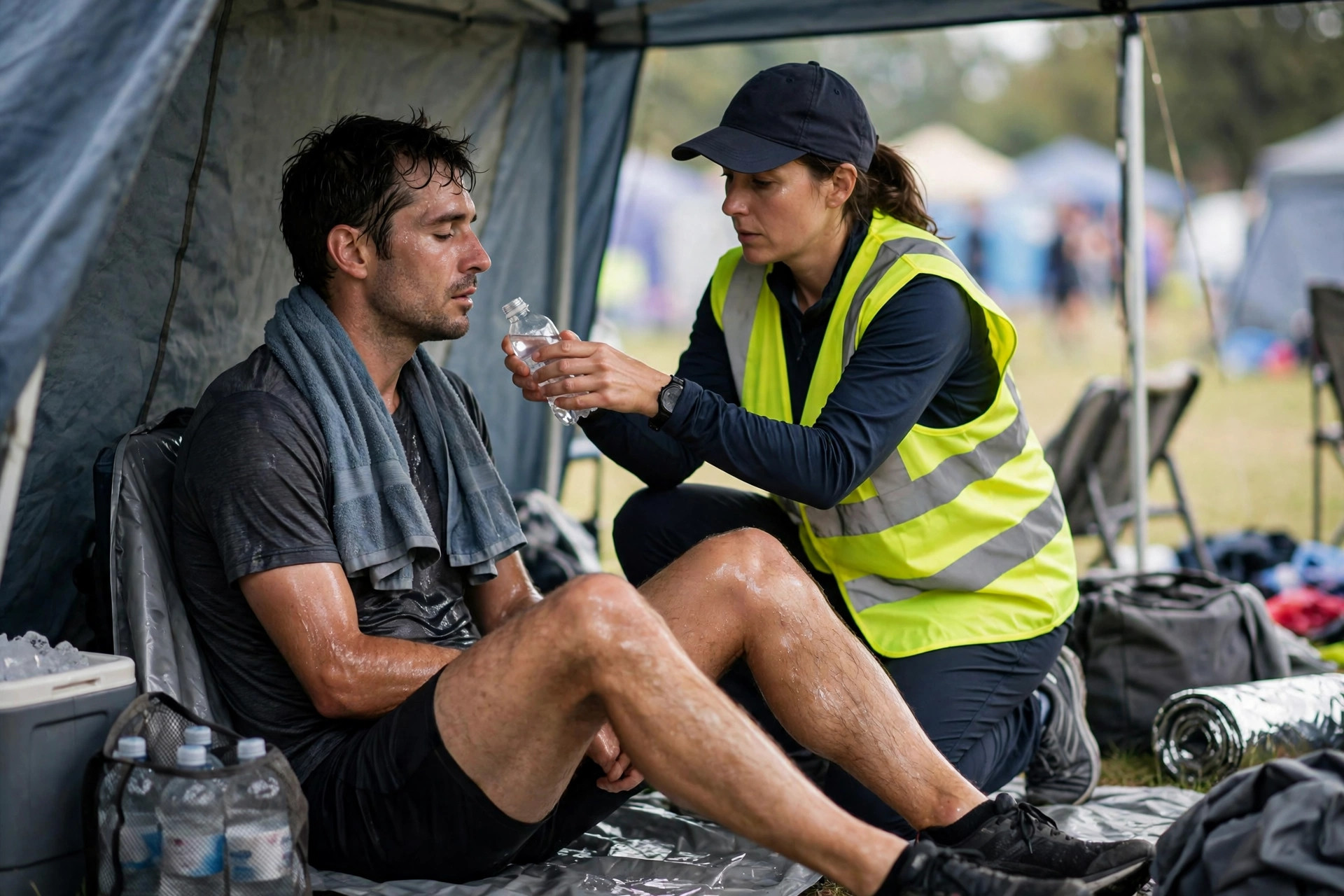
- Recognise heat exhaustion: heavy sweating, pale and clammy skin, nausea, headache, dizziness, weakness, muscle cramps and a fast pulse, usually after heat or exertion. The person is unwell but still alert — if they become confused or stop sweating, treat as heatstroke (see Heatstroke).
- Move the person to shade or a cool place immediately and stop all activity.
- Lie them down and raise their legs slightly. Loosen or remove excess clothing.
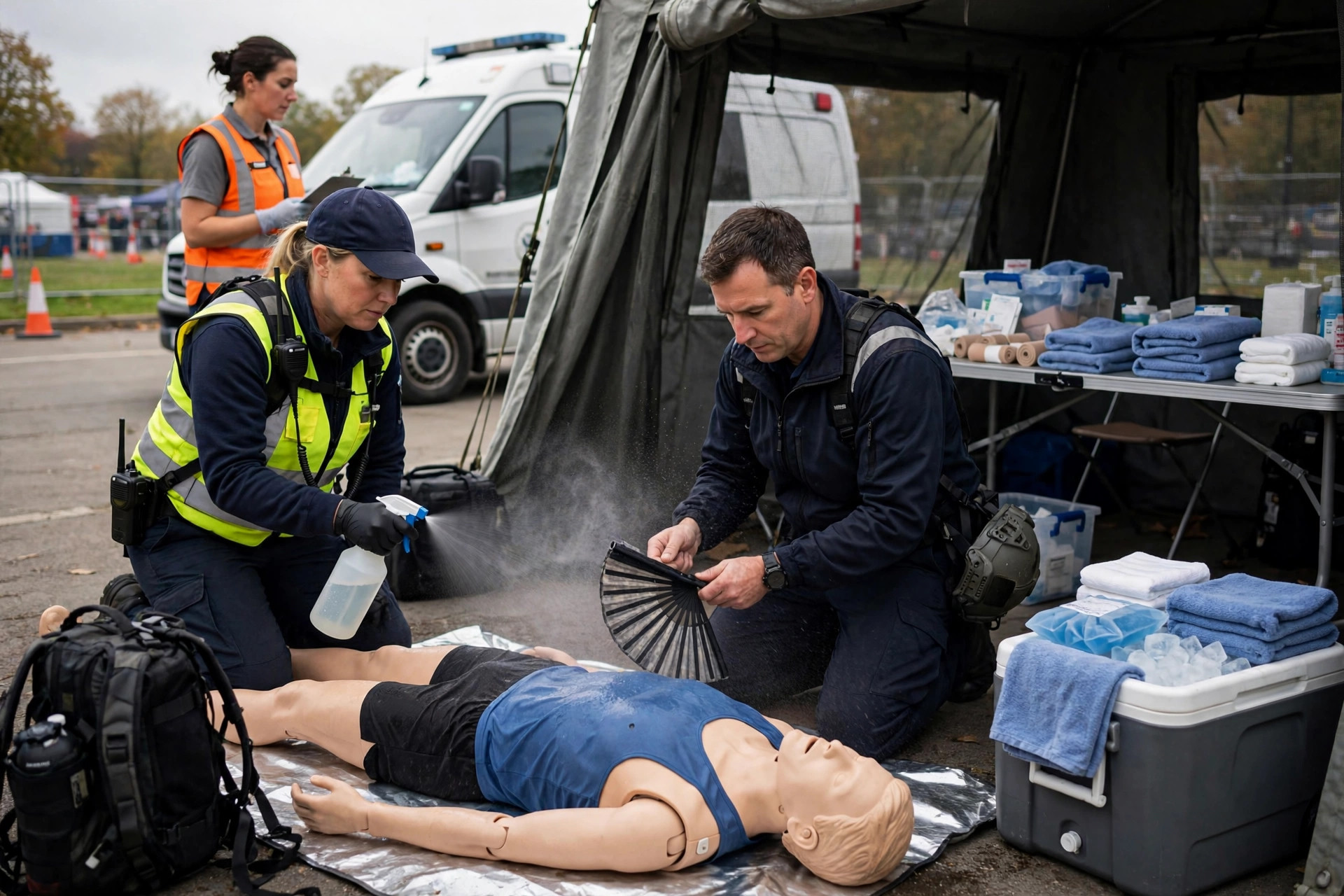
- Cool the skin: spray or sponge with cool water and fan them, or apply cool wet cloths to the neck, armpits and groin.
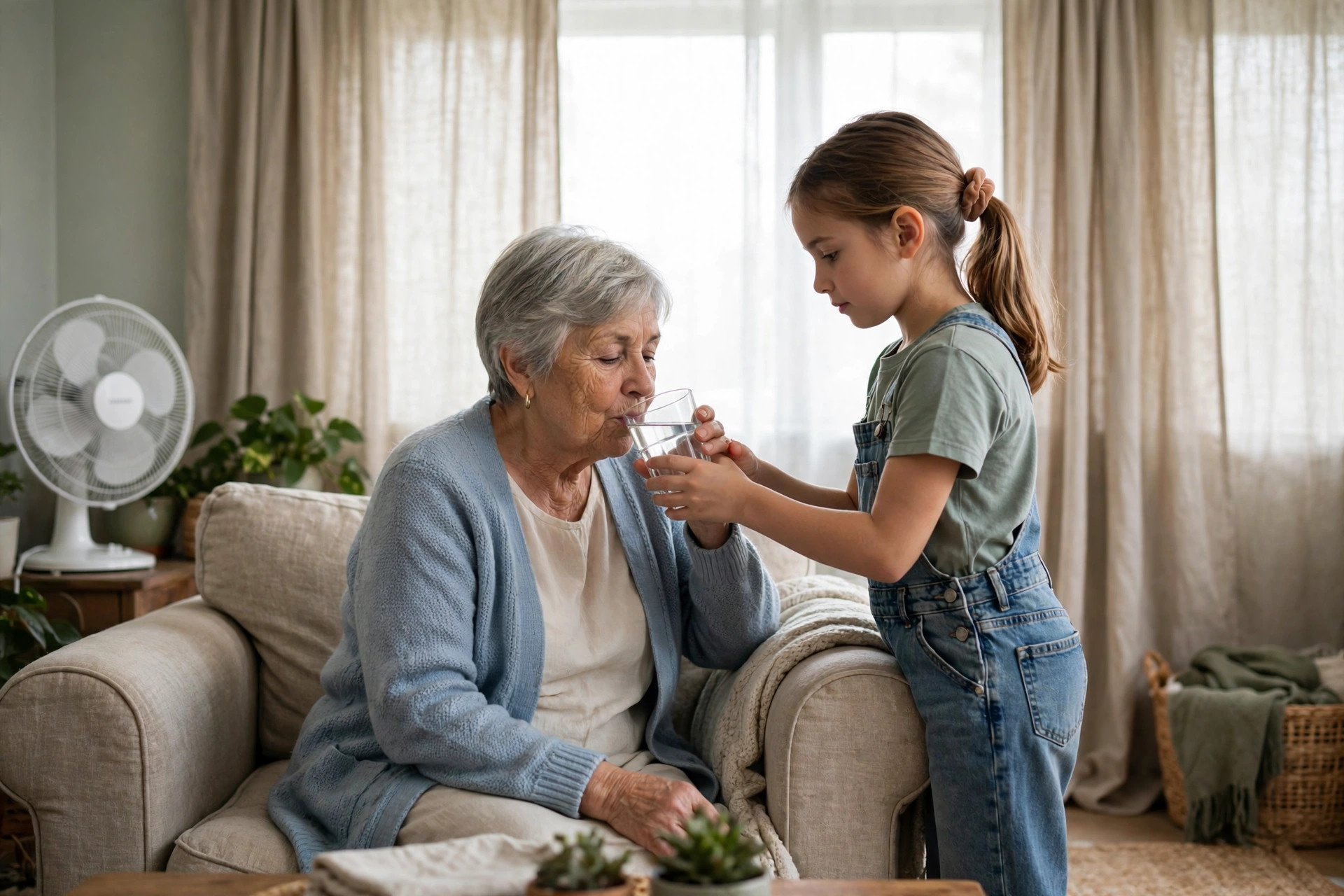
- Give small, frequent sips of cool water. An oral rehydration or sports drink is a good choice after heavy sweating; avoid alcohol and caffeine.
- They should start to feel better within about 30 minutes. Keep them resting in the cool for the rest of the day and monitor them — if they worsen at any point, escalate.
What NOT to do
- Do not let the person return to sport or work in the heat the same day.
- Do not give large volumes of water at once — small sips are absorbed better and avoid vomiting.
- Do not ignore deterioration: vomiting, confusion, or failure to improve within 30 minutes needs emergency care.
- Do not wrap them in blankets — cooling is the treatment.
When to get medical care
Call 911 if the person is not improving after 30 minutes of cooling and fluids, vomits repeatedly, becomes confused, drowsy, agitated or faints, stops sweating despite heat, or develops a high temperature — these are heatstroke signs. Babies, older people and those with heart or lung conditions should be assessed early.
Related symptoms
Frequently asked questions
What is the difference between heat exhaustion and heatstroke?
Heat exhaustion is the body's warning stage: heavy sweating, clamminess, nausea and weakness, with normal or slightly raised temperature and a clear mind. Heatstroke is failure of temperature control: hot, often dry skin, high temperature, confusion or collapse. Heatstroke is a 911 emergency needing rapid cooling.
Can heat exhaustion be prevented?
Mostly yes: build up heat exposure gradually, drink regularly (more in heat and exercise), wear light loose clothing and a hat, rest in shade during the hottest hours, and never leave children or pets in parked cars.
In an emergency, call 911 (or your local emergency number) first — do not delay a call to read a guide. These pages are educational first-aid information in general terms; they are not a substitute for emergency services, first-aid training, or assessment by a qualified clinician.