- Physical Examination
- Surgical Examination
- Ophthalmology
- Clinical Skills
- Orthopedics
- Surgery Videos
- Laparoscopy
- Pediatrics
- Funny Videos
- Cardiothoracic Surgery
- Nursing Videos
- Plastic Surgery
- Otorhinolaryngology
- Histology and Histopathology
- Neurosurgery
- Dermatology
- Pediatric Surgery
- Urology
- Dentistry
- Oncology and Cancers
- Anatomy Videos
- Health and Fitness
- Radiology
- Anaesthesia
- Physical Therapy
- Pharmacology
- Interventional Radiology
- Cardiology
- Endocrinology
- Gynecology
- Emergency Medicine
- Psychiatry and Psychology
- Childbirth Videos
- General Medical Videos
- Nephrology
- Physiology
- Diet and Food Health
- Diabetes Mellitus
- Neurology
- Women Health
- Osteoporosis
- Gastroenterology
- Pulmonology
- Hematology
- Rheumatology
- Toxicology
- Nuclear Medicine
- Infectious Diseases
- Vascular Disease
- Reproductive Health
- Burns and Wound Healing
- Kidney Zone Podcast
- Other
Heatstroke — Emergency First Aid
What to do
- Recognise heatstroke: a person overheated by heat or exertion who has a high temperature, hot skin (sweaty or dry), and — critically — confusion, agitation, slurred speech, seizures or loss of consciousness. This is a life-threatening emergency.
- Call 911 immediately.
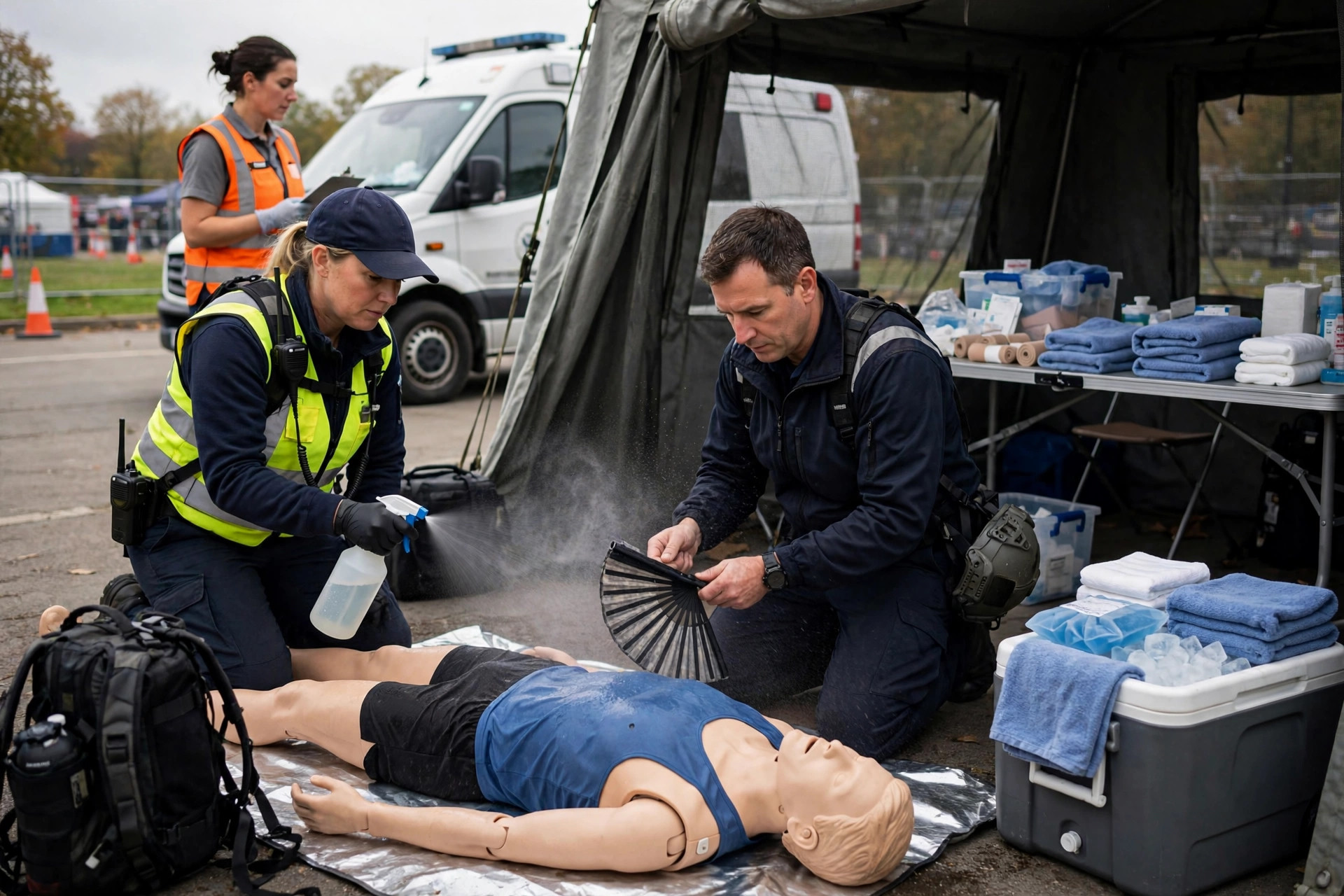
- Cool the person as fast as possible, by any means available. The most effective is immersing the body (up to the neck) in cool or cold water — a bath, tub, lake or paddling pool at an event.
- If immersion is not possible, soak the whole body repeatedly with water and fan vigorously, or apply ice packs wrapped in cloth to the neck, armpits and groin while wetting and fanning the skin.
- Remove excess clothing. Do not give anything to drink if the person is confused, drowsy or unconscious.
- Continue cooling until the ambulance arrives or the person clearly improves, monitoring response and breathing; start CPR if they become unresponsive and stop breathing normally.
What NOT to do
- Do not delay cooling to transport — cool first, fast, while help comes to you.
- Do not give fever medicines (such as paracetamol/acetaminophen) — heatstroke is not a fever and they do not help.
- Do not give fluids to someone who is confused or not fully alert.
- Do not stop cooling because the skin feels cooler — internal temperature is what matters, and responders will measure it.
When to get medical care
Heatstroke is always a 911 emergency. Any person with confusion, collapse, seizures or loss of consciousness in the heat, or whose temperature is very high, needs immediate emergency cooling and hospital care — organ damage rises with every minute spent overheated.
Related symptoms
Frequently asked questions
Why is cooling more urgent than the ambulance ride?
Outcome in heatstroke depends on how many minutes the core temperature stays dangerously high. Immediate whole-body cooling (ideally cold-water immersion) at the scene saves lives and brains; cooling should start before and continue during transport whenever possible.
Who is most at risk of heatstroke?
Older people, babies and young children, people doing hard exercise in heat, outdoor workers, and people with heart, lung or mental-health conditions or on certain medicines. Classic heatstroke develops over days in heatwaves; exertional heatstroke can strike fit young athletes within an hour.
In an emergency, call 911 (or your local emergency number) first — do not delay a call to read a guide. These pages are educational first-aid information in general terms; they are not a substitute for emergency services, first-aid training, or assessment by a qualified clinician.