- Physical Examination
- Surgical Examination
- Ophthalmology
- Clinical Skills
- Orthopedics
- Surgery Videos
- Laparoscopy
- Pediatrics
- Funny Videos
- Cardiothoracic Surgery
- Nursing Videos
- Plastic Surgery
- Otorhinolaryngology
- Histology and Histopathology
- Neurosurgery
- Dermatology
- Pediatric Surgery
- Urology
- Dentistry
- Oncology and Cancers
- Anatomy Videos
- Health and Fitness
- Radiology
- Anaesthesia
- Physical Therapy
- Pharmacology
- Interventional Radiology
- Cardiology
- Endocrinology
- Gynecology
- Emergency Medicine
- Psychiatry and Psychology
- Childbirth Videos
- General Medical Videos
- Nephrology
- Physiology
- Diet and Food Health
- Diabetes Mellitus
- Neurology
- Women Health
- Osteoporosis
- Gastroenterology
- Pulmonology
- Hematology
- Rheumatology
- Toxicology
- Nuclear Medicine
- Infectious Diseases
- Vascular Disease
- Reproductive Health
- Burns and Wound Healing
- Kidney Zone Podcast
- Other
Crush Injuries — First Aid
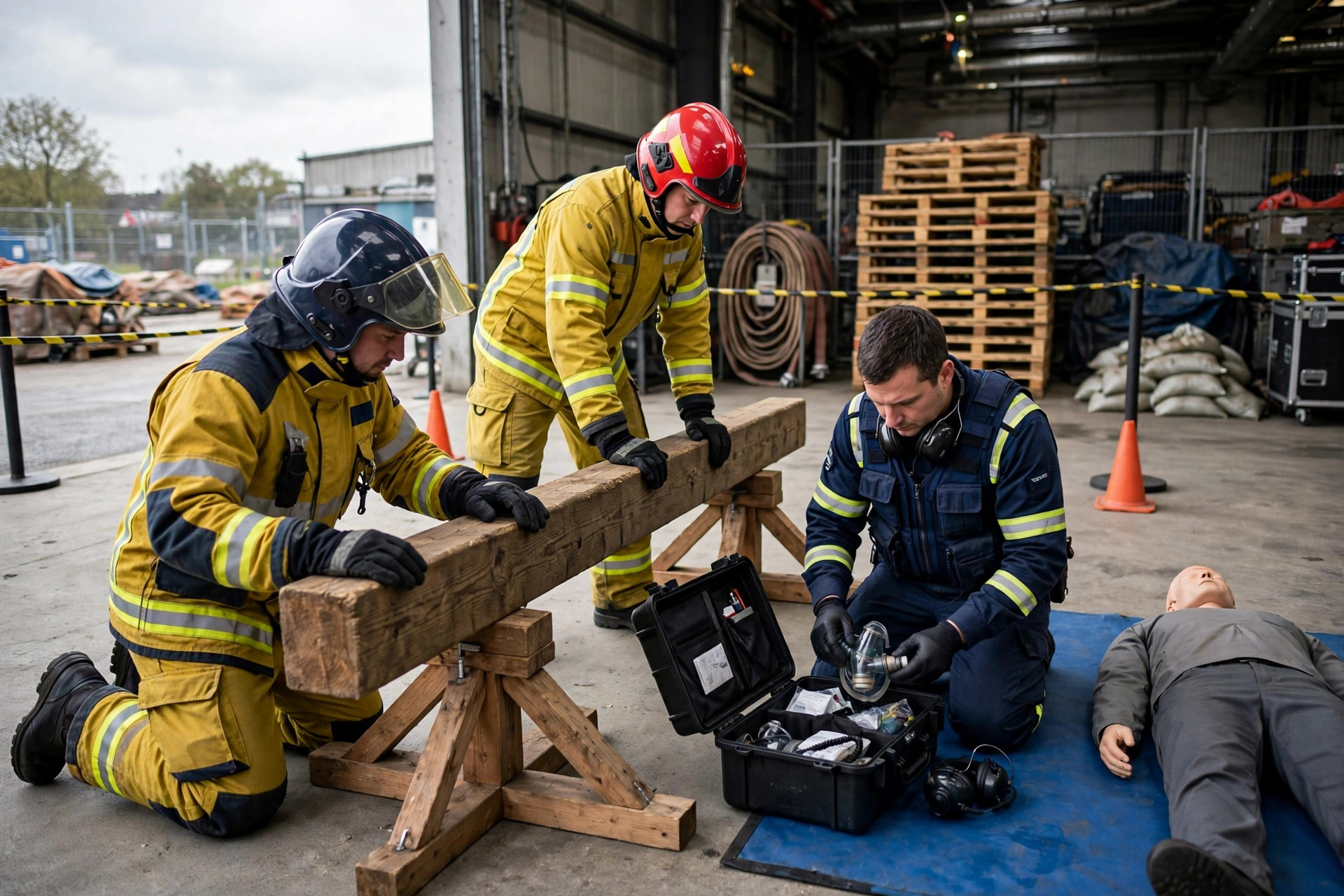
What to do
- Call 911 immediately and give clear details of what is crushing the person and for how long, if known.
- Keep the scene safe — do not attempt to lift very heavy objects alone or enter unstable structures; wait for the fire and rescue service if the load cannot be moved safely.
- If the crushing object can be removed quickly and safely (a brief crush, light object), remove it and treat bleeding and fractures as normal.
- If the person has been trapped for more than about 15 minutes, do not suddenly release the crushing weight unless emergency services advise it — sudden release can allow harmful substances built up in the crushed limb to flood the circulation. Follow the 911 dispatcher's instructions.
- Control any visible bleeding with direct pressure, keep the person warm and still, and give nothing to eat or drink.
- Monitor response and breathing continuously and start CPR if they become unresponsive and stop breathing normally.
What NOT to do
- Do not apply a tourniquet routinely for a crush injury — follow dispatcher or paramedic advice.
- Do not rush to free someone trapped under rubble or a vehicle if doing so endangers you or them.
- Do not give food or drink — hospital treatment and possibly surgery will be needed.
- Do not assume a person is fine because they can talk — crush injuries can cause delayed collapse after release.
When to get medical care
Always call 911 for crush injuries involving the chest, abdomen, pelvis or a limb trapped under significant weight, and for any crush lasting more than a few minutes. Sudden deterioration can occur after the weight is removed, so hospital monitoring is essential even if the person feels well.
Related conditions
Related procedures & tests
Related symptoms
Frequently asked questions
What is crush syndrome?
When a limb is crushed for a prolonged period, damaged muscle releases substances into the blood once pressure is released. These can cause dangerous heart rhythms and kidney failure. It is why prolonged crushes are released under medical control, with fluids and monitoring ready.
A heavy box fell on my foot briefly. Is that a crush injury?
A brief impact like that is usually treated as a fracture/contusion injury: rest, ice, elevation and an X-ray if you cannot bear weight or pain is severe. The prolonged entrapment described on this page is the scenario needing 911 and caution about release.
In an emergency, call 911 (or your local emergency number) first — do not delay a call to read a guide. These pages are educational first-aid information in general terms; they are not a substitute for emergency services, first-aid training, or assessment by a qualified clinician.