
- Physical Examination
- Surgical Examination
- Ophthalmology
- Clinical Skills
- Orthopedics
- Surgery Videos
- Laparoscopy
- Pediatrics
- Funny Videos
- Cardiothoracic Surgery
- Nursing Videos
- Plastic Surgery
- Otorhinolaryngology
- Histology and Histopathology
- Neurosurgery
- Dermatology
- Pediatric Surgery
- Urology
- Dentistry
- Oncology and Cancers
- Anatomy Videos
- Health and Fitness
- Radiology
- Anaesthesia
- Physical Therapy
- Pharmacology
- Interventional Radiology
- Cardiology
- Endocrinology
- Gynecology
- Emergency Medicine
- Psychiatry and Psychology
- Childbirth Videos
- General Medical Videos
- Nephrology
- Physiology
- Diet and Food Health
- Diabetes Mellitus
- Neurology
- Women Health
- Osteoporosis
- Gastroenterology
- Pulmonology
- Hematology
- Rheumatology
- Toxicology
- Nuclear Medicine
- Infectious Diseases
- Vascular Disease
- Reproductive Health
- Burns and Wound Healing
- Kidney Zone Podcast
- Other
Capsule endoscopy
Category: Endoscopy & Camera Tests · All endoscopy & camera tests
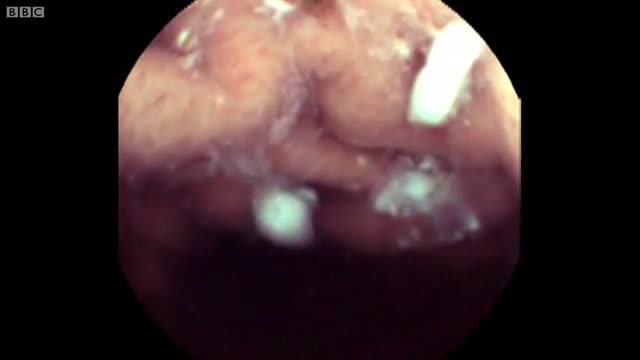
What it is
Capsule endoscopy uses a camera the size of a large vitamin capsule, which you swallow. As it travels naturally through the digestive system it takes thousands of pictures, transmitted to a recorder you wear, mainly to examine the small bowel that standard scopes cannot reach.
Why it is done
It is used to look for causes of unexplained bleeding or anaemia, suspected Crohn's disease of the small bowel and other small-bowel problems.
How to prepare
You will fast beforehand and may take bowel preparation so the views are clear. Tell the team if you have a pacemaker or implanted device, swallowing difficulties, or a known bowel narrowing — a dissolvable test capsule may be used first in that case.
What happens during the procedure
You swallow the capsule with water in clinic and wear a sensor belt and recorder for about 8 hours while you go about the day (usually at home or work). You can usually drink after a couple of hours and eat lightly later, following the unit's timings. The capsule passes naturally in the stool and does not need to be retrieved in most cases.
Afterwards — recovery & results
You return the recorder the next day. The pictures are reviewed — this takes some days — and the report goes to your doctor. If you develop abdominal pain, vomiting or the capsule is not seen to pass, contact the team.
Risks & considerations
The main risk is the capsule getting stuck at a narrowing (retention), which occasionally needs an endoscopy or surgery to retrieve. This is uncommon and screening questions reduce the risk. The capsule is single-use and disposable.
Watch: Capsule endoscopy videos
Real procedure videos from the MedicalVideos.com library. Some clinical footage is graphic — that is the nature of a medical video library.
Related guides on MedicalVideos.com
Frequently asked questions
Will I feel the capsule?
No — once swallowed you cannot feel it travelling through you.
What if I don't see it come out?
Most people never notice it pass. If you have symptoms of blockage — pain, vomiting, bloating — contact the unit. Otherwise an X-ray can check if needed.
Related procedures — Endoscopy & Camera Tests
Browse the C section of the A–Z list or return to the Procedures & Tests hub.