
- Physical Examination
- Surgical Examination
- Ophthalmology
- Clinical Skills
- Orthopedics
- Surgery Videos
- Laparoscopy
- Pediatrics
- Funny Videos
- Cardiothoracic Surgery
- Nursing Videos
- Plastic Surgery
- Otorhinolaryngology
- Histology and Histopathology
- Neurosurgery
- Dermatology
- Pediatric Surgery
- Urology
- Dentistry
- Oncology and Cancers
- Anatomy Videos
- Health and Fitness
- Radiology
- Anaesthesia
- Physical Therapy
- Pharmacology
- Interventional Radiology
- Cardiology
- Endocrinology
- Gynecology
- Emergency Medicine
- Psychiatry and Psychology
- Childbirth Videos
- General Medical Videos
- Nephrology
- Physiology
- Diet and Food Health
- Diabetes Mellitus
- Neurology
- Women Health
- Osteoporosis
- Gastroenterology
- Pulmonology
- Hematology
- Rheumatology
- Toxicology
- Nuclear Medicine
- Infectious Diseases
- Vascular Disease
- Reproductive Health
- Burns and Wound Healing
- Kidney Zone Podcast
- Other
Endoscopic ultrasound (EUS)
Category: Endoscopy & Camera Tests · All endoscopy & camera tests
What it is
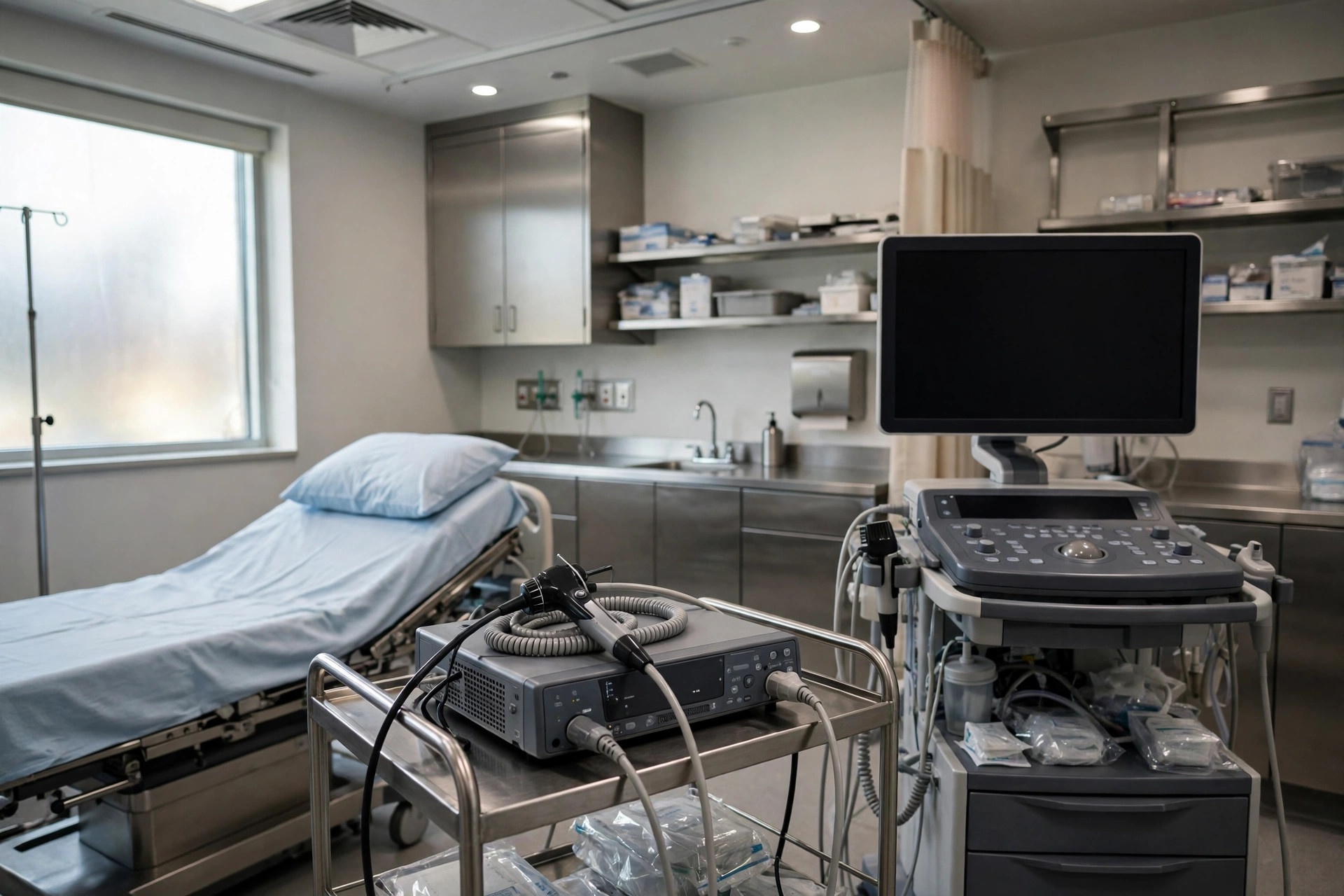
Endoscopic ultrasound combines an endoscope with an ultrasound probe at its tip, giving very detailed pictures of the gut wall and nearby organs such as the pancreas, bile ducts and lymph nodes from inside the body. A fine needle can be passed to sample tissue.
Why it is done
It is used to investigate and stage tumours of the gullet, stomach, pancreas and rectum, to assess pancreatic and bile duct problems, and to obtain tissue samples from places that are hard to reach from outside.
How to prepare
You will fast for several hours (longer in some cases) and have medicines reviewed, especially blood thinners if a needle sample is likely. Sedation or general anaesthetic is used, so arrange an escort and expect a period of observation.
What happens during the procedure
The scope is passed through the mouth (or occasionally the back passage) under sedation. Ultrasound pictures are taken from inside, and if a sample is needed the needle is passed through the scope under direct ultrasound vision. It takes about 30 to 60 minutes.
Afterwards — recovery & results
You recover in the unit until sedation wears off and go home the same day in most cases, with an escort. A sore throat and bloating are common. Sample results usually take one to two weeks.
Risks & considerations
Risks are those of endoscopy and sedation, plus a small risk of bleeding or infection after needle sampling, and rarely inflammation of the pancreas if it is sampled. Serious complications are uncommon.
Related guides on MedicalVideos.com
Frequently asked questions
Why not do a normal CT scan instead?
EUS sees some organs, especially the pancreas, more clearly than CT because the probe sits right next to them — and it can take tissue samples in the same procedure.
Will I feel the needle biopsy?
With sedation, most people feel nothing and remember little. Tell the team if you are uncomfortable at any point.
Related procedures — Endoscopy & Camera Tests
Browse the E section of the A–Z list or return to the Procedures & Tests hub.