
- Physical Examination
- Surgical Examination
- Ophthalmology
- Clinical Skills
- Orthopedics
- Surgery Videos
- Laparoscopy
- Pediatrics
- Funny Videos
- Cardiothoracic Surgery
- Nursing Videos
- Plastic Surgery
- Otorhinolaryngology
- Histology and Histopathology
- Neurosurgery
- Dermatology
- Pediatric Surgery
- Urology
- Dentistry
- Oncology and Cancers
- Anatomy Videos
- Health and Fitness
- Radiology
- Anaesthesia
- Physical Therapy
- Pharmacology
- Interventional Radiology
- Cardiology
- Endocrinology
- Gynecology
- Emergency Medicine
- Psychiatry and Psychology
- Childbirth Videos
- General Medical Videos
- Nephrology
- Physiology
- Diet and Food Health
- Diabetes Mellitus
- Neurology
- Women Health
- Osteoporosis
- Gastroenterology
- Pulmonology
- Hematology
- Rheumatology
- Toxicology
- Nuclear Medicine
- Infectious Diseases
- Vascular Disease
- Reproductive Health
- Burns and Wound Healing
- Kidney Zone Podcast
- Other
Implantable loop recorder
Category: Heart Tests & Procedures · All heart tests & procedures
What it is
An implantable loop recorder is a tiny heart-rhythm monitor placed just under the skin of the chest. It continuously watches the heart's electrical activity for up to a few years, automatically recording abnormal rhythms and episodes you activate with a small hand-held trigger, and sending data to the clinic from a home transmitter.
Why it is done
It investigates infrequent unexplained blackouts (syncope) and palpitations that shorter monitors miss, and looks for silent atrial fibrillation after certain strokes.
How to prepare
No fasting is needed. Tell the team about blood thinners, allergies and any skin infection near the site. The device is placed in a short clinic or day-case procedure under local anaesthetic.
What happens during the procedure
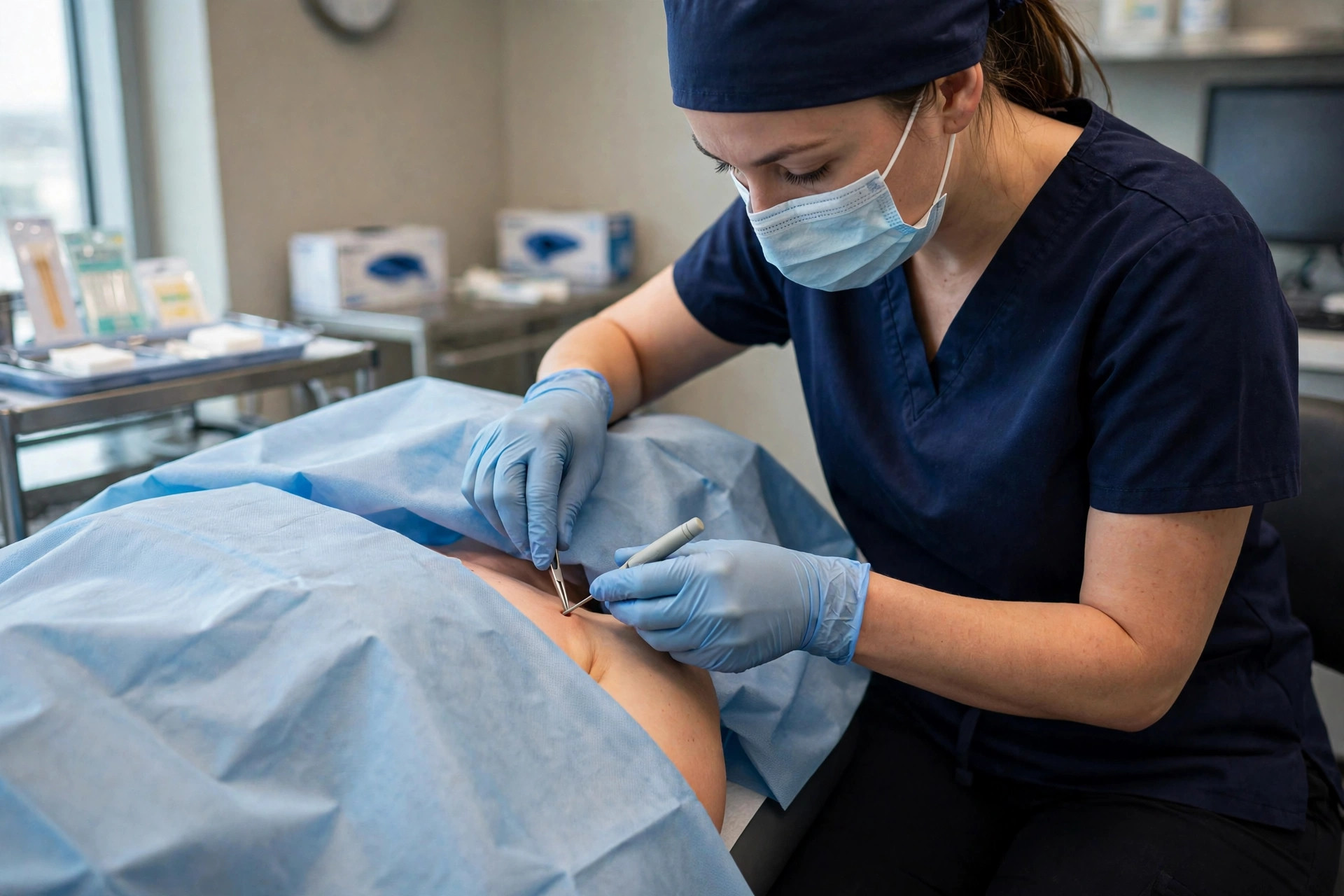
After numbing, a small cut (about 1 to 2 cm) is made and the device — smaller than a USB stick — is slipped into a pocket under the skin and the wound closed with stitches or adhesive strips. It takes about 15 minutes.
Afterwards — recovery & results
Keep the wound dry for a few days; mild bruising and tenderness settle over a week or two. You will be shown the activator and the home transmitter (often by your bedside). Follow-up is mostly remote; the device is removed in a similar minor procedure when the diagnosis is made or its battery ends.
Risks & considerations
Risks are low: infection or bleeding at the pocket, the device being felt under the skin, and rarely it working outwards through the skin. Removal is straightforward.
Related guides on MedicalVideos.com
Frequently asked questions
Why not just wear a monitor for a week?
If episodes happen every few months, a week's recording will almost always miss them. The loop recorder waits as long as it takes — that is its value.
Does it interfere with phones or scanners?
Day-to-day electronics do not affect it. MRI scanning is possible with modern devices under specific conditions — your cardiology team confirms compatibility before any MRI.
Related procedures — Heart Tests & Procedures
Browse the I section of the A–Z list or return to the Procedures & Tests hub.