
- Physical Examination
- Surgical Examination
- Ophthalmology
- Clinical Skills
- Orthopedics
- Surgery Videos
- Laparoscopy
- Pediatrics
- Funny Videos
- Cardiothoracic Surgery
- Nursing Videos
- Plastic Surgery
- Otorhinolaryngology
- Histology and Histopathology
- Neurosurgery
- Dermatology
- Pediatric Surgery
- Urology
- Dentistry
- Oncology and Cancers
- Anatomy Videos
- Health and Fitness
- Radiology
- Anaesthesia
- Physical Therapy
- Pharmacology
- Interventional Radiology
- Cardiology
- Endocrinology
- Gynecology
- Emergency Medicine
- Psychiatry and Psychology
- Childbirth Videos
- General Medical Videos
- Nephrology
- Physiology
- Diet and Food Health
- Diabetes Mellitus
- Neurology
- Women Health
- Osteoporosis
- Gastroenterology
- Pulmonology
- Hematology
- Rheumatology
- Toxicology
- Nuclear Medicine
- Infectious Diseases
- Vascular Disease
- Reproductive Health
- Burns and Wound Healing
- Kidney Zone Podcast
- Other
Pericardiocentesis
Category: Heart Tests & Procedures · All heart tests & procedures
What it is
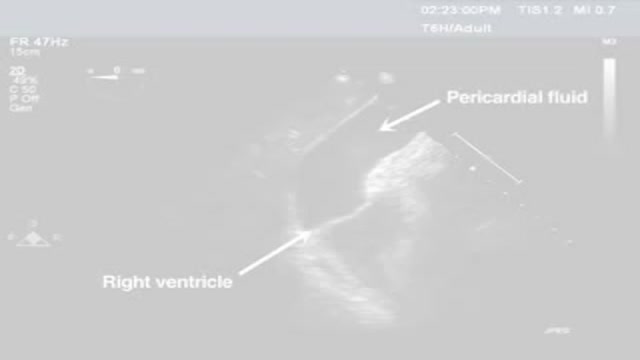
Pericardiocentesis is a procedure to remove excess fluid from the sac around the heart (pericardium) using a needle and fine drain, usually guided by ultrasound.
Why it is done
It is done when fluid around the heart is squeezing it and affecting its pumping (tamponade), causing breathlessness and low blood pressure, or when fluid needs to be tested to find its cause.
How to prepare
In an emergency the procedure may proceed immediately. Otherwise there are blood tests, an echocardiogram to map the fluid, and a review of blood-thinning medicines. Tell the team about allergies.
What happens during the procedure
The skin below the breastbone or between the ribs is numbed with local anaesthetic. Under ultrasound guidance a needle is advanced into the fluid, a guidewire and then a soft drain tube follow. Fluid is drained into a bag and samples are sent for testing. It usually takes 30 to 60 minutes.
Afterwards — recovery & results
The drain often stays in for a day or more while output is monitored, with regular observations and sometimes repeat scans. Once drainage slows and the fluid does not re-accumulate, the drain is removed. The underlying cause of the fluid guides further treatment.
Risks & considerations
Risks include puncturing the heart muscle or a lung, bleeding into the sac, infection and rhythm disturbance. Ultrasound guidance and monitoring keep these uncommon, and in tamponade the relief of pressure is life-saving.
Watch: Pericardiocentesis videos
Real procedure videos from the MedicalVideos.com library. Some clinical footage is graphic — that is the nature of a medical video library.
Related guides on MedicalVideos.com
Frequently asked questions
Does it hurt?
Local anaesthetic numbs the skin; you may feel pressure as the needle passes. Most discomfort is brief, and breathlessness often improves quickly as fluid drains.
Will the fluid come back?
It can, depending on the cause. The drain stays until output is low, and treating the underlying cause — and sometimes further procedures — reduces recurrence.
Related procedures — Heart Tests & Procedures
Browse the P section of the A–Z list or return to the Procedures & Tests hub.