
- Physical Examination
- Surgical Examination
- Ophthalmology
- Clinical Skills
- Orthopedics
- Surgery Videos
- Laparoscopy
- Pediatrics
- Funny Videos
- Cardiothoracic Surgery
- Nursing Videos
- Plastic Surgery
- Otorhinolaryngology
- Histology and Histopathology
- Neurosurgery
- Dermatology
- Pediatric Surgery
- Urology
- Dentistry
- Oncology and Cancers
- Anatomy Videos
- Health and Fitness
- Radiology
- Anaesthesia
- Physical Therapy
- Pharmacology
- Interventional Radiology
- Cardiology
- Endocrinology
- Gynecology
- Emergency Medicine
- Psychiatry and Psychology
- Childbirth Videos
- General Medical Videos
- Nephrology
- Physiology
- Diet and Food Health
- Diabetes Mellitus
- Neurology
- Women Health
- Osteoporosis
- Gastroenterology
- Pulmonology
- Hematology
- Rheumatology
- Toxicology
- Nuclear Medicine
- Infectious Diseases
- Vascular Disease
- Reproductive Health
- Burns and Wound Healing
- Kidney Zone Podcast
- Other
Tilt table test
Category: Heart Tests & Procedures · All heart tests & procedures
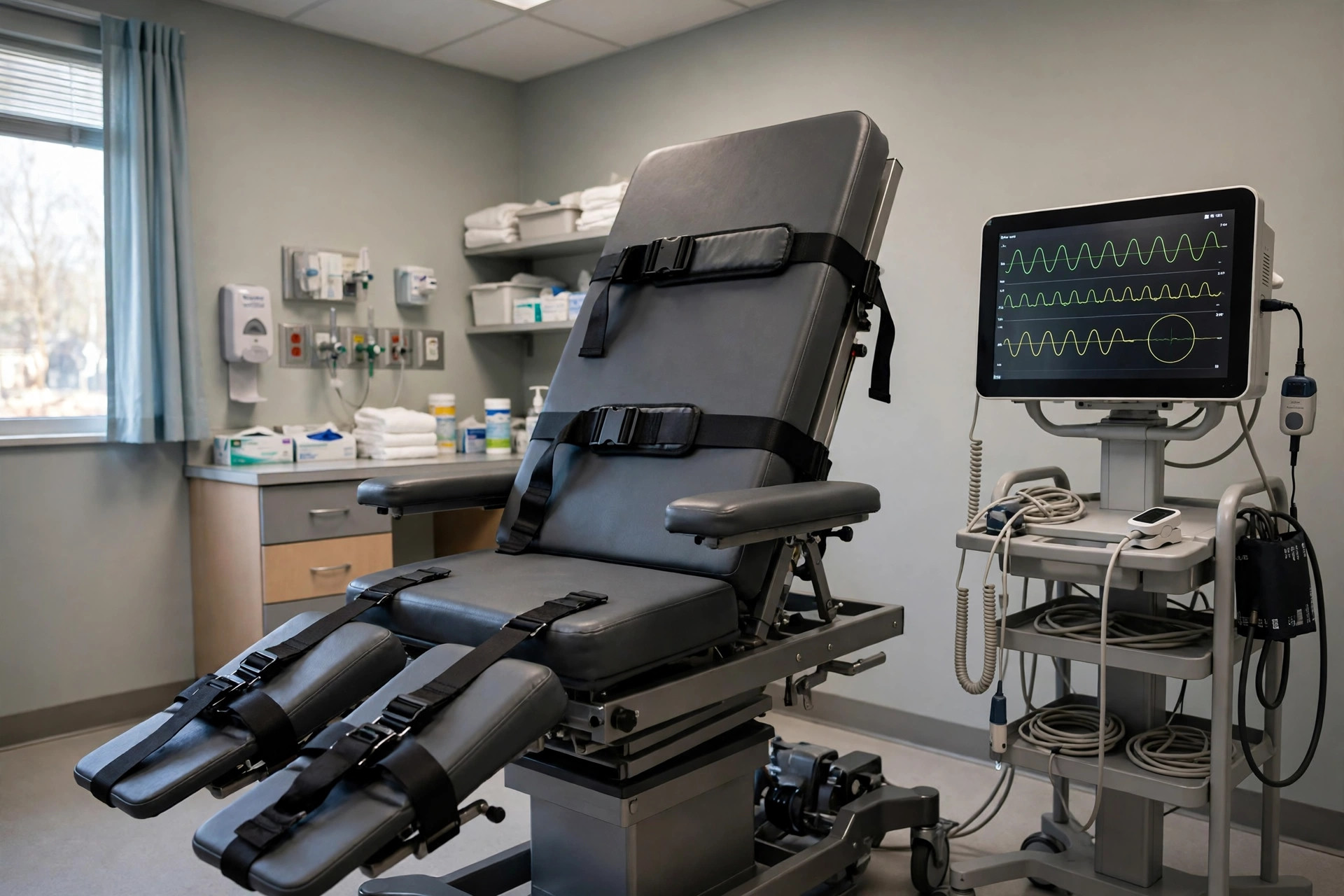
What it is
A tilt table test investigates fainting. You lie on a table that is tilted upright at an angle while your heart rhythm and blood pressure are monitored, to see whether the tilt reproduces a faint and why.
Why it is done
It is used for unexplained blackouts or recurrent faints when a drop in blood pressure or heart rate on standing (a reflex faint) is suspected.
How to prepare
You will usually be asked not to eat for a few hours beforehand. Tell the team about your medicines, as some may be paused for the test only if they advise it. Arrange a lift home in case you feel unwell afterwards.
What happens during the procedure
You lie on the table secured with straps and a footplate, with ECG and blood-pressure monitoring. The table tilts you head-up for up to about 45 minutes. If nothing happens, a medicine under the tongue may be used to provoke the response. If you faint, the table is lowered flat and you recover quickly.
Afterwards — recovery & results
Most people feel back to normal within minutes and can go home once the team is happy. The results help your doctor decide whether simple measures, medicines or further heart tests are appropriate.
Risks & considerations
The test intentionally tries to reproduce a faint in a safe, monitored setting. Brief nausea, sweating or fainting are expected possibilities rather than complications, and staff are present throughout.
Related guides on MedicalVideos.com
Frequently asked questions
Will I definitely faint?
No — many tests are negative, which is also useful information. If you do faint, you are already lying secured on the table and recover as soon as it is tipped flat.
Can I drive afterwards?
If you fainted during the test, ask the team about driving — fainting has legal implications for driving licences in many places, and your doctor will advise.
Related procedures — Heart Tests & Procedures
Browse the T section of the A–Z list or return to the Procedures & Tests hub.