
- Procedures & Tests
- Symptoms A-Z
- Symptom Checker
- Kidney Diet
- First Aid
- Anatomy Atlas
- Ask MedicalVideos
- Drug Guide
- Lab Values
- Vital Signs
- Muscles A–Z
- Clinical Signs
- Medical Abbreviations
- Medical Terminology
- Physical Examination
- Surgical Examination
- Ophthalmology
- Clinical Skills
- Orthopedics
- Surgery Videos
- Laparoscopy
- Pediatrics
- Medical Humor
- Cardiothoracic Surgery
- Nursing Videos
- Plastic Surgery
- Otorhinolaryngology
- Histology and Histopathology
- Neurosurgery
- Dermatology
- Pediatric Surgery
- Urology
- Dentistry
- Oncology and Cancers
- Anatomy Videos
- Health and Fitness
- Radiology
- Anaesthesia
- Physical Therapy
- Pharmacology
- Interventional Radiology
- Cardiology
- Endocrinology
- Gynecology
- Emergency Medicine
- Psychiatry and Psychology
- Childbirth Videos
- General Medical Videos
- Nephrology
- Physiology
- Diet and Food Health
- Diabetes Mellitus
- Neurology
- Women Health
- Osteoporosis
- Gastroenterology
- Pulmonology
- Hematology
- Rheumatology
- Toxicology
- Nuclear Medicine
- Infectious Diseases
- Vascular Disease
- Reproductive Health
- Burns and Wound Healing
- Kidney Zone Podcast
- Other
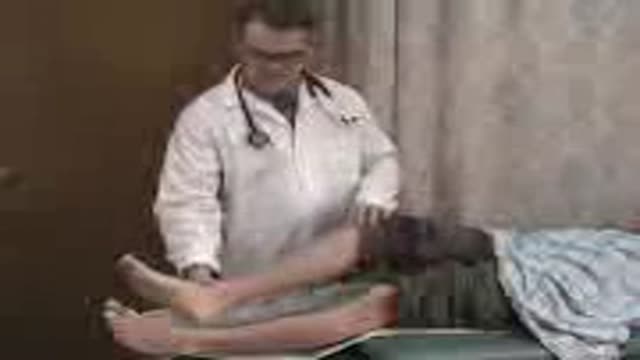


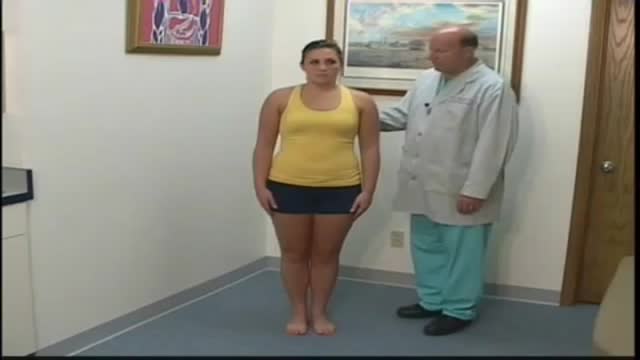

Examination of the Lower Limbs

Educational only: videos on MedicalVideos.com are for general information and are not medical advice. Always consult your own doctor about your health.
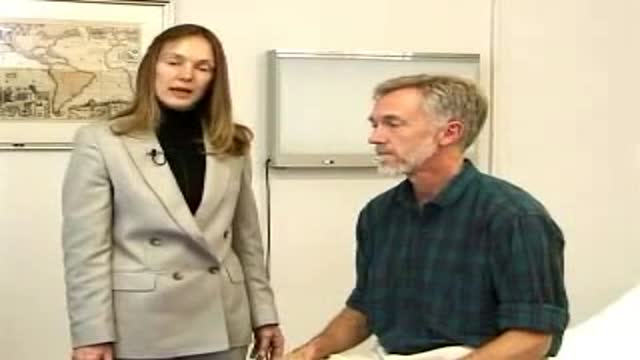
A clinical examination of the lower limbs is demonstrated in this physical-examination video, covering inspection, palpation, movement, and neurovascular checks of the legs. It follows the structured approach taught in medical school. A core study resource for students. Educational only — not medical advice.
This video in 30 seconds
A teaching demonstration of the lower-limb neurological examination, reporting normal findings throughout. The examiner works through gait and heel-toe walking, balance testing, tone, power at the hip, knee and ankle, reflexes, coordination and sensation including vibration testing.
Key points
- The demonstration begins with gait and heel-toe walking
- The examiner assesses balance, tone and clonus
- Power is tested at the hip, knee and ankle against resistance
- Reflexes, heel-to-shin coordination and sensation including vibration are assessed
Chapters
- 0:12 — Gait and heel-toe walking
- 1:39 — Tone and clonus assessment
- 2:42 — Power at hip knee ankle
- 3:11 — Reflexes knee ankle Babinski
- 4:56 — Coordination heel-to-shin test
- 5:25 — Sensation and vibration testing
Video Transcript
A teaching demonstration of lower-limb neurological examination. It runs the full sequence — gait and heel-toe walking, balance testing, tone, power at hip, knee, and ankle, reflexes, coordination by heel-to-shin, and sensation including vibration with a tuning fork — reporting normal findings throughout.
Read the full transcript
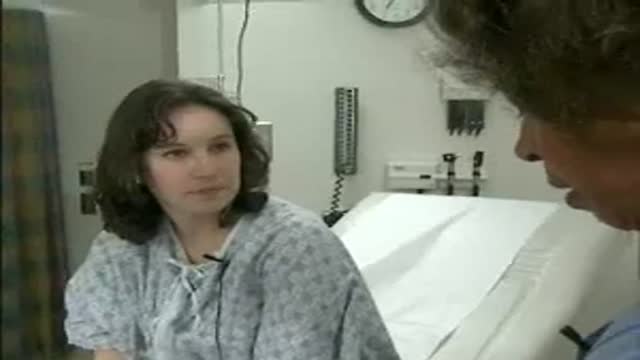
So again, when assessing somebody's lower limbs, normally the examination would start with inspection and the patients would be in their underwear. And when having done that, the next thing to do is again a general gross assessment of lower limb function by just asking the patient to take a few steps and assessing their gait. Good, and turn around and when they come back, you ask them to walk back heel to toe. Good. Okay, now I'll get clear to take a step over here. Just standing there on the spot, first of all close our eyes.
We're looking for abnormal proprioception and slaying. Good, and then the next thing I'm going to do with plenty of warning for Claire is I'm just going to let her know that I'm going to pull back on her shoulders and hopefully, good, she takes a step back, which is a normal reaction. People with Parkinson's disease, for example, won't be able to take that step back and you'll have to really, will have to be ready to catch them. So having performed a very quick general assessment of lower limb neurology, get the
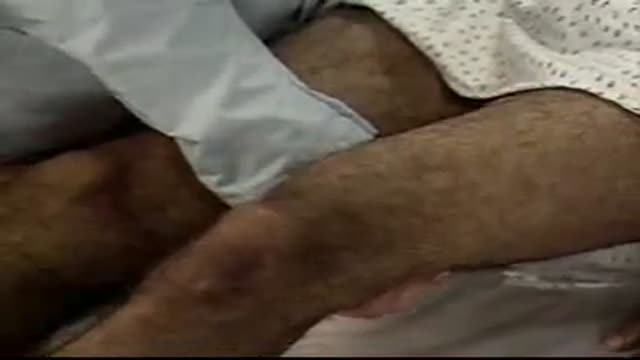
patient to take a seat on the bed. So the patient adequately positioned and able to be really exposed. We first of all test tone, again done at the knees just quite gently, lifting the knee and watching them. So carefully look for the sciculations. Okay. The muscle bulk. Yep, yep. Slide again. Yeah, sure. So now that we've got the patient adequately exposed, we can again perform our inspection, looking for muscle bulk, for sciculations, again any surgical scars that might be clues to underlying disease. And then very quickly moving on to an assessment of tone.
We just hands under the knees and which is very gently, give the leg a quick lift and we should watch the heel slide along the bedside. An abnormally or increased leg will, the whole leg will come off the bed as I do that. Moving clonus is the next part of the tone response and with the patient's leg externally rotated and slightly bent, just a very quick pull on the heel and there's no response. And that normal reflex will be multiple beating of the foot. So having assessed tone, we now move on to power.
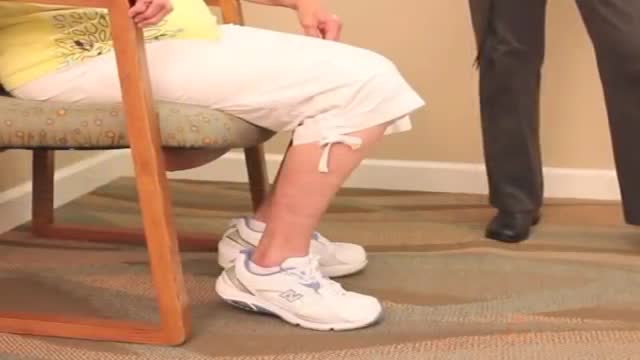
Again assessing all muscle groups. First thing we do is just ask the patient to lift their leg up in the air, hold it there against resistance. Good. The patient puts their leg down on the bed, sorry down on the bed and I'll just slide my hand under here and push down against my resistance assessing the extensor compartment of the leg. With the patient's knee bent, we can ask the patient to kick their leg out, assessing power of the knee and again pulling the heel towards the buttocks.
Good. Asking the patient to push out their hands against my knees, push out their knees against my hands and again pushing against my hands. Good. Assessing power at the ankle after the patient's bend their toes right back, hold them there nice and strong. Good. Push down like you're pushing on the accelerator. Good. And again assess left and compare to the right side as well. Moving on to reflexes, the most important thing is to have the patient nice and relaxed. Just one hand gently under the knee. It's important to make sure that the patient's not stiff and nice and loose.
Quickly palpate the patella tendon and good normal response. Assessing the ankle jerk. Alright, I'll open my shoulders. Can we just do that knee one again? Yep. Is that alright? Can you see if I do that? No, I'm just sliding your... Okay, so if I assess from here, is that better? Yeah, that would be great. So the first of the three reflexes in the lower limb is the knee jerk. And that's done by just gently placing one hand under the patient's knee, making sure the patient's nice and loose.
Feel the tendon and just a quick tap. You should be able to see contraction in the quadriceps muscle. The next reflex is the ankle jerk, which is done in the same position as the clonus. Stretch the tendon just with a little bit of pressure under the ball of the foot and hit the Achilles tendon. Good. Put normal. And then finally, the third reflex is the Babinski reflex or response. And that's done with the sharp end of the tendon hammer, just scraping up underneath the bottom of the foot and across the ball.
And the normal response is for the toes to curl over. And that normal response is for the toes to pull back and splay. Assessing coordination is a bit easier in the lower limb. It's just done by asking the patient to lift their right foot up to my hand. Good. Now place your heel onto your opposite knee. Good. And just like Claire's doing, nice and cooperatively, running the heel up and down the shin. And a nice smooth motion indicates normal coordination. Good. And finally, the final part is the sensation,
which again is assessed with a neuro-tip. And again, for the glove and stocking distribution, assess central and then peripherally. Sharp. Feels the same. So there's no peripheral neuropathy. And then in each of the dermatomes, sharp everywhere. Sharp. Good. Good. And it's important to do underneath the leg as well. And finally, just as in the upper limb, finish off with Vibration Sense, which again with 128 hertz tuning fork. Start with the bony prominence. Feels the vibrating. Good. Move to the ankle. Good. And finally, the tibial tuberosity. Good.
And if needed, one on the hip as well. And that completes a perfectly normal neurological exam for Claire.
Transcript auto-generated from the video’s audio for accessibility and study. Educational content only — not medical advice.
Related reading
Save videos for later
Create a free account to build your own watch-later list and playlists, and pick up where you left off on any device.
Medical Videos
Free medical and surgery videos for patients, students and professionals — trusted since 2007.
Founded by Dr. Mohamed Ibrahim, MD, PhD — physician-scientist.
Follow us on Facebook · Instagram
SORT BY-
Top Comments
-
Latest comments