- Physical Examination
- Surgical Examination
- Ophthalmology
- Clinical Skills
- Orthopedics
- Surgery Videos
- Laparoscopy
- Pediatrics
- Funny Videos
- Cardiothoracic Surgery
- Nursing Videos
- Plastic Surgery
- Otorhinolaryngology
- Histology and Histopathology
- Neurosurgery
- Dermatology
- Pediatric Surgery
- Urology
- Dentistry
- Oncology and Cancers
- Anatomy Videos
- Health and Fitness
- Radiology
- Anaesthesia
- Physical Therapy
- Pharmacology
- Interventional Radiology
- Cardiology
- Endocrinology
- Gynecology
- Emergency Medicine
- Psychiatry and Psychology
- Childbirth Videos
- General Medical Videos
- Nephrology
- Physiology
- Diet and Food Health
- Diabetes Mellitus
- Neurology
- Women Health
- Osteoporosis
- Gastroenterology
- Pulmonology
- Hematology
- Rheumatology
- Toxicology
- Nuclear Medicine
- Infectious Diseases
- Vascular Disease
- Reproductive Health
- Burns and Wound Healing
- Kidney Zone Podcast
- Other
Duodenum
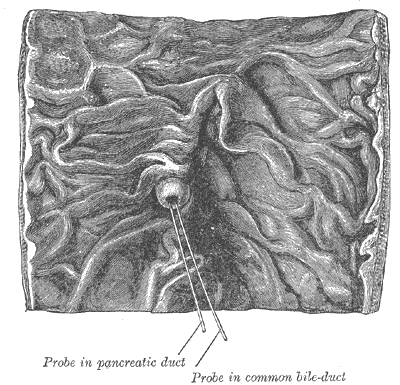
Gray's Anatomy (1918) plate, public domain
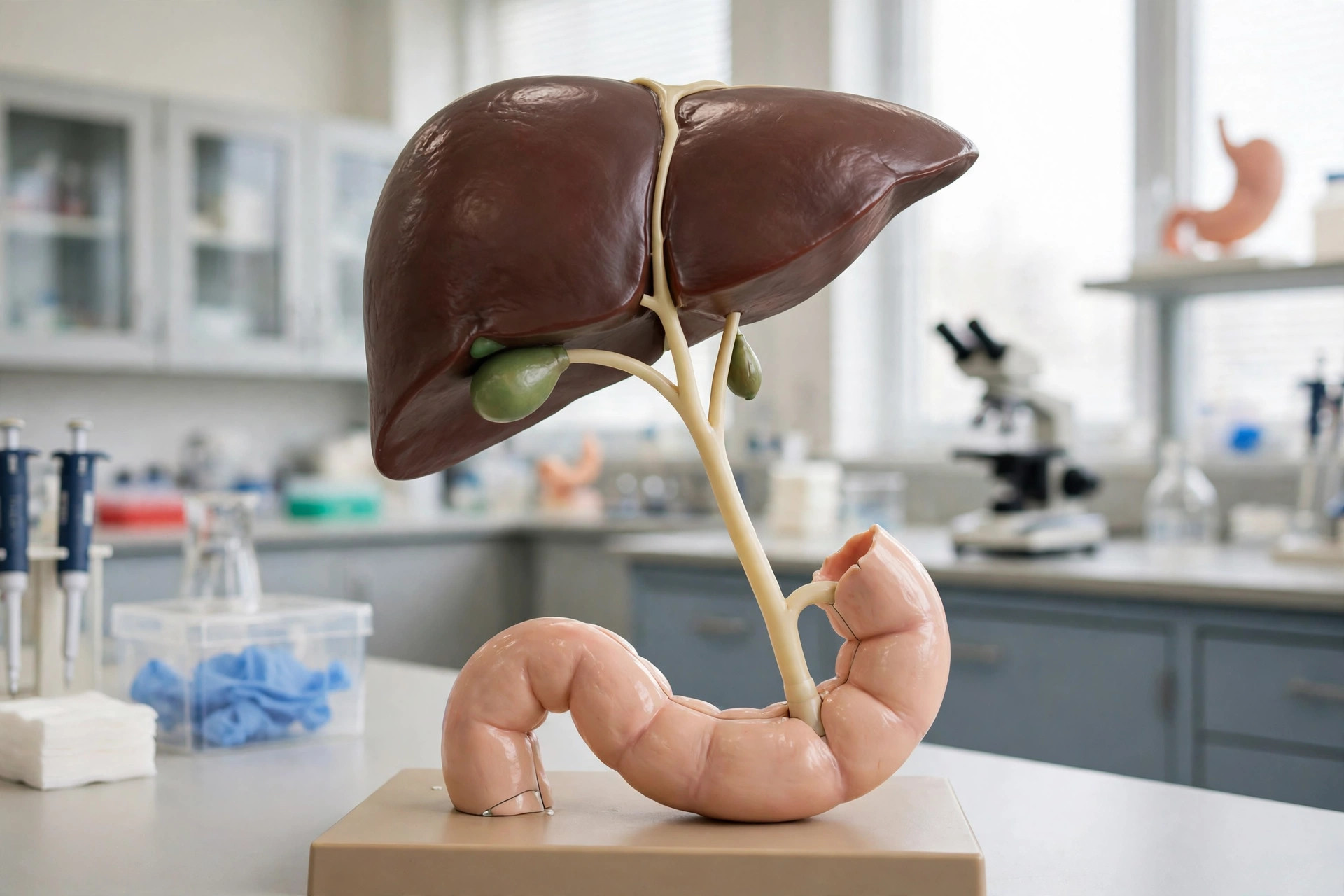
The duodenum is the short, C-shaped first part of the small intestine, wrapping around the head of the pancreas. It receives acidic chyme from the stomach plus bile and pancreatic juices through a shared opening, and its glands secrete bicarbonate-rich mucus that neutralises the acid. Most chemical digestion happens here as enzymes and bile mix with the food stream before absorption begins further down.
Key facts
- At about 25-30 cm, the duodenum is roughly the length of twelve finger-widths — the source of its name.
- It is largely fixed against the back wall of the abdomen, unlike the free-hanging rest of the small intestine.
- Bile and pancreatic juice enter through a small nipple-like opening (the ampulla) guarded by a sphincter muscle.
- Iron and calcium absorption happen mainly in the duodenum.
What can go wrong
Duodenal ulcers — usually linked to Helicobacter pylori or anti-inflammatory medicines — classically cause pain when the stomach is empty that eases with food. Because the duodenum hugs the pancreas and bile duct, diseases of those organs often involve it, and blockages here cause profuse vomiting. It is inspected during gastroscopy, and its opening is the target of the ERCP procedure.
Related procedures & tests
Related symptoms
Watch: related videos
Frequently asked questions
What happens in the duodenum?
Acidic food from the stomach is neutralised and mixed with bile and pancreatic enzymes so fats, proteins and carbohydrates can be broken down for absorption.
Why are duodenal ulcers painful at night?
With no food to buffer it, acid bathes the ulcer crater — classically causing pain that wakes people in the early hours and eases after eating.
Educational information only. This atlas explains normal anatomy and describes conditions in general terms; it is not medical advice and does not replace assessment by a qualified clinician. If you have symptoms that worry you, seek medical care.