- Physical Examination
- Surgical Examination
- Ophthalmology
- Clinical Skills
- Orthopedics
- Surgery Videos
- Laparoscopy
- Pediatrics
- Funny Videos
- Cardiothoracic Surgery
- Nursing Videos
- Plastic Surgery
- Otorhinolaryngology
- Histology and Histopathology
- Neurosurgery
- Dermatology
- Pediatric Surgery
- Urology
- Dentistry
- Oncology and Cancers
- Anatomy Videos
- Health and Fitness
- Radiology
- Anaesthesia
- Physical Therapy
- Pharmacology
- Interventional Radiology
- Cardiology
- Endocrinology
- Gynecology
- Emergency Medicine
- Psychiatry and Psychology
- Childbirth Videos
- General Medical Videos
- Nephrology
- Physiology
- Diet and Food Health
- Diabetes Mellitus
- Neurology
- Women Health
- Osteoporosis
- Gastroenterology
- Pulmonology
- Hematology
- Rheumatology
- Toxicology
- Nuclear Medicine
- Infectious Diseases
- Vascular Disease
- Reproductive Health
- Burns and Wound Healing
- Kidney Zone Podcast
- Other
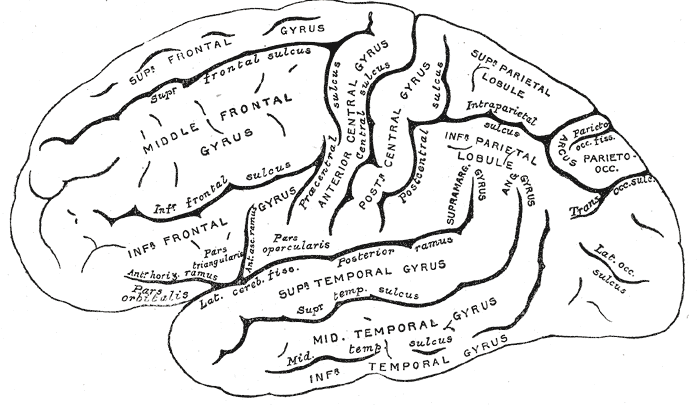
Cerebrum
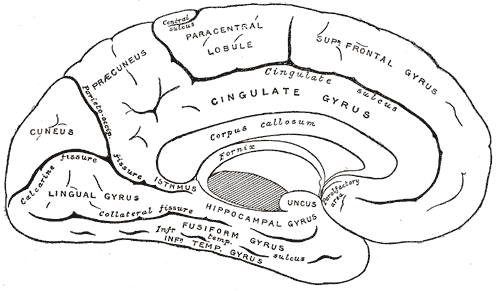
Gray's Anatomy (1918) plate, public domain
The cerebrum is the largest part of the brain, filling most of the skull. Its outer layer of grey matter — the cerebral cortex — is where conscious thought, perception, memory and voluntary movement are organised. Beneath it, white matter connects regions within and between the two hemispheres. A deep groove separates the left and right hemispheres, each of which largely serves the opposite side of the body.
Key facts
- The cerebrum makes up about four-fifths of the brain's weight.
- Its cortex is only a few millimetres thick but contains most of its neurons.
- Left and right sides specialise loosely — language is usually left-dominant.
- The corpus callosum, some 200 million fibres, joins the hemispheres.
- Deep grey-matter nuclei within it (such as the basal ganglia) refine movement.
What can go wrong
Damage to the cerebrum — from stroke, injury or tumour — produces effects related to the area involved: weakness, speech problems, visual loss or personality change. Diseases such as Alzheimer's affect the cortex progressively. Epilepsy arises from abnormal electrical activity in the cortex.
Related conditions
Related procedures & tests
Related symptoms
Frequently asked questions
What is the difference between grey and white matter?
Grey matter is rich in neuron cell bodies and does the computing — the cortex is grey matter. White matter is the wiring: bundles of insulated axons (myelin gives the white colour) carrying signals between regions.
Is it true we use only 10% of the brain?
No — that is a myth. Brain imaging shows virtually all of the cerebrum active over the course of a day, and damage to almost any area causes some deficit.
Educational information only. This atlas explains normal anatomy and describes conditions in general terms; it is not medical advice and does not replace assessment by a qualified clinician. If you have symptoms that worry you, seek medical care.