- Physical Examination
- Surgical Examination
- Ophthalmology
- Clinical Skills
- Orthopedics
- Surgery Videos
- Laparoscopy
- Pediatrics
- Funny Videos
- Cardiothoracic Surgery
- Nursing Videos
- Plastic Surgery
- Otorhinolaryngology
- Histology and Histopathology
- Neurosurgery
- Dermatology
- Pediatric Surgery
- Urology
- Dentistry
- Oncology and Cancers
- Anatomy Videos
- Health and Fitness
- Radiology
- Anaesthesia
- Physical Therapy
- Pharmacology
- Interventional Radiology
- Cardiology
- Endocrinology
- Gynecology
- Emergency Medicine
- Psychiatry and Psychology
- Childbirth Videos
- General Medical Videos
- Nephrology
- Physiology
- Diet and Food Health
- Diabetes Mellitus
- Neurology
- Women Health
- Osteoporosis
- Gastroenterology
- Pulmonology
- Hematology
- Rheumatology
- Toxicology
- Nuclear Medicine
- Infectious Diseases
- Vascular Disease
- Reproductive Health
- Burns and Wound Healing
- Kidney Zone Podcast
- Other
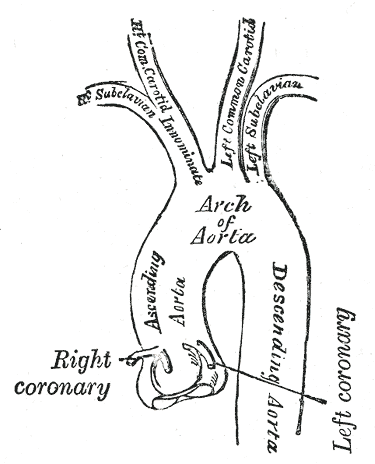
Coronary Arteries
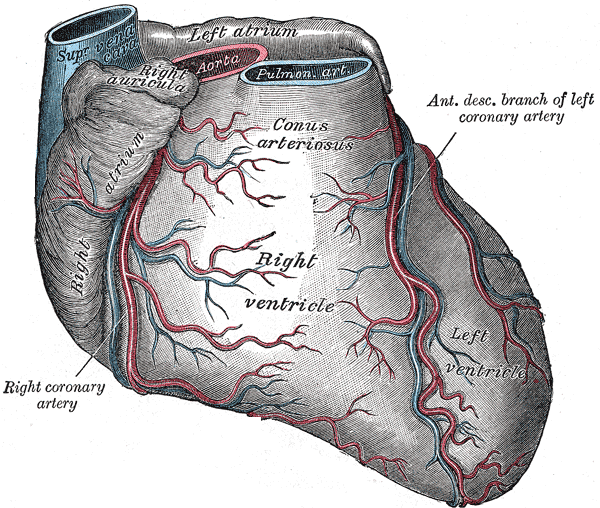
Gray's Anatomy (1918) plate, public domain
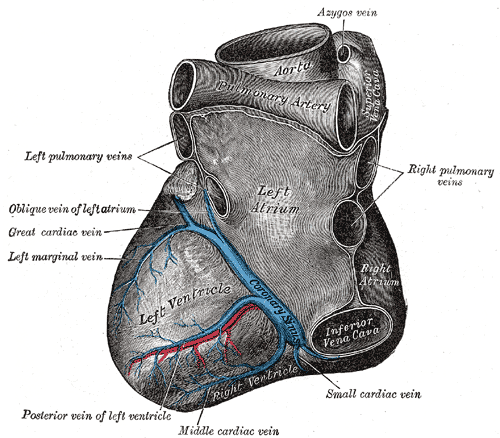
The coronary arteries are the heart's own blood supply — two arteries arising from the start of the aorta that branch over the heart's surface like a crown (corona). The left coronary artery divides into the anterior descending and circumflex branches; the right coronary artery supplies the right side and, in most people, the heart's pacemaker and conduction tissue.
Key facts
- The coronary arteries are the first branches of the aorta.
- They fill mainly during the heart's relaxation phase (diastole).
- The left anterior descending artery supplies the front wall and septum — the most critical territory.
- In about 90% of people the right coronary artery supplies the AV node ('right dominance').
- Unlike most tissues, the heart extracts most of the oxygen from its blood even at rest.
What can go wrong
Coronary artery disease — fatty narrowing (atherosclerosis) of these arteries — is the cause of angina and most heart attacks: when a narrowed segment's surface ruptures and a clot forms, the downstream heart muscle is starved of blood. Chest pain or pressure, especially on exertion, should always be assessed promptly.
Related conditions
Related procedures & tests
- Coronary angiogram (cardiac catheterisation)
- Angioplasty and stent (PCI)
- Coronary artery bypass graft (CABG)
- Troponin and BNP heart blood tests
Related symptoms
Watch: related videos
Frequently asked questions
Why do coronary arteries fill when the heart relaxes?
During contraction the heart muscle squeezes its own vessels shut; when it relaxes, pressure in the aorta drives blood into them. This is why a fast heart rate — which shortens relaxation — can provoke angina.
What does 'dominance' mean for the coronary arteries?
It describes which artery gives off the branch supplying the back of the heart's septum and the AV node — the right in most people. It matters for interpreting angiograms and planning treatment.
Educational information only. This atlas explains normal anatomy and describes conditions in general terms; it is not medical advice and does not replace assessment by a qualified clinician. If you have symptoms that worry you, seek medical care.