- Physical Examination
- Surgical Examination
- Ophthalmology
- Clinical Skills
- Orthopedics
- Surgery Videos
- Laparoscopy
- Pediatrics
- Funny Videos
- Cardiothoracic Surgery
- Nursing Videos
- Plastic Surgery
- Otorhinolaryngology
- Histology and Histopathology
- Neurosurgery
- Dermatology
- Pediatric Surgery
- Urology
- Dentistry
- Oncology and Cancers
- Anatomy Videos
- Health and Fitness
- Radiology
- Anaesthesia
- Physical Therapy
- Pharmacology
- Interventional Radiology
- Cardiology
- Endocrinology
- Gynecology
- Emergency Medicine
- Psychiatry and Psychology
- Childbirth Videos
- General Medical Videos
- Nephrology
- Physiology
- Diet and Food Health
- Diabetes Mellitus
- Neurology
- Women Health
- Osteoporosis
- Gastroenterology
- Pulmonology
- Hematology
- Rheumatology
- Toxicology
- Nuclear Medicine
- Infectious Diseases
- Vascular Disease
- Reproductive Health
- Burns and Wound Healing
- Kidney Zone Podcast
- Other
Aortic Arch
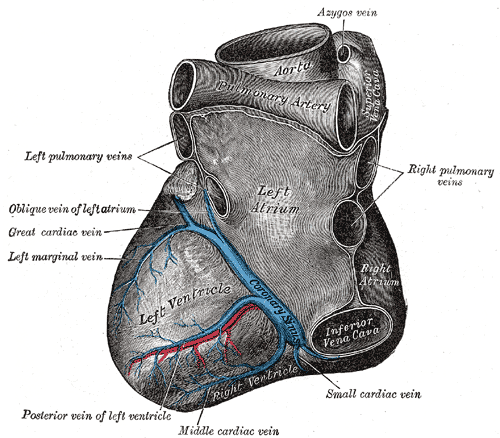
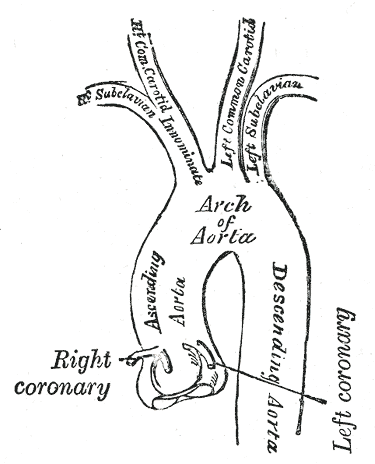
Gray's Anatomy (1918) plate, public domain
The aortic arch is the curved segment of the aorta that bends backward over the root of the left lung, connecting the ascending aorta (from the heart) to the descending aorta (down the back of the chest). From its top arise the three great branches to the head and arms: the brachiocephalic trunk (splitting to the right arm and right side of the head), the left common carotid and the left subclavian arteries. Pressure sensors in its wall help regulate blood pressure.
Key facts
- The recurrent laryngeal nerve loops under the arch — which is why arch swellings can cause hoarseness.
- The ductus arteriosus, a fetal short-cut vessel, joins the arch to the pulmonary artery before birth and normally closes after.
- Its curve converts the heart's pulsing output into smoother flow for the body.
- Baroreceptors in the arch wall send blood-pressure readings to the brainstem every beat.
What can go wrong
The arch is a classic site for aneurysm (a weakened bulge that can rupture or dissect), for narrowing in congenital conditions (coarctation, usually just beyond the arch), and for the origin of strokes when atheroma sheds debris. Symptoms may be absent until complications occur, so arch disease is often found on imaging; management depends on size, growth and symptoms and is a specialist decision.
Related conditions
Related procedures & tests
Related symptoms
Frequently asked questions
What is an aortic aneurysm?
A permanent widening of a weakened section of aorta. The larger it grows, the higher the risk of tearing (dissection) or rupture, so size and growth rate guide surveillance and repair decisions.
Why can an arch aneurysm cause a hoarse voice?
The nerve to the voice box (left recurrent laryngeal) hooks under the arch; stretching or pressure from an expanding aneurysm can weaken the vocal cord and hoarsen the voice.
Educational information only. This atlas explains normal anatomy and describes conditions in general terms; it is not medical advice and does not replace assessment by a qualified clinician. If you have symptoms that worry you, seek medical care.