- Physical Examination
- Surgical Examination
- Ophthalmology
- Clinical Skills
- Orthopedics
- Surgery Videos
- Laparoscopy
- Pediatrics
- Funny Videos
- Cardiothoracic Surgery
- Nursing Videos
- Plastic Surgery
- Otorhinolaryngology
- Histology and Histopathology
- Neurosurgery
- Dermatology
- Pediatric Surgery
- Urology
- Dentistry
- Oncology and Cancers
- Anatomy Videos
- Health and Fitness
- Radiology
- Anaesthesia
- Physical Therapy
- Pharmacology
- Interventional Radiology
- Cardiology
- Endocrinology
- Gynecology
- Emergency Medicine
- Psychiatry and Psychology
- Childbirth Videos
- General Medical Videos
- Nephrology
- Physiology
- Diet and Food Health
- Diabetes Mellitus
- Neurology
- Women Health
- Osteoporosis
- Gastroenterology
- Pulmonology
- Hematology
- Rheumatology
- Toxicology
- Nuclear Medicine
- Infectious Diseases
- Vascular Disease
- Reproductive Health
- Burns and Wound Healing
- Kidney Zone Podcast
- Other
Blood
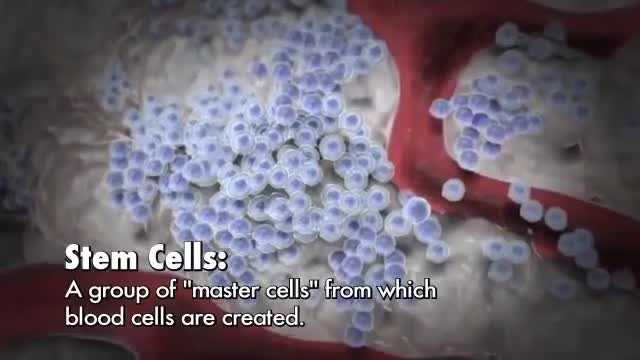
Video still from MedicalVideos.com: white blood cells
Blood is the body's transport fluid: about 5 litres in an adult, made of plasma (the liquid) and cells — red cells carrying oxygen, white cells defending against infection, and platelets sealing leaks. Plasma carries nutrients, hormones, proteins (including clotting factors and antibodies) and waste to and from every tissue. Blood also distributes heat and buffers the body's acidity, and its composition is a window into nearly every organ's health.
Key facts
- Red cells live about 120 days; the marrow replaces millions every second to keep pace.
- Plasma is about 90% water and 7% protein — albumin alone keeps fluid in the vessels and ferries many substances.
- Blood type (ABO and Rh) is set by markers on red cells, inherited like other traits.
- A blood sample's colour, clotting and cell counts give clinicians a fast survey of many systems at once.
What can go wrong
Blood disorders include anaemia (too few red cells or haemoglobin — from blood loss, nutrient deficiency, marrow or kidney disease), white cell cancers (leukaemia) and lymphomas, clotting failures (haemophilia, platelet problems) and over-clotting (thrombosis). Because the kidneys drive red cell production via erythropoietin, kidney failure characteristically causes anaemia. Blood tests — full blood count, clotting, antibodies — underpin diagnosis across medicine.
Related conditions
Related procedures & tests
Related symptoms
Watch: related videos
Frequently asked questions
What is the difference between plasma and serum?
Plasma is blood's liquid with its clotting factors intact; serum is what remains after the blood has clotted and the clotting factors have been consumed.
Why does kidney failure cause anaemia?
Healthy kidneys release erythropoietin, the hormone instructing marrow to make red cells; as kidney function falls, the signal weakens and red cell production drops.
Educational information only. This atlas explains normal anatomy and describes conditions in general terms; it is not medical advice and does not replace assessment by a qualified clinician. If you have symptoms that worry you, seek medical care.