- Physical Examination
- Surgical Examination
- Ophthalmology
- Clinical Skills
- Orthopedics
- Surgery Videos
- Laparoscopy
- Pediatrics
- Funny Videos
- Cardiothoracic Surgery
- Nursing Videos
- Plastic Surgery
- Otorhinolaryngology
- Histology and Histopathology
- Neurosurgery
- Dermatology
- Pediatric Surgery
- Urology
- Dentistry
- Oncology and Cancers
- Anatomy Videos
- Health and Fitness
- Radiology
- Anaesthesia
- Physical Therapy
- Pharmacology
- Interventional Radiology
- Cardiology
- Endocrinology
- Gynecology
- Emergency Medicine
- Psychiatry and Psychology
- Childbirth Videos
- General Medical Videos
- Nephrology
- Physiology
- Diet and Food Health
- Diabetes Mellitus
- Neurology
- Women Health
- Osteoporosis
- Gastroenterology
- Pulmonology
- Hematology
- Rheumatology
- Toxicology
- Nuclear Medicine
- Infectious Diseases
- Vascular Disease
- Reproductive Health
- Burns and Wound Healing
- Kidney Zone Podcast
- Other
Heart Valves
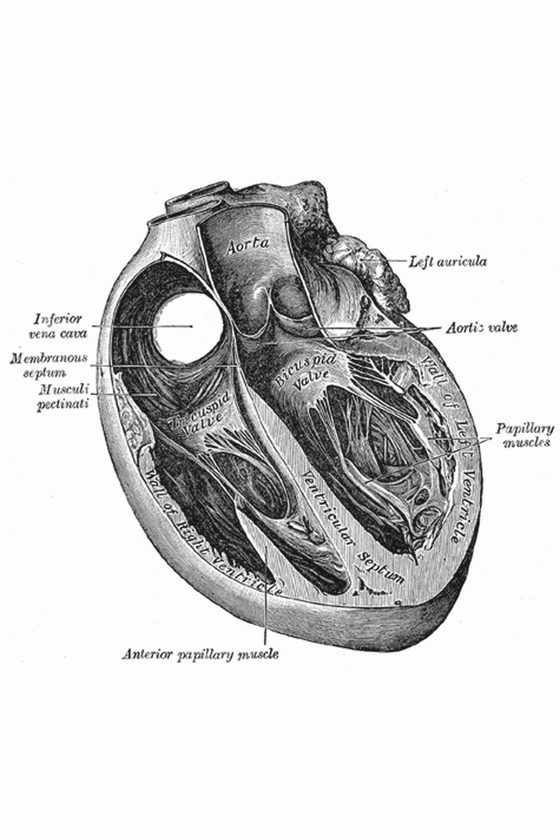
Gray's Anatomy (1918) plate, public domain
Four one-way valves keep blood moving in the right direction through the heart. The mitral and tricuspid valves guard the entrances to the ventricles and are anchored by cords to prevent them blowing backwards; the aortic and pulmonary valves, with three half-moon cusps each, guard the exits. Their snapping shut produces the familiar 'lub-dub' heart sounds.
Key facts
- There are four valves: mitral, tricuspid, aortic and pulmonary.
- The mitral is the only valve with two cusps instead of three.
- Valves have no muscle of their own — pressure differences open and close them.
- Fine cords (chordae tendineae) tether the mitral and tricuspid valves to the ventricle walls.
- Heart murmurs are the sounds of turbulent flow, often at a narrowed or leaking valve.
What can go wrong
Valves can narrow (stenosis) or leak (regurgitation) through wear and calcification with age, congenital differences (such as a two-cusp aortic valve), infection (endocarditis) or stretching of the heart. Significant valve disease makes the heart work harder and can cause breathlessness, chest pain, palpitations or fainting.
Related conditions
Related procedures & tests
- Echocardiogram (heart ultrasound)
- Heart valve replacement / repair surgery
- TAVI (transcatheter aortic valve implantation)
Related symptoms
Watch: related videos
Frequently asked questions
What makes the 'lub-dub' sound?
The closing of the valves. 'Lub' is the mitral and tricuspid valves shutting at the start of contraction; 'dub' is the aortic and pulmonary valves shutting as the ventricles relax.
Can a leaking valve be harmless?
Yes — tiny leaks are common and often found incidentally on scans in healthy hearts. It is the severity of the leak or narrowing, and its effect on the heart's size and function, that decides whether treatment is needed.
Educational information only. This atlas explains normal anatomy and describes conditions in general terms; it is not medical advice and does not replace assessment by a qualified clinician. If you have symptoms that worry you, seek medical care.