- Physical Examination
- Surgical Examination
- Ophthalmology
- Clinical Skills
- Orthopedics
- Surgery Videos
- Laparoscopy
- Pediatrics
- Funny Videos
- Cardiothoracic Surgery
- Nursing Videos
- Plastic Surgery
- Otorhinolaryngology
- Histology and Histopathology
- Neurosurgery
- Dermatology
- Pediatric Surgery
- Urology
- Dentistry
- Oncology and Cancers
- Anatomy Videos
- Health and Fitness
- Radiology
- Anaesthesia
- Physical Therapy
- Pharmacology
- Interventional Radiology
- Cardiology
- Endocrinology
- Gynecology
- Emergency Medicine
- Psychiatry and Psychology
- Childbirth Videos
- General Medical Videos
- Nephrology
- Physiology
- Diet and Food Health
- Diabetes Mellitus
- Neurology
- Women Health
- Osteoporosis
- Gastroenterology
- Pulmonology
- Hematology
- Rheumatology
- Toxicology
- Nuclear Medicine
- Infectious Diseases
- Vascular Disease
- Reproductive Health
- Burns and Wound Healing
- Kidney Zone Podcast
- Other
Hip Bone
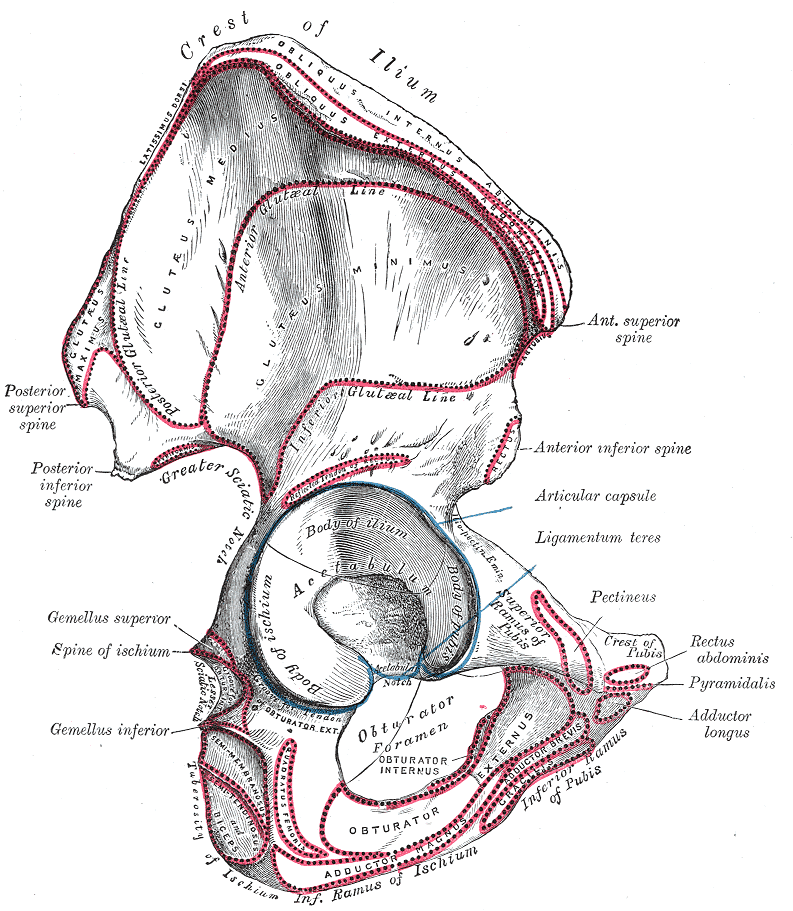
Gray's Anatomy (1918) plate, public domain
The hip bone (os coxae) is the large, irregular bone forming each side of the pelvis. It begins as three bones — ilium, ischium and pubis — that fuse at the hip socket (acetabulum) by the late teens. Its cup-shaped socket meets the femur to form the hip joint; its broad upper blade gives attachment to the abdominal and gluteal muscles.
Key facts
- Each hip bone is a fusion of the ilium, ischium and pubis.
- The acetabulum — its socket — faces sideways and slightly forwards and down.
- The three parts meet in a Y-shaped cartilage in childhood.
- Its large hole (obturator foramen) is closed by a membrane, not bone.
- The hip bones meet the sacrum behind and each other in front.
What can go wrong
The hip bone can fracture through its socket in falls and collisions (acetabular fractures), which threaten the hip joint's future. In older adults, the pubic rami at the front are common fragility-fracture sites after simple falls. The broad ilium is also a site used for bone-graft harvesting and bone-marrow sampling.
Related procedures & tests
Related symptoms
Related muscles
Frequently asked questions
When do the hip bone's three parts fuse?
The ilium, ischium and pubis meet in the socket as a Y of cartilage through childhood and fuse into a single bone between about 15 and 25 years of age.
Why is there a big hole in the hip bone?
The obturator foramen lightens the bone while its membrane still provides muscle attachment; only a small gap remains for the nerve and vessels to the inner thigh.
Educational information only. This atlas explains normal anatomy and describes conditions in general terms; it is not medical advice and does not replace assessment by a qualified clinician. If you have symptoms that worry you, seek medical care.