- Physical Examination
- Surgical Examination
- Ophthalmology
- Clinical Skills
- Orthopedics
- Surgery Videos
- Laparoscopy
- Pediatrics
- Funny Videos
- Cardiothoracic Surgery
- Nursing Videos
- Plastic Surgery
- Otorhinolaryngology
- Histology and Histopathology
- Neurosurgery
- Dermatology
- Pediatric Surgery
- Urology
- Dentistry
- Oncology and Cancers
- Anatomy Videos
- Health and Fitness
- Radiology
- Anaesthesia
- Physical Therapy
- Pharmacology
- Interventional Radiology
- Cardiology
- Endocrinology
- Gynecology
- Emergency Medicine
- Psychiatry and Psychology
- Childbirth Videos
- General Medical Videos
- Nephrology
- Physiology
- Diet and Food Health
- Diabetes Mellitus
- Neurology
- Women Health
- Osteoporosis
- Gastroenterology
- Pulmonology
- Hematology
- Rheumatology
- Toxicology
- Nuclear Medicine
- Infectious Diseases
- Vascular Disease
- Reproductive Health
- Burns and Wound Healing
- Kidney Zone Podcast
- Other
Humerus
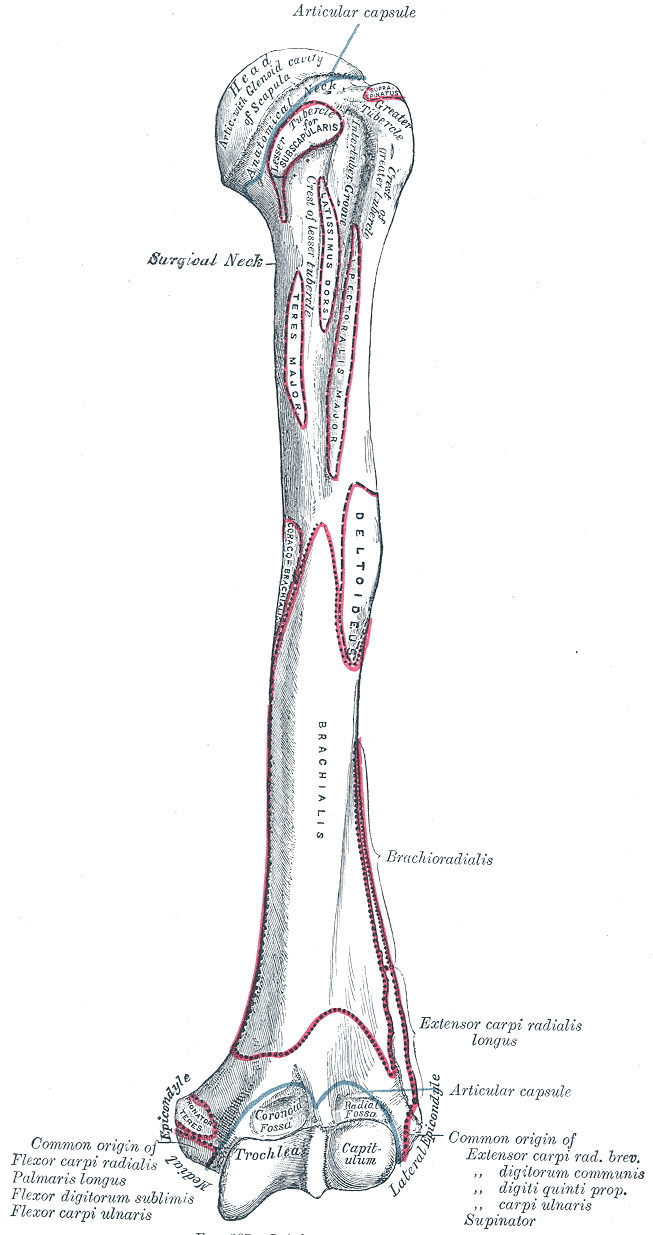
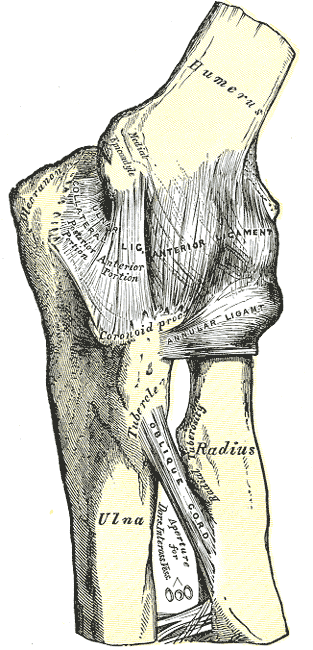
Gray's Anatomy (1918) plate, public domain
The humerus is the long bone of the upper arm, running from shoulder to elbow. Its smooth ball-shaped head forms the shoulder joint with the scapula; its lower end carries a spool (trochlea) and a ball (capitulum) that hinge with the ulna and radius at the elbow. The radial nerve winds around its shaft in a spiral groove.
Key facts
- The humerus is the longest bone of the upper limb.
- Its head points backwards and inwards into the shallow shoulder socket.
- The biceps and triceps — the arm's main muscles — attach along it.
- The bump you knock as the 'funny bone' is part of the humerus at the elbow (its medial epicondyle).
- The radial nerve grooves its shaft, which is why mid-shaft fractures can affect wrist movement.
What can go wrong
The humerus breaks at three classic levels: near the shoulder in older adults after falls, along the shaft (where the radial nerve is at risk, causing temporary wrist drop), and above the elbow in children, a fracture treated carefully because of nearby vessels. Most humeral fractures heal without surgery, in a brace or sling.
Related procedures & tests
Related symptoms
Related muscles
Watch: related videos
Frequently asked questions
Is the 'funny bone' a bone?
No — the funny-bone tingle is the ulnar nerve being bumped as it passes behind the medial epicondyle of the humerus at the elbow. The sensation is nerve, not bone.
Why do shoulder-end humerus fractures happen in older people?
The bone just below the head (the surgical neck) thins with age and osteoporosis, so a fall onto the arm can snap it — it is one of the classic fragility fractures.
Educational information only. This atlas explains normal anatomy and describes conditions in general terms; it is not medical advice and does not replace assessment by a qualified clinician. If you have symptoms that worry you, seek medical care.