- Physical Examination
- Surgical Examination
- Ophthalmology
- Clinical Skills
- Orthopedics
- Surgery Videos
- Laparoscopy
- Pediatrics
- Funny Videos
- Cardiothoracic Surgery
- Nursing Videos
- Plastic Surgery
- Otorhinolaryngology
- Histology and Histopathology
- Neurosurgery
- Dermatology
- Pediatric Surgery
- Urology
- Dentistry
- Oncology and Cancers
- Anatomy Videos
- Health and Fitness
- Radiology
- Anaesthesia
- Physical Therapy
- Pharmacology
- Interventional Radiology
- Cardiology
- Endocrinology
- Gynecology
- Emergency Medicine
- Psychiatry and Psychology
- Childbirth Videos
- General Medical Videos
- Nephrology
- Physiology
- Diet and Food Health
- Diabetes Mellitus
- Neurology
- Women Health
- Osteoporosis
- Gastroenterology
- Pulmonology
- Hematology
- Rheumatology
- Toxicology
- Nuclear Medicine
- Infectious Diseases
- Vascular Disease
- Reproductive Health
- Burns and Wound Healing
- Kidney Zone Podcast
- Other
Jugular Veins
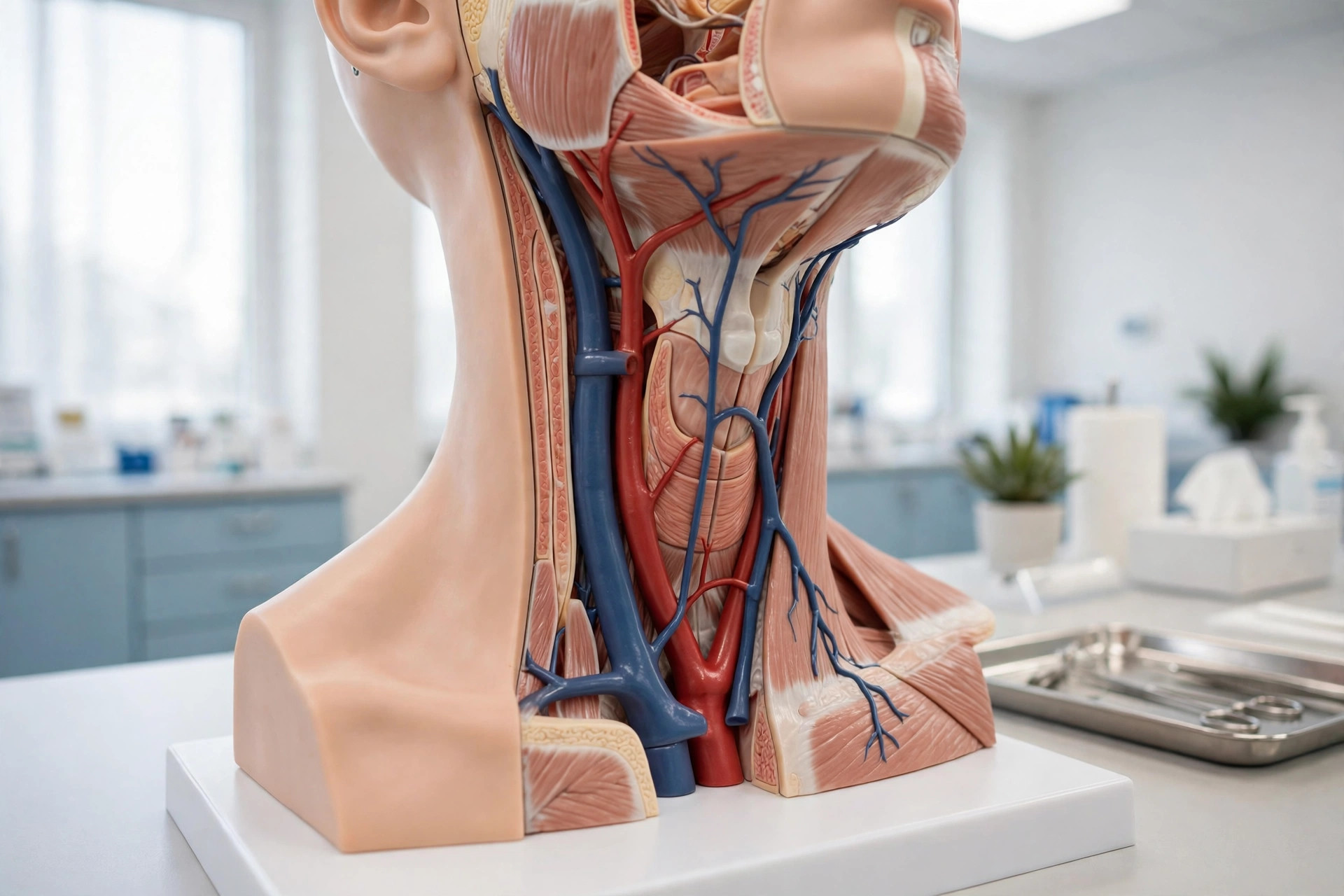
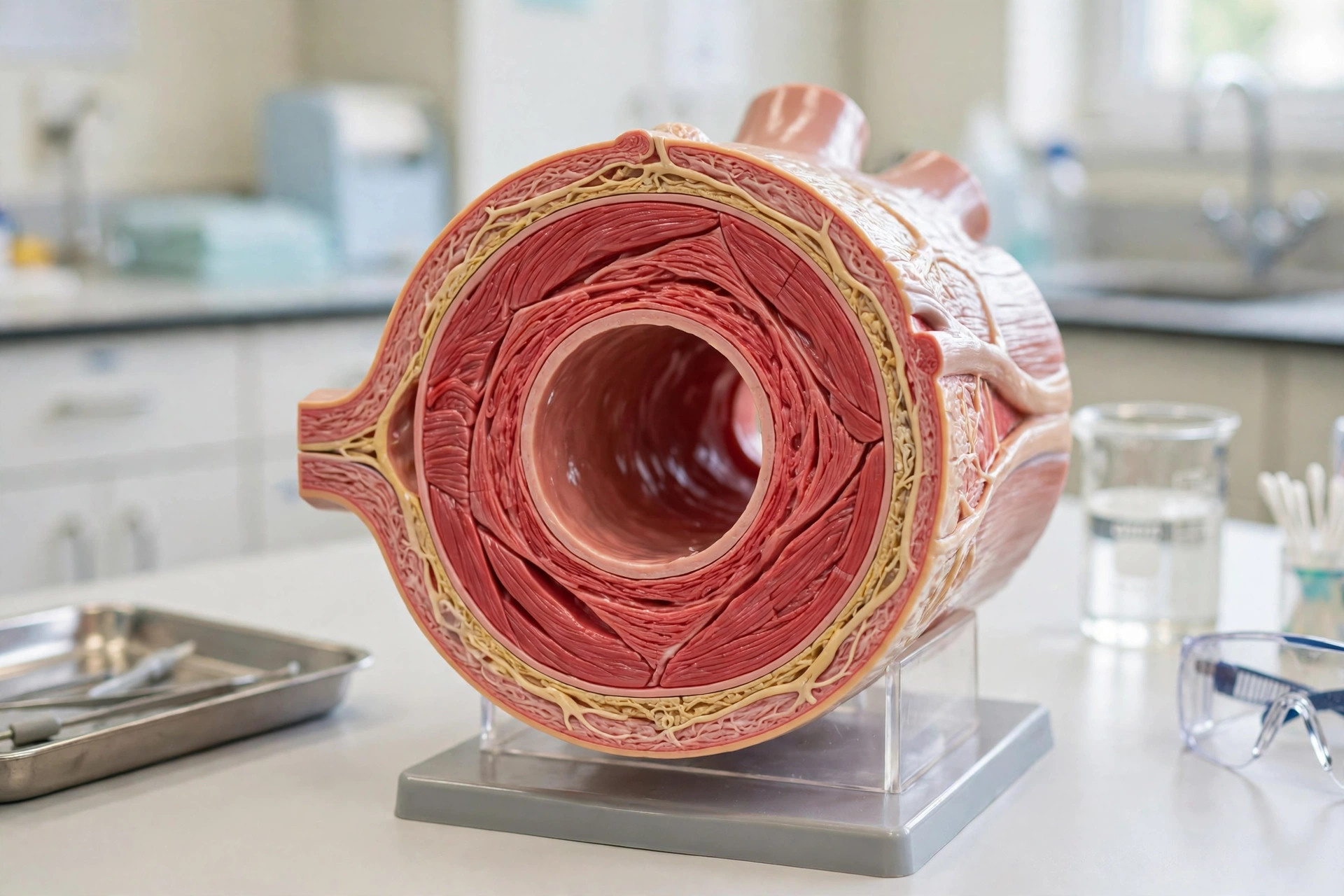
AI-generated anatomical illustration
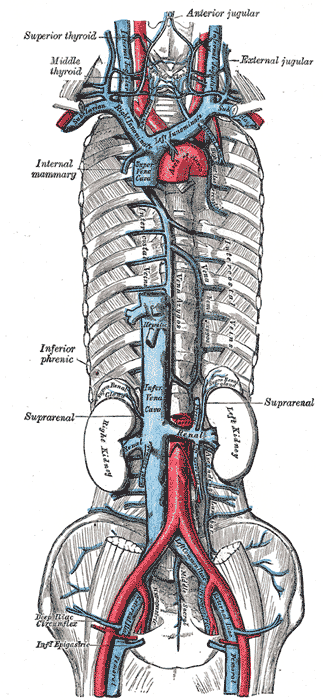
The jugular veins drain the head and neck. The internal jugular — the main channel — runs from the skull base down beside the carotid artery, collecting blood from the brain, face and neck, and joins the subclavian vein behind the collarbone to form the brachiocephalic vein. The external jugular crosses the surface of the neck muscle and is often visible. Because the internal jugular connects directly to the right atrium, its filling level mirrors right-heart pressures — the basis of the JVP examination.
Key facts
- The internal jugular is the largest vein of the head and neck and has a valve just before its termination.
- Its pulsation is a flickering double wave, quite different from the single strong carotid pulse beside it.
- Clinicians use the vein as a built-in pressure gauge (the jugular venous pressure) for the right side of the heart.
- Central lines are often placed in the internal jugular because of its size and straight path to the heart.
What can go wrong
A raised jugular venous pressure signals right-sided heart strain — from heart failure, fluid overload, or obstruction of the superior vena cava — and is a key bedside finding. The veins can clot (thrombosis), especially around central lines or in neck infections, and they are vulnerable in neck trauma and surgery. Distended neck veins with a low blood pressure can indicate tamponade or tension pneumothorax in emergencies.
Related conditions
Related procedures & tests
Related symptoms
Related muscles
Frequently asked questions
What does the JVP tell a clinician?
The height and waveform of the internal jugular filling estimate pressure in the right atrium — high in fluid overload and right heart failure, low in dehydration.
Why is the internal jugular used for central lines?
It offers a wide, relatively straight route to the superior vena cava and the heart, with ultrasound guidance making insertion safer and more reliable.
Educational information only. This atlas explains normal anatomy and describes conditions in general terms; it is not medical advice and does not replace assessment by a qualified clinician. If you have symptoms that worry you, seek medical care.