- Physical Examination
- Surgical Examination
- Ophthalmology
- Clinical Skills
- Orthopedics
- Surgery Videos
- Laparoscopy
- Pediatrics
- Funny Videos
- Cardiothoracic Surgery
- Nursing Videos
- Plastic Surgery
- Otorhinolaryngology
- Histology and Histopathology
- Neurosurgery
- Dermatology
- Pediatric Surgery
- Urology
- Dentistry
- Oncology and Cancers
- Anatomy Videos
- Health and Fitness
- Radiology
- Anaesthesia
- Physical Therapy
- Pharmacology
- Interventional Radiology
- Cardiology
- Endocrinology
- Gynecology
- Emergency Medicine
- Psychiatry and Psychology
- Childbirth Videos
- General Medical Videos
- Nephrology
- Physiology
- Diet and Food Health
- Diabetes Mellitus
- Neurology
- Women Health
- Osteoporosis
- Gastroenterology
- Pulmonology
- Hematology
- Rheumatology
- Toxicology
- Nuclear Medicine
- Infectious Diseases
- Vascular Disease
- Reproductive Health
- Burns and Wound Healing
- Kidney Zone Podcast
- Other
Lens
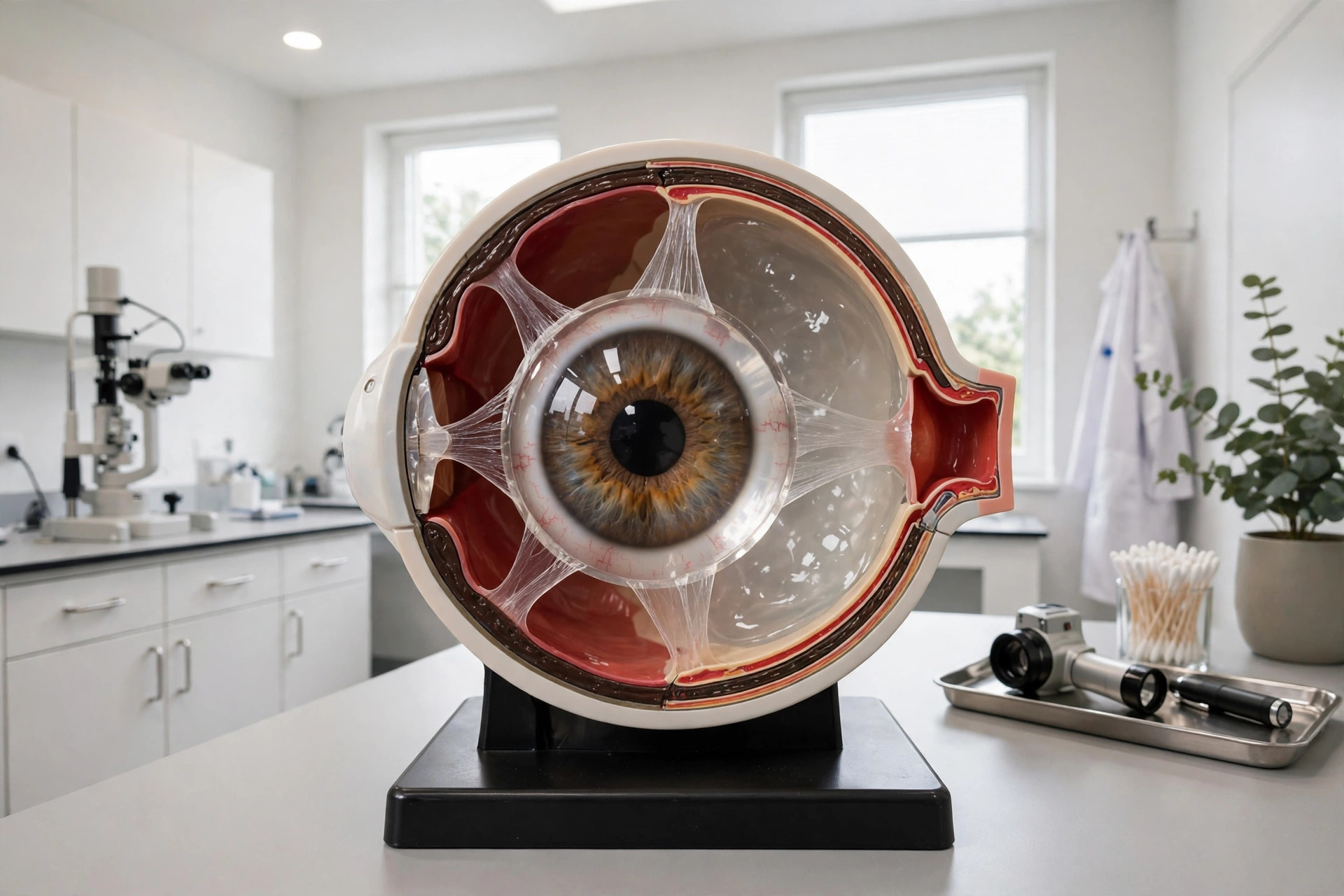
AI-generated anatomical illustration
The lens is the eye's fine-focusing element: a transparent, biconvex disc about 9-10 mm across, suspended behind the iris by zonular fibres attached to the ciliary muscle. By changing shape — rounder for near vision, flatter for distance — it adjusts focus (accommodation). It is made of precisely ordered protein fibres (crystallins) with no blood supply, and it grows throughout life by adding new layers like an onion.
Key facts
- Accommodation weakens with age as the lens stiffens — the reason reading glasses become necessary in the forties (presbyopia).
- The lens filters some ultraviolet light, protecting the retina.
- Its proteins are among the longest-lived in the body, laid down before birth in its core.
- It is held under tension: the zonules pull it flat unless the ciliary muscle contracts to release them for near focus.
What can go wrong
The lens's great disorder is cataract — progressive clouding as its proteins clump with age, diabetes, steroids, smoking or ultraviolet exposure — causing glare, faded colours and blurred vision. Cataract surgery replaces the cloudy lens with a clear artificial implant and is among the commonest and most successful operations. Rarely the lens dislocates (in Marfan syndrome or after injury), and in children congenital cataracts must be treated early to let vision develop.
Related conditions
Related procedures & tests
Related symptoms
Frequently asked questions
Why can't the lens heal or be repaired?
It has no blood vessels and its cells lose their nuclei as they mature into fibres, so damage accumulates over decades — surgery replaces rather than repairs it.
What is presbyopia?
The age-related loss of near focusing as the lens stiffens and the ciliary muscle's release of zonular tension changes its shape less effectively; it typically begins in the mid-forties.
Educational information only. This atlas explains normal anatomy and describes conditions in general terms; it is not medical advice and does not replace assessment by a qualified clinician. If you have symptoms that worry you, seek medical care.