- Physical Examination
- Surgical Examination
- Ophthalmology
- Clinical Skills
- Orthopedics
- Surgery Videos
- Laparoscopy
- Pediatrics
- Funny Videos
- Cardiothoracic Surgery
- Nursing Videos
- Plastic Surgery
- Otorhinolaryngology
- Histology and Histopathology
- Neurosurgery
- Dermatology
- Pediatric Surgery
- Urology
- Dentistry
- Oncology and Cancers
- Anatomy Videos
- Health and Fitness
- Radiology
- Anaesthesia
- Physical Therapy
- Pharmacology
- Interventional Radiology
- Cardiology
- Endocrinology
- Gynecology
- Emergency Medicine
- Psychiatry and Psychology
- Childbirth Videos
- General Medical Videos
- Nephrology
- Physiology
- Diet and Food Health
- Diabetes Mellitus
- Neurology
- Women Health
- Osteoporosis
- Gastroenterology
- Pulmonology
- Hematology
- Rheumatology
- Toxicology
- Nuclear Medicine
- Infectious Diseases
- Vascular Disease
- Reproductive Health
- Burns and Wound Healing
- Kidney Zone Podcast
- Other
Median Nerve
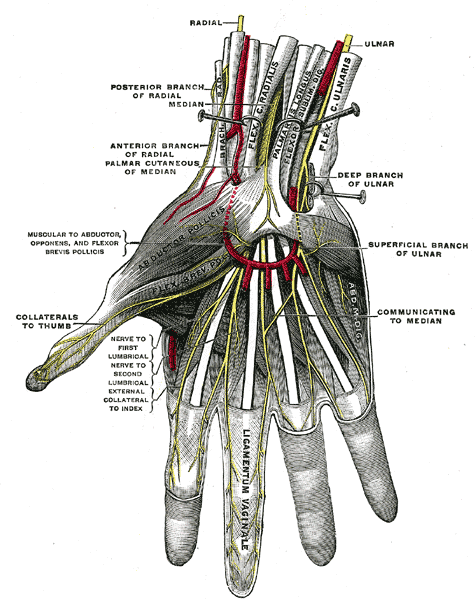
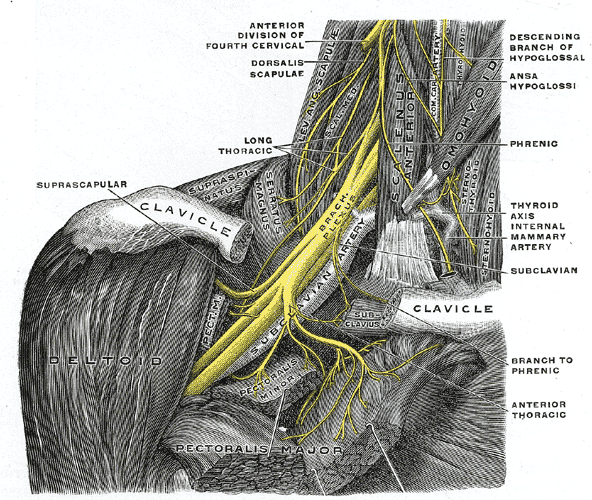
Gray's Anatomy (1918) plate, public domain
The median nerve, formed from the brachial plexus, runs down the middle of the arm and forearm, supplying most of the forearm's flexor muscles, then enters the hand through the carpal tunnel at the wrist. In the hand it powers the thumb's precision muscles and provides sensation to the palm side of the thumb, index, middle and half of the ring finger — the grip-and-feel nerve of the hand's working surface.
Key facts
- Its hand territory is the precision grip zone: thumb opposition comes from its thenar branch.
- The nerve has no branches above the elbow — injuries there affect the whole forearm flexor mass.
- Position of vulnerability: it lies just under the skin at the wrist, under the flexor retinaculum in the carpal tunnel.
- Its motor loss gives the classic 'hand of benediction' when trying to make a fist.
What can go wrong
The nerve's famous problem is carpal tunnel syndrome: compression in the wrist's tunnel causing night-time tingling and numbness in its fingers, clumsiness and sometimes thumb weakness — common in pregnancy, diabetes, thyroid disease and repetitive hand use. Higher injuries (at the elbow) weaken forearm rotation and finger flexion. Nerve conduction studies measure its speed across the wrist to confirm compression.
Related conditions
Related procedures & tests
Related symptoms
Related muscles
Frequently asked questions
Why does carpal tunnel syndrome wake people at night?
Sleeping with bent wrists raises pressure in the tunnel, and fluid redistributes when lying flat; the compressed nerve protests with tingling that shaking the hand relieves — a classic history.
What do nerve conduction studies show?
They time the nerve's signals across the wrist: slowing localised to the carpal tunnel segment confirms median nerve compression and grades its severity.
Educational information only. This atlas explains normal anatomy and describes conditions in general terms; it is not medical advice and does not replace assessment by a qualified clinician. If you have symptoms that worry you, seek medical care.