- Physical Examination
- Surgical Examination
- Ophthalmology
- Clinical Skills
- Orthopedics
- Surgery Videos
- Laparoscopy
- Pediatrics
- Funny Videos
- Cardiothoracic Surgery
- Nursing Videos
- Plastic Surgery
- Otorhinolaryngology
- Histology and Histopathology
- Neurosurgery
- Dermatology
- Pediatric Surgery
- Urology
- Dentistry
- Oncology and Cancers
- Anatomy Videos
- Health and Fitness
- Radiology
- Anaesthesia
- Physical Therapy
- Pharmacology
- Interventional Radiology
- Cardiology
- Endocrinology
- Gynecology
- Emergency Medicine
- Psychiatry and Psychology
- Childbirth Videos
- General Medical Videos
- Nephrology
- Physiology
- Diet and Food Health
- Diabetes Mellitus
- Neurology
- Women Health
- Osteoporosis
- Gastroenterology
- Pulmonology
- Hematology
- Rheumatology
- Toxicology
- Nuclear Medicine
- Infectious Diseases
- Vascular Disease
- Reproductive Health
- Burns and Wound Healing
- Kidney Zone Podcast
- Other
Nephron
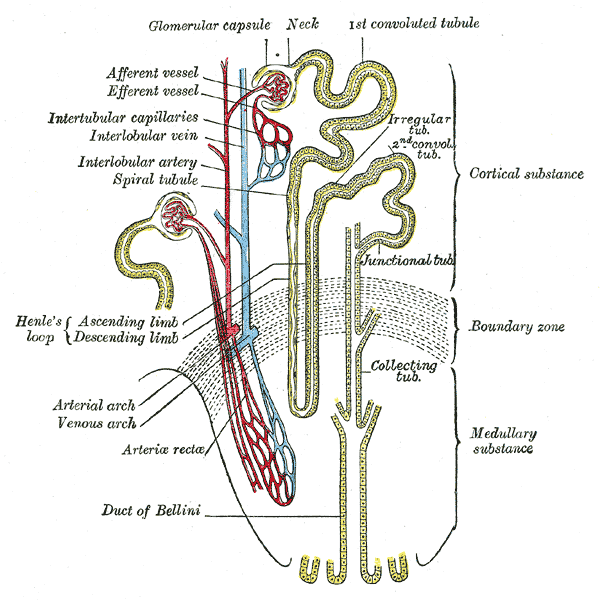
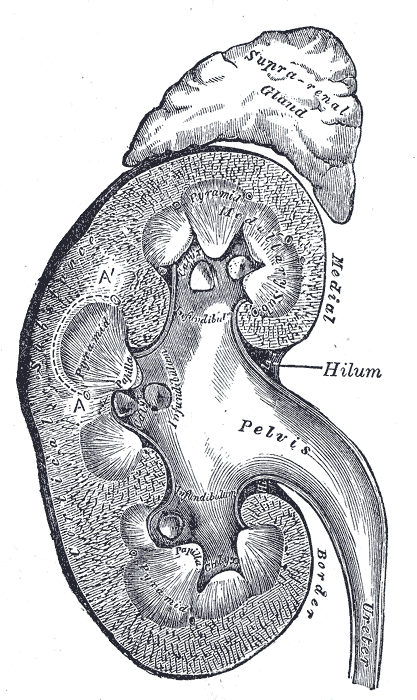
Gray's Anatomy (1918) plate, public domain
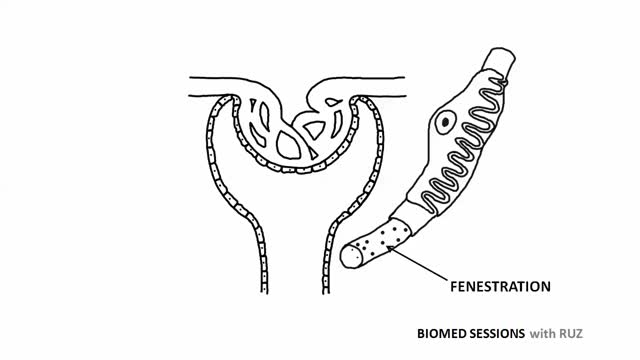
The nephron is the kidney's working unit: a glomerulus plus a long tubule that loops through the cortex and medulla. As filtrate travels the tubule, cells reclaim water, glucose, salts and bicarbonate in carefully regulated amounts, and secrete additional waste into the urine. The loop of Henle concentrates the urine; hormones fine-tune the final adjustments so the body's fluid and chemistry stay balanced.
Key facts
- Each nephron's tubule is about 3 cm long — a million of them end-to-end would stretch for tens of kilometres.
- By the end of the tubule, about 99% of the filtered water has been reclaimed.
- The nephron cannot be regenerated once lost; surviving nephrons enlarge to compensate.
- Its segments are the targets of most diuretic (water tablet) classes, each acting at a different station.
What can go wrong
Nephrons are lost gradually with age and rapidly in some diseases; as numbers fall the remainder overwork, which can accelerate further damage — the basis of progressive chronic kidney disease. Acute injury from low blood flow, sepsis or toxins can stun the tubules (acute tubular necrosis), usually with recovery if the cause is corrected. Rare inherited tubule disorders affect salt, potassium or acid handling.
Related conditions
Related procedures & tests
Related symptoms
Watch: related videos
Frequently asked questions
How many nephrons do you have?
Around a million per kidney at birth, with wide natural variation; the number declines with age and cannot increase.
What does the loop of Henle do?
It builds the medulla's salt gradient that lets the kidney concentrate urine, conserving water when the body is dry.
Educational information only. This atlas explains normal anatomy and describes conditions in general terms; it is not medical advice and does not replace assessment by a qualified clinician. If you have symptoms that worry you, seek medical care.