- Physical Examination
- Surgical Examination
- Ophthalmology
- Clinical Skills
- Orthopedics
- Surgery Videos
- Laparoscopy
- Pediatrics
- Funny Videos
- Cardiothoracic Surgery
- Nursing Videos
- Plastic Surgery
- Otorhinolaryngology
- Histology and Histopathology
- Neurosurgery
- Dermatology
- Pediatric Surgery
- Urology
- Dentistry
- Oncology and Cancers
- Anatomy Videos
- Health and Fitness
- Radiology
- Anaesthesia
- Physical Therapy
- Pharmacology
- Interventional Radiology
- Cardiology
- Endocrinology
- Gynecology
- Emergency Medicine
- Psychiatry and Psychology
- Childbirth Videos
- General Medical Videos
- Nephrology
- Physiology
- Diet and Food Health
- Diabetes Mellitus
- Neurology
- Women Health
- Osteoporosis
- Gastroenterology
- Pulmonology
- Hematology
- Rheumatology
- Toxicology
- Nuclear Medicine
- Infectious Diseases
- Vascular Disease
- Reproductive Health
- Burns and Wound Healing
- Kidney Zone Podcast
- Other
Renal Pelvis
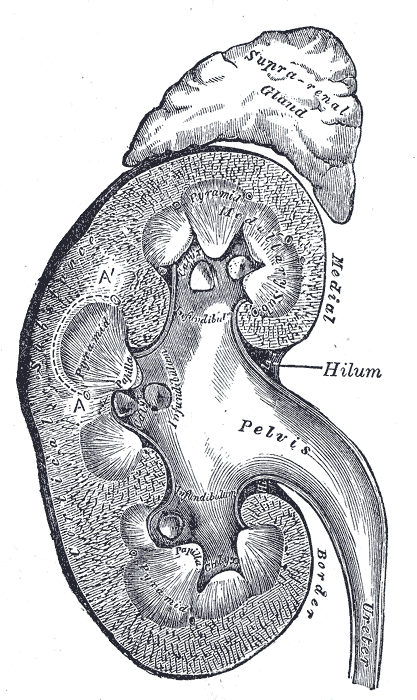
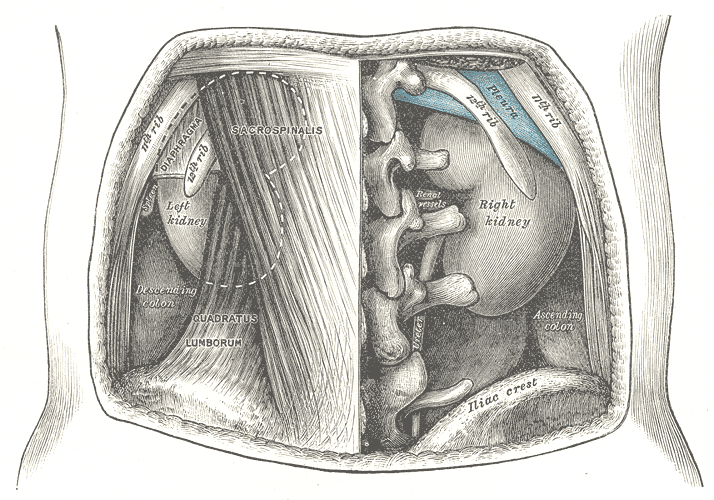
Gray's Anatomy (1918) plate, public domain
The renal pelvis is the funnel-shaped chamber at the centre of the kidney that collects urine from the drainage cups (calyces) around each medullary pyramid and channels it into the ureter. Its wall contains pacemaker-like smooth muscle that initiates the peristaltic waves sweeping urine down to the bladder. It sits within the kidney's sinus, surrounded by fat and the renal vessels.
Key facts
- Urine flow through the pelvis is not passive — rhythmic muscle waves begin here about every few seconds.
- The pelvis narrows at the pelviureteric junction, a common site for congenital narrowing or stone impaction.
- On ultrasound, a fluid-filled pelvis is the visible sign of obstructed drainage (hydronephrosis).
- Its lining is the same waterproof urothelium that lines the whole urinary tract.
What can go wrong
Blockage at the junction between pelvis and ureter — from a stone, a congenital narrowing or external pressure — dilates the pelvis and, if prolonged, damages the kidney (hydronephrosis). The pelvis is also a site where urinary cancers occasionally arise from its lining. Ultrasound readily detects a dilated renal pelvis, including before birth on pregnancy scans.
Related conditions
Related procedures & tests
Related symptoms
Frequently asked questions
What is hydronephrosis?
Swelling of the kidney's drainage system — pelvis and calyces — because urine cannot drain freely past a blockage; finding and relieving the cause protects kidney function.
Can a dilated renal pelvis be normal in pregnancy?
Mild dilation, usually on the right, is common in pregnancy from hormonal relaxation and pressure of the growing uterus, and is distinguished from obstruction by the clinical picture.
Educational information only. This atlas explains normal anatomy and describes conditions in general terms; it is not medical advice and does not replace assessment by a qualified clinician. If you have symptoms that worry you, seek medical care.