- Physical Examination
- Surgical Examination
- Ophthalmology
- Clinical Skills
- Orthopedics
- Surgery Videos
- Laparoscopy
- Pediatrics
- Funny Videos
- Cardiothoracic Surgery
- Nursing Videos
- Plastic Surgery
- Otorhinolaryngology
- Histology and Histopathology
- Neurosurgery
- Dermatology
- Pediatric Surgery
- Urology
- Dentistry
- Oncology and Cancers
- Anatomy Videos
- Health and Fitness
- Radiology
- Anaesthesia
- Physical Therapy
- Pharmacology
- Interventional Radiology
- Cardiology
- Endocrinology
- Gynecology
- Emergency Medicine
- Psychiatry and Psychology
- Childbirth Videos
- General Medical Videos
- Nephrology
- Physiology
- Diet and Food Health
- Diabetes Mellitus
- Neurology
- Women Health
- Osteoporosis
- Gastroenterology
- Pulmonology
- Hematology
- Rheumatology
- Toxicology
- Nuclear Medicine
- Infectious Diseases
- Vascular Disease
- Reproductive Health
- Burns and Wound Healing
- Kidney Zone Podcast
- Other
Bladder
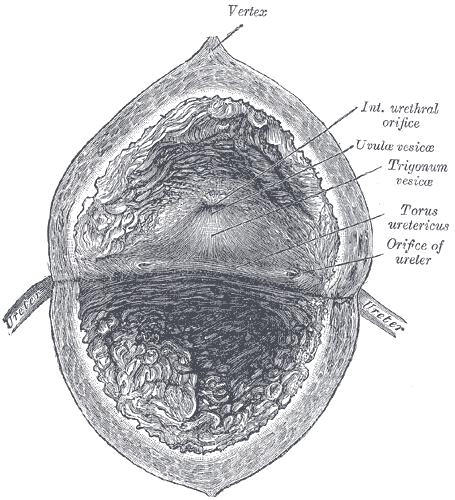
Gray's Anatomy (1918) plate, public domain
The bladder is a hollow muscular bag in the pelvis that stores urine and empties it under voluntary control. Its wall muscle (the detrusor) relaxes and stretches during filling, while the outlet sphincters stay closed; for voiding, the pattern reverses in a coordinated reflex. A waterproof lining (urothelium) protects the wall from urine. Comfortable capacity is around 400-600 mL.
Key facts
- The bladder's lining cells are among the most impermeable in the body, keeping urine's waste out of the tissues.
- Stretch signals travel to the brain, giving the conscious urge to pass urine at about half capacity.
- The detrusor can generate enough pressure to empty against mild outlet resistance, but chronic obstruction makes it thicken and overwork.
- In women the bladder sits in front of the uterus; in men the prostate wraps its outlet.
What can go wrong
Bladder problems include infections (cystitis) causing burning and frequency, overactive bladder with urgency and leakage, stones, and — importantly — bladder cancer, whose classic first sign is painless visible blood in the urine. Long-standing outlet obstruction (often the prostate in men) or nerve disease can leave the bladder unable to empty fully. A camera inspection is called cystoscopy.
Related conditions
Related procedures & tests
Related symptoms
- Pain or burning when urinating
- Needing to urinate often
- Blood in the urine
- Leaking urine (incontinence)
- Being unable to pass urine
Watch: related videos
Frequently asked questions
How does the bladder know when it is full?
Stretch receptors in its wall send signals that grow stronger as it fills; the brain registers the first urge at moderate filling and a compelling urge near capacity.
Why does cystitis make you go so often?
The inflamed lining becomes irritable and signals fullness at low volumes, so small amounts trigger repeated urges with burning as urine passes.
Educational information only. This atlas explains normal anatomy and describes conditions in general terms; it is not medical advice and does not replace assessment by a qualified clinician. If you have symptoms that worry you, seek medical care.