- Physical Examination
- Surgical Examination
- Ophthalmology
- Clinical Skills
- Orthopedics
- Surgery Videos
- Laparoscopy
- Pediatrics
- Funny Videos
- Cardiothoracic Surgery
- Nursing Videos
- Plastic Surgery
- Otorhinolaryngology
- Histology and Histopathology
- Neurosurgery
- Dermatology
- Pediatric Surgery
- Urology
- Dentistry
- Oncology and Cancers
- Anatomy Videos
- Health and Fitness
- Radiology
- Anaesthesia
- Physical Therapy
- Pharmacology
- Interventional Radiology
- Cardiology
- Endocrinology
- Gynecology
- Emergency Medicine
- Psychiatry and Psychology
- Childbirth Videos
- General Medical Videos
- Nephrology
- Physiology
- Diet and Food Health
- Diabetes Mellitus
- Neurology
- Women Health
- Osteoporosis
- Gastroenterology
- Pulmonology
- Hematology
- Rheumatology
- Toxicology
- Nuclear Medicine
- Infectious Diseases
- Vascular Disease
- Reproductive Health
- Burns and Wound Healing
- Kidney Zone Podcast
- Other
Urethra
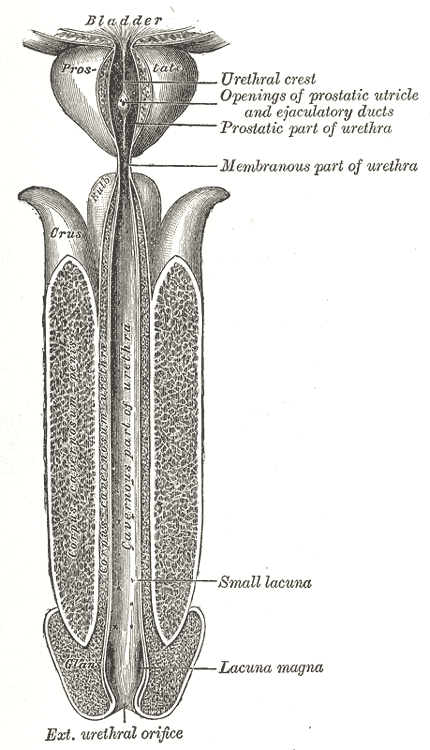
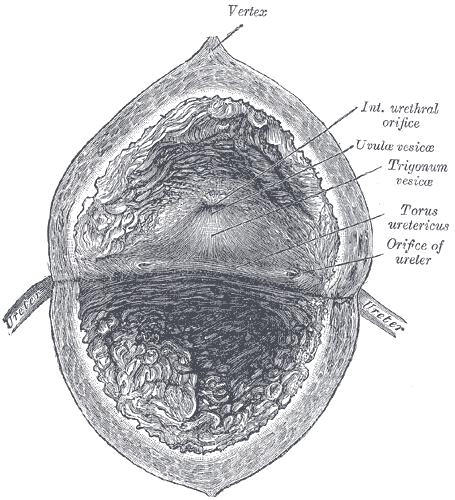
Gray's Anatomy (1918) plate, public domain
The urethra is the final tube of the urinary tract, carrying urine from the bladder to the outside. In women it is short — about 4 cm — opening in front of the vagina, which is why bladder infections are more common. In men it is about 18-20 cm, passing through the prostate and along the penis, and it doubles as the passage for semen. Sphincter muscles around it maintain continence.
Key facts
- The female urethra's shortness and closeness to the bowel flora explain women's higher rate of urinary infections.
- The male urethra has three parts — prostatic, membranous and spongy (penile) — named for the tissues they traverse.
- Its narrowest points in men are the external opening and the membranous segment, where strictures cause most trouble.
- Mucus glands along its length keep the lining moist and protected.
What can go wrong
Scar narrowing (stricture) — after infection, instrumentation or injury — weakens the stream and can block flow. Infections of the urethra (urethritis), often sexually transmitted, cause discharge and burning. In men, enlargement of the prostate compresses the prostatic urethra, the commonest cause of a weak stream and night-time voiding in later life. Catheters pass through the urethra to drain the bladder.
Related procedures & tests
Related symptoms
Frequently asked questions
Why do women get more bladder infections than men?
The short female urethra offers bacteria a much shorter journey to the bladder, and its opening lies close to the vaginal and bowel flora.
What is a urethral stricture?
A segment of scar tissue that narrows the urethra, slowing the stream; it can follow infections, catheter use or pelvic injury.
Educational information only. This atlas explains normal anatomy and describes conditions in general terms; it is not medical advice and does not replace assessment by a qualified clinician. If you have symptoms that worry you, seek medical care.