- Physical Examination
- Surgical Examination
- Ophthalmology
- Clinical Skills
- Orthopedics
- Surgery Videos
- Laparoscopy
- Pediatrics
- Funny Videos
- Cardiothoracic Surgery
- Nursing Videos
- Plastic Surgery
- Otorhinolaryngology
- Histology and Histopathology
- Neurosurgery
- Dermatology
- Pediatric Surgery
- Urology
- Dentistry
- Oncology and Cancers
- Anatomy Videos
- Health and Fitness
- Radiology
- Anaesthesia
- Physical Therapy
- Pharmacology
- Interventional Radiology
- Cardiology
- Endocrinology
- Gynecology
- Emergency Medicine
- Psychiatry and Psychology
- Childbirth Videos
- General Medical Videos
- Nephrology
- Physiology
- Diet and Food Health
- Diabetes Mellitus
- Neurology
- Women Health
- Osteoporosis
- Gastroenterology
- Pulmonology
- Hematology
- Rheumatology
- Toxicology
- Nuclear Medicine
- Infectious Diseases
- Vascular Disease
- Reproductive Health
- Burns and Wound Healing
- Kidney Zone Podcast
- Other
Glomerulus
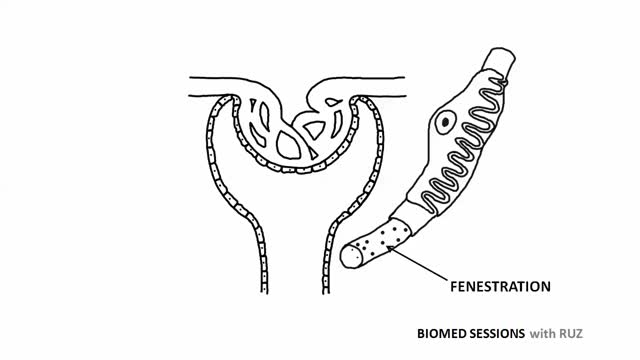
Video still from MedicalVideos.com: glomerular filtration
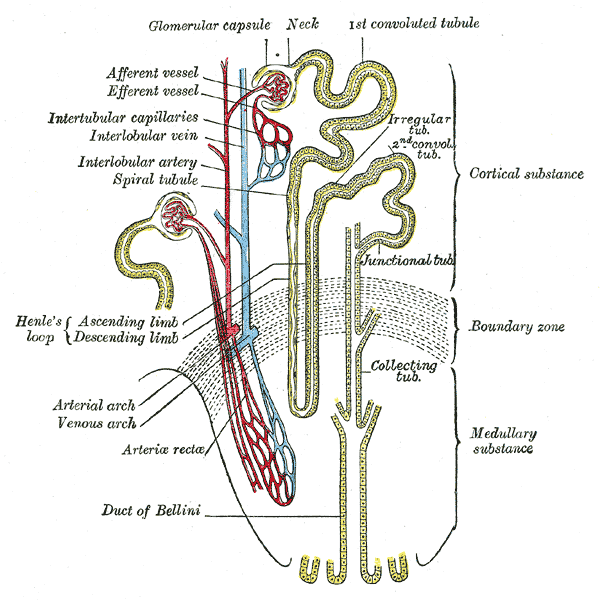
The glomerulus is a tiny tuft of capillaries at the head of each nephron where filtration begins. Blood arrives under pressure, and water, salts, glucose and small waste molecules pass through a three-layer filter — the capillary lining, a basement membrane and specialised cells called podocytes — while blood cells and most protein stay in circulation. Each kidney holds around a million of these filters working in parallel.
Key facts
- The filter's layers act like a sieve with both size and electrical-charge selectivity, keeping albumin in the blood.
- Podocytes wrap the capillaries with interlocking foot processes that form part of the filter.
- The filtration rate across all glomeruli (the GFR) is the standard measure of kidney function.
- Pressure in the tuft is finely auto-regulated so filtration stays steady despite blood-pressure swings.
What can go wrong
Damage to the glomerular filter causes glomerulonephritis — a group of conditions (including IgA nephropathy) where protein and blood leak into the urine and filtration may decline. Diabetes and high blood pressure injure glomeruli over years. Signs are often detected first on urine and blood tests, and a kidney biopsy is sometimes needed to identify the exact pattern of injury.
Related conditions
Related procedures & tests
Related symptoms
Watch: related videos
Frequently asked questions
What does the glomerulus filter out?
Water, salts, glucose, amino acids and waste products such as urea pass into the tubule; cells and most plasma protein are held back in the blood.
Why is protein in the urine a warning sign?
A healthy filter barely lets protein through, so persistent proteinuria usually signals glomerular damage and predicts faster loss of kidney function.
Educational information only. This atlas explains normal anatomy and describes conditions in general terms; it is not medical advice and does not replace assessment by a qualified clinician. If you have symptoms that worry you, seek medical care.