- Physical Examination
- Surgical Examination
- Ophthalmology
- Clinical Skills
- Orthopedics
- Surgery Videos
- Laparoscopy
- Pediatrics
- Funny Videos
- Cardiothoracic Surgery
- Nursing Videos
- Plastic Surgery
- Otorhinolaryngology
- Histology and Histopathology
- Neurosurgery
- Dermatology
- Pediatric Surgery
- Urology
- Dentistry
- Oncology and Cancers
- Anatomy Videos
- Health and Fitness
- Radiology
- Anaesthesia
- Physical Therapy
- Pharmacology
- Interventional Radiology
- Cardiology
- Endocrinology
- Gynecology
- Emergency Medicine
- Psychiatry and Psychology
- Childbirth Videos
- General Medical Videos
- Nephrology
- Physiology
- Diet and Food Health
- Diabetes Mellitus
- Neurology
- Women Health
- Osteoporosis
- Gastroenterology
- Pulmonology
- Hematology
- Rheumatology
- Toxicology
- Nuclear Medicine
- Infectious Diseases
- Vascular Disease
- Reproductive Health
- Burns and Wound Healing
- Kidney Zone Podcast
- Other
Nose
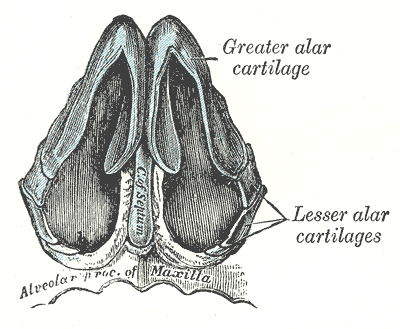
Gray's Anatomy (1918) plate, public domain
The nose is the projecting structure in the middle of the face that warms, moistens and filters the air you breathe. Its upper third is bone (the nasal bones) and its lower two-thirds are cartilage, which is why the tip stays flexible. Inside, two nostrils open into the nasal cavity, divided by the septum. The nose also houses the smell receptors at its roof and shapes the resonance of the voice.
Key facts
- The visible nose is about one-third bone and two-thirds cartilage.
- Nostril hairs and the moist lining trap dust and particles before air reaches the lungs.
- The nose conditions incoming air — warming and humidifying it — within a few centimetres of travel.
- Smell receptors sit high in the nasal cavity, which is why sniffing helps you detect faint odours.
What can go wrong
The nose is the most commonly broken bone-bearing structure of the face — a direct blow can fracture the nasal bones or bend the septum, causing a blocked feeling, nosebleeds or a changed shape. Persistent one-sided blockage can come from a deviated septum or swollen lining (rhinitis); loss of smell can follow viral infections or chronic sinus inflammation. Recurrent nosebleeds usually come from the rich vessel network at the front of the septum.
Related procedures & tests
Related symptoms
Related muscles
Watch: related videos
Frequently asked questions
Why does the nose run when you have a cold?
The lining swells and its glands produce extra mucus to flush out viruses and irritants — the extra fluid drains as a runny nose.
Can a bent (deviated) septum cause problems?
Yes. Most septums are slightly off-centre, but a marked bend can block one side, contribute to snoring or sinus problems, and is a common finding on examination.
Educational information only. This atlas explains normal anatomy and describes conditions in general terms; it is not medical advice and does not replace assessment by a qualified clinician. If you have symptoms that worry you, seek medical care.