- Physical Examination
- Surgical Examination
- Ophthalmology
- Clinical Skills
- Orthopedics
- Surgery Videos
- Laparoscopy
- Pediatrics
- Funny Videos
- Cardiothoracic Surgery
- Nursing Videos
- Plastic Surgery
- Otorhinolaryngology
- Histology and Histopathology
- Neurosurgery
- Dermatology
- Pediatric Surgery
- Urology
- Dentistry
- Oncology and Cancers
- Anatomy Videos
- Health and Fitness
- Radiology
- Anaesthesia
- Physical Therapy
- Pharmacology
- Interventional Radiology
- Cardiology
- Endocrinology
- Gynecology
- Emergency Medicine
- Psychiatry and Psychology
- Childbirth Videos
- General Medical Videos
- Nephrology
- Physiology
- Diet and Food Health
- Diabetes Mellitus
- Neurology
- Women Health
- Osteoporosis
- Gastroenterology
- Pulmonology
- Hematology
- Rheumatology
- Toxicology
- Nuclear Medicine
- Infectious Diseases
- Vascular Disease
- Reproductive Health
- Burns and Wound Healing
- Kidney Zone Podcast
- Other
Sacrum
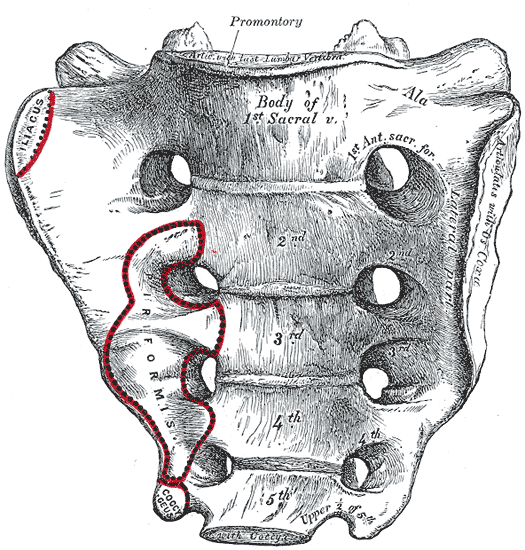
Gray's Anatomy (1918) plate, public domain
The sacrum is a large triangular bone at the base of the spine, formed by five sacral vertebrae fused together. Wedged between the two hip bones, it transmits the weight of the upper body into the pelvis and legs. Its front surface is smooth and curved, forming the back wall of the pelvis; nerves pass through holes in it to the pelvis and legs.
Key facts
- The sacrum is five fused vertebrae (S1-S5), fusion completing by about age 30.
- It forms the sacroiliac joints with the hip bones on each side.
- It carries the entire load of the upper body into the pelvis.
- The sacral canal continues the spinal canal and opens at its lower end (the sacral hiatus).
- Its shape differs between the sexes, being broader and less curved in women.
What can go wrong
The sacroiliac joints can become inflamed (sacroiliitis), causing buttock and lower-back pain — a feature of some types of inflammatory arthritis. The sacrum can fracture in major pelvic injuries, and in older adults with osteoporosis it can crack with little trauma (insufficiency fractures), causing deep buttock pain.
Related procedures & tests
Related symptoms
Related muscles
Watch: related videos
Frequently asked questions
Why is the sacrum fused solid?
Its job is load transfer, not movement: a rigid wedge locked between the hip bones passes the spine's weight into the legs (standing) or the seat bones (sitting) without wasting energy in joint play.
What are the sacroiliac joints?
The two joints between the sacrum and the ilium of each hip bone. They are strong, rough-surfaced joints with very little movement, held by some of the strongest ligaments in the body.
Educational information only. This atlas explains normal anatomy and describes conditions in general terms; it is not medical advice and does not replace assessment by a qualified clinician. If you have symptoms that worry you, seek medical care.