- Physical Examination
- Surgical Examination
- Ophthalmology
- Clinical Skills
- Orthopedics
- Surgery Videos
- Laparoscopy
- Pediatrics
- Funny Videos
- Cardiothoracic Surgery
- Nursing Videos
- Plastic Surgery
- Otorhinolaryngology
- Histology and Histopathology
- Neurosurgery
- Dermatology
- Pediatric Surgery
- Urology
- Dentistry
- Oncology and Cancers
- Anatomy Videos
- Health and Fitness
- Radiology
- Anaesthesia
- Physical Therapy
- Pharmacology
- Interventional Radiology
- Cardiology
- Endocrinology
- Gynecology
- Emergency Medicine
- Psychiatry and Psychology
- Childbirth Videos
- General Medical Videos
- Nephrology
- Physiology
- Diet and Food Health
- Diabetes Mellitus
- Neurology
- Women Health
- Osteoporosis
- Gastroenterology
- Pulmonology
- Hematology
- Rheumatology
- Toxicology
- Nuclear Medicine
- Infectious Diseases
- Vascular Disease
- Reproductive Health
- Burns and Wound Healing
- Kidney Zone Podcast
- Other
Salivary Glands
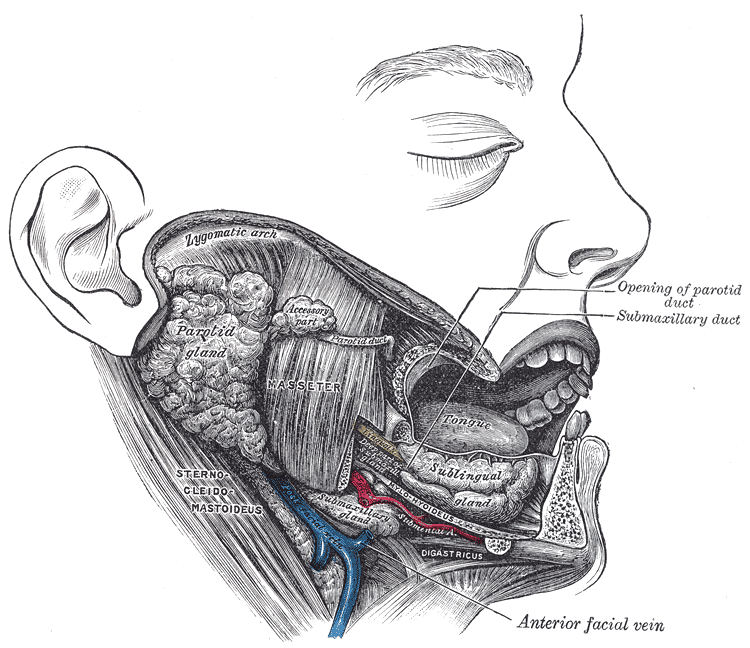
Gray's Anatomy (1918) plate, public domain
The salivary glands produce the saliva that moistens food, starts starch digestion, protects the teeth and keeps the mouth comfortable. There are three main pairs: the parotid glands in front of the ears, the submandibular glands under the jaw, and the sublingual glands under the tongue — plus hundreds of tiny glands throughout the mouth lining. Together they make about a litre to a litre and a half of saliva a day.
Key facts
- The parotid is the largest salivary gland and the one that swells in mumps.
- Saliva contains an enzyme (amylase) that begins breaking down starches in the mouth.
- It also carries antibodies and minerals that help protect enamel.
- Saliva flow rises sharply with the sight, smell or thought of food — a reflex driven by nerves.
What can go wrong
Stones can form in the ducts (most often the submandibular), causing painful swelling at mealtimes when saliva cannot escape. Viral infections such as mumps inflame the parotids; autoimmune conditions like Sjögren's syndrome dry the glands and mouth. Persistent one-sided gland swelling or a lump is assessed with ultrasound and sometimes a needle sample, as tumours can arise in these glands.
Related procedures & tests
Related symptoms
Watch: related videos
Frequently asked questions
Why does the mouth water before eating?
Smell, sight and even thinking about food trigger nerve reflexes that increase saliva production in preparation for chewing and swallowing.
What is a salivary stone?
A small calcified deposit that forms in a gland duct and blocks saliva flow, typically causing swelling and pain in the gland when you eat.
Educational information only. This atlas explains normal anatomy and describes conditions in general terms; it is not medical advice and does not replace assessment by a qualified clinician. If you have symptoms that worry you, seek medical care.