- Physical Examination
- Surgical Examination
- Ophthalmology
- Clinical Skills
- Orthopedics
- Surgery Videos
- Laparoscopy
- Pediatrics
- Funny Videos
- Cardiothoracic Surgery
- Nursing Videos
- Plastic Surgery
- Otorhinolaryngology
- Histology and Histopathology
- Neurosurgery
- Dermatology
- Pediatric Surgery
- Urology
- Dentistry
- Oncology and Cancers
- Anatomy Videos
- Health and Fitness
- Radiology
- Anaesthesia
- Physical Therapy
- Pharmacology
- Interventional Radiology
- Cardiology
- Endocrinology
- Gynecology
- Emergency Medicine
- Psychiatry and Psychology
- Childbirth Videos
- General Medical Videos
- Nephrology
- Physiology
- Diet and Food Health
- Diabetes Mellitus
- Neurology
- Women Health
- Osteoporosis
- Gastroenterology
- Pulmonology
- Hematology
- Rheumatology
- Toxicology
- Nuclear Medicine
- Infectious Diseases
- Vascular Disease
- Reproductive Health
- Burns and Wound Healing
- Kidney Zone Podcast
- Other
Seminal Vesicles
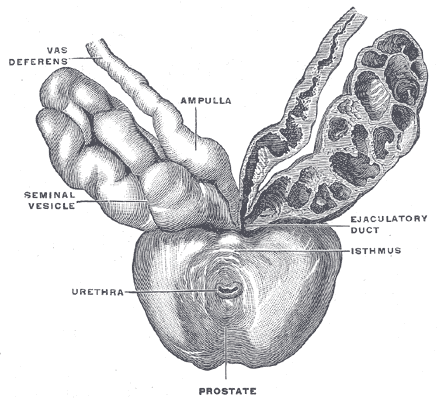
Gray's Anatomy (1918) plate, public domain
The seminal vesicles are two coiled, sac-like glands, each about 5 cm long, tucked behind the bladder. They produce the largest share of seminal fluid — a fructose-rich, alkaline secretion that nourishes sperm and helps them survive in the vagina. Their ducts join the vasa deferentia to form the ejaculatory ducts that pass through the prostate and open into the urethra.
Key facts
- Despite the name, they do not store sperm — they are glands, not reservoirs.
- Their fluid contains fructose, the sugar that fuels sperm on their journey.
- The fluid also carries prostaglandins and proteins that influence the female tract and sperm transport.
- They empty by muscular contraction at ejaculation, mixing their secretion with sperm arriving via the vas.
What can go wrong
Seminal vesicles are seldom the primary problem: they can be inflamed alongside prostatitis, blocked by cysts or stones, or — rarely — involved by spread of prostate or bladder disease. Absent or small vesicles on imaging, combined with low-volume acidic ejaculate, point to obstruction or congenital absence of the vas deferens in fertility assessment.
Related conditions
Related procedures & tests
Related symptoms
Frequently asked questions
What do the seminal vesicles add to semen?
Most of its volume: an alkaline, fructose-rich fluid that nourishes sperm, helps neutralise vaginal acidity and supports sperm movement after ejaculation.
Can seminal vesicles be seen on a scan?
Yes — they are routinely assessed on transrectal ultrasound and pelvic MRI, particularly in fertility and prostate evaluations.
Educational information only. This atlas explains normal anatomy and describes conditions in general terms; it is not medical advice and does not replace assessment by a qualified clinician. If you have symptoms that worry you, seek medical care.