- Physical Examination
- Surgical Examination
- Ophthalmology
- Clinical Skills
- Orthopedics
- Surgery Videos
- Laparoscopy
- Pediatrics
- Funny Videos
- Cardiothoracic Surgery
- Nursing Videos
- Plastic Surgery
- Otorhinolaryngology
- Histology and Histopathology
- Neurosurgery
- Dermatology
- Pediatric Surgery
- Urology
- Dentistry
- Oncology and Cancers
- Anatomy Videos
- Health and Fitness
- Radiology
- Anaesthesia
- Physical Therapy
- Pharmacology
- Interventional Radiology
- Cardiology
- Endocrinology
- Gynecology
- Emergency Medicine
- Psychiatry and Psychology
- Childbirth Videos
- General Medical Videos
- Nephrology
- Physiology
- Diet and Food Health
- Diabetes Mellitus
- Neurology
- Women Health
- Osteoporosis
- Gastroenterology
- Pulmonology
- Hematology
- Rheumatology
- Toxicology
- Nuclear Medicine
- Infectious Diseases
- Vascular Disease
- Reproductive Health
- Burns and Wound Healing
- Kidney Zone Podcast
- Other
Small Intestine
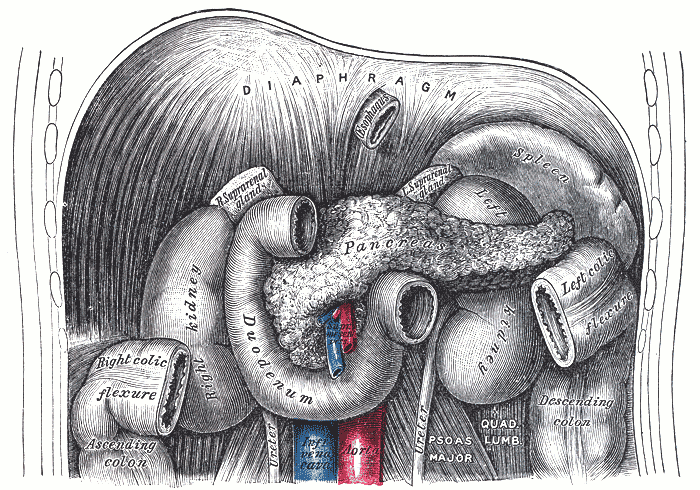
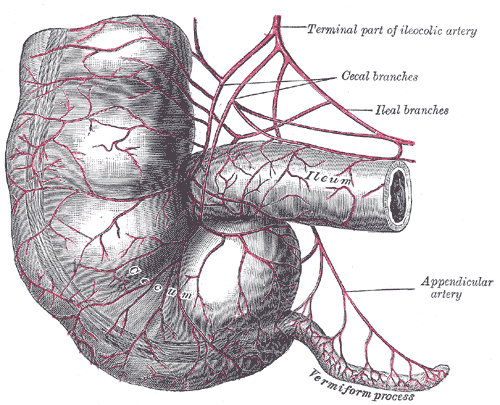
Gray's Anatomy (1918) plate, public domain
The small intestine is the long, coiled tube — duodenum, jejunum and ileum — where digestion is completed and about 90% of all nutrient absorption takes place. Folds, finger-like villi and microscopic microvilli expand its inner surface to roughly 200 square metres. Blood from it flows first to the liver via the portal vein, so absorbed nutrients and any toxins are processed before reaching the rest of the body.
Key facts
- Its surface-boosting folds, villi and microvilli together multiply the area roughly 600-fold over a plain tube.
- Millions of villi sway in the food stream, each with its own blood capillary net and lymph channel (lacteal) for fats.
- The whole lining is shed and renewed every 2-6 days.
- About 7-9 litres of fluid pass through it daily — from food, drink and digestive juices — and nearly all is reabsorbed.
What can go wrong
The small intestine is central to malabsorption conditions such as coeliac disease, to Crohn's inflammation, and to bacterial overgrowth that causes bloating and diarrhoea. Infections usually cause short-lived diarrhoea. Blockage presents with colicky pain, vomiting and distension and is a surgical emergency; the underlying causes include adhesions from previous surgery and hernias.
Related procedures & tests
Related symptoms
Watch: related videos
Frequently asked questions
Why is it called 'small' if it is so long?
The name refers to its narrow diameter — about 2-3 cm — compared with the wider large intestine, not its length.
How does the small intestine move food along?
Coordinated waves of muscle contraction (peristalsis), plus local mixing movements, propel and churn the contents over a journey of several hours.
Educational information only. This atlas explains normal anatomy and describes conditions in general terms; it is not medical advice and does not replace assessment by a qualified clinician. If you have symptoms that worry you, seek medical care.