- Physical Examination
- Surgical Examination
- Ophthalmology
- Clinical Skills
- Orthopedics
- Surgery Videos
- Laparoscopy
- Pediatrics
- Funny Videos
- Cardiothoracic Surgery
- Nursing Videos
- Plastic Surgery
- Otorhinolaryngology
- Histology and Histopathology
- Neurosurgery
- Dermatology
- Pediatric Surgery
- Urology
- Dentistry
- Oncology and Cancers
- Anatomy Videos
- Health and Fitness
- Radiology
- Anaesthesia
- Physical Therapy
- Pharmacology
- Interventional Radiology
- Cardiology
- Endocrinology
- Gynecology
- Emergency Medicine
- Psychiatry and Psychology
- Childbirth Videos
- General Medical Videos
- Nephrology
- Physiology
- Diet and Food Health
- Diabetes Mellitus
- Neurology
- Women Health
- Osteoporosis
- Gastroenterology
- Pulmonology
- Hematology
- Rheumatology
- Toxicology
- Nuclear Medicine
- Infectious Diseases
- Vascular Disease
- Reproductive Health
- Burns and Wound Healing
- Kidney Zone Podcast
- Other
Tibia
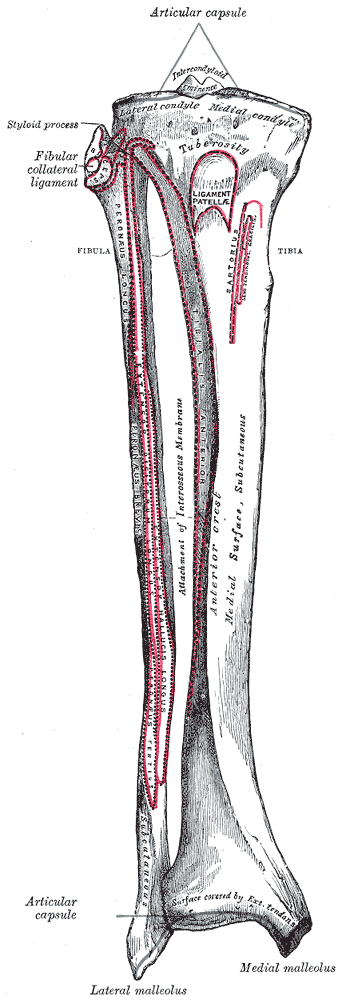
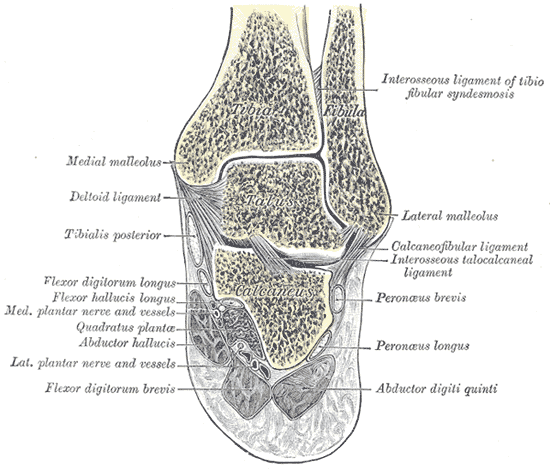
Gray's Anatomy (1918) plate, public domain
The tibia is the shinbone — the large, weight-bearing bone of the lower leg. Its broad, flat top (the tibial plateau) forms the knee joint with the femur; its shaft is triangular, with the sharp front edge you can feel as your shin; and its lower end forms the inner bump of the ankle. It carries nearly all the load between knee and foot.
Key facts
- The tibia is the second longest bone in the body.
- It transmits almost all the weight from knee to ankle.
- Its front edge is directly under the skin — hence painful shin knocks.
- Its upper end's plateau is relatively flat, relying on cartilage (menisci) for fit with the femur.
- The bump below the knee (tibial tuberosity) anchors the kneecap tendon.
What can go wrong
The tibia's exposed position makes it the long bone most often fractured with the skin broken (open fracture). Its plateau can fracture in falls and collisions, threatening the knee. Growing pains at its tuberosity in sporty adolescents are called Osgood-Schlatter disease. Stress fractures of the shaft occur in runners and military recruits.
Related procedures & tests
Related symptoms
Related muscles
Watch: related videos
Frequently asked questions
Why do shin knocks hurt so much?
The front edge of the tibia lies immediately under the skin with almost no muscle or fat padding, so a blow strikes bone covering (periosteum), which is richly supplied with pain nerves.
What is Osgood-Schlatter disease?
Irritation where the kneecap tendon pulls on the still-growing tibial tuberosity in adolescents, causing a tender bump below the knee during growth spurts and sport. It settles as growth finishes.
Educational information only. This atlas explains normal anatomy and describes conditions in general terms; it is not medical advice and does not replace assessment by a qualified clinician. If you have symptoms that worry you, seek medical care.