
- Physical Examination
- Surgical Examination
- Ophthalmology
- Clinical Skills
- Orthopedics
- Surgery Videos
- Laparoscopy
- Pediatrics
- Funny Videos
- Cardiothoracic Surgery
- Nursing Videos
- Plastic Surgery
- Otorhinolaryngology
- Histology and Histopathology
- Neurosurgery
- Dermatology
- Pediatric Surgery
- Urology
- Dentistry
- Oncology and Cancers
- Anatomy Videos
- Health and Fitness
- Radiology
- Anaesthesia
- Physical Therapy
- Pharmacology
- Interventional Radiology
- Cardiology
- Endocrinology
- Gynecology
- Emergency Medicine
- Psychiatry and Psychology
- Childbirth Videos
- General Medical Videos
- Nephrology
- Physiology
- Diet and Food Health
- Diabetes Mellitus
- Neurology
- Women Health
- Osteoporosis
- Gastroenterology
- Pulmonology
- Hematology
- Rheumatology
- Toxicology
- Nuclear Medicine
- Infectious Diseases
- Vascular Disease
- Reproductive Health
- Burns and Wound Healing
- Kidney Zone Podcast
- Other
Scleroderma
Scleroderma is a long-term autoimmune condition in which the body produces too much collagen, causing skin and sometimes internal tissues to become thickened and stiff. This page explains its symptoms, causes, and treatment in plain language, with videos to help you follow the key points.
✓ Medically reviewed by Dr. Mohamed Ibrahim, MD, PhD — physician-scientist · Last reviewed: November 2026
In short: Scleroderma ranges from a limited form affecting mainly the skin of the fingers, face, and lower limbs to a diffuse form that can also involve the lungs, heart, kidneys, and gut. There is no cure, but treatment controls symptoms and close monitoring protects the organs. Fingers turning white or blue in the cold, called Raynaud's phenomenon, is often the first sign.
Watch: Scleroderma videos

Read: the plain-language guide
Overview
In scleroderma, also called systemic sclerosis, the immune system drives overproduction of collagen, so skin and sometimes internal organs become hard and less flexible, and small blood vessels are damaged. The limited form develops slowly and mainly affects skin below the elbows and knees and the face. The diffuse form spreads more widely and carries a higher chance of early organ involvement. A separate condition, morphoea, affects patches of skin only and never involves internal organs.
Symptoms
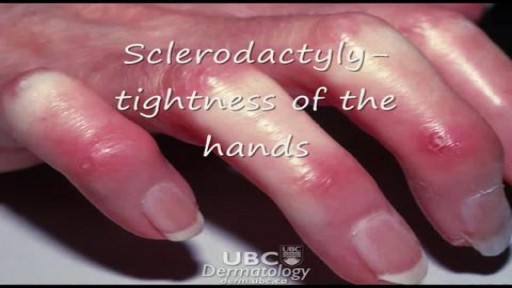
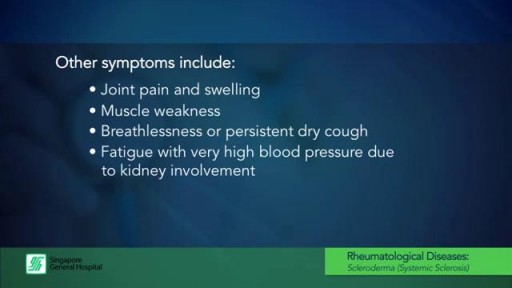
An early and very common sign is Raynaud's phenomenon, where fingers or toes turn white, then blue, then red in the cold or with stress, with numbness or tingling. Other features include thickened, tight, or shiny skin on the fingers and face, stiff or sore joints, small calcium lumps under the skin, tiny red spots on the hands and face, heartburn and difficulty swallowing from gut involvement, and breathlessness or a dry cough if the lungs are affected. Fatigue is common across all forms.
Causes & risk factors
The cause is an autoimmune reaction: the immune system mistakenly stimulates the cells that make collagen, and small blood vessels are injured in the process. Why this happens is not fully understood; inherited susceptibility and environmental triggers are both thought to play a part. Scleroderma is not contagious and is not caused by infection. It affects women more often than men and usually begins in adult life. It cannot be predicted or prevented, and nothing the person did causes it.
How it's diagnosed
A rheumatologist usually makes the diagnosis from the pattern of skin changes and symptoms, supported by blood tests for antibodies that are characteristic of scleroderma and help predict its course. Examining the tiny blood vessels at the base of the fingernails under magnification, called nailfold capillaroscopy, shows typical changes. Because internal organs can be involved silently, baseline checks of the lungs, heart, kidneys, and blood pressure are arranged and repeated regularly to catch problems early.
Treatment overview
There is no cure, so treatment targets the affected organs and symptoms, coordinated by a specialist team. Medicines that open up blood vessels help Raynaud's and finger ulcers, medicines that reduce stomach acid protect the gullet, and medicines that calm the immune system are used when organs such as the lungs are involved. Physiotherapy, hand exercises, and careful skin care help maintain movement and prevent damage, and protecting the hands from cold is a daily priority. Regular organ monitoring is as much a part of treatment as any medicine.
When to seek care
Arrange prompt review for finger ulcers that are not healing, new or worsening breathlessness, chest pain, or ankle swelling. Get emergency care for a sudden severe headache with very high blood pressure or a sharp drop in urine output, which can signal a kidney crisis needing immediate treatment.
Frequently asked questions
Is scleroderma contagious?
No. Scleroderma is an autoimmune condition in which the body's own immune system drives excess collagen production. It cannot be caught from, or passed to, another person through contact or any other route.
What is the difference between limited and diffuse scleroderma?
Limited scleroderma develops slowly and affects skin mainly on the fingers, lower limbs, and face, with internal organ problems tending to come later, if at all. Diffuse scleroderma involves more widespread skin thickening and carries a higher chance of earlier involvement of the lungs, heart, kidneys, or gut.
Why do my fingers turn white in the cold?
That is Raynaud's phenomenon: the small blood vessels in the fingers narrow excessively in response to cold or stress, temporarily cutting off blood flow. It is often the earliest sign of scleroderma and also occurs in many people who never develop the condition.
Can scleroderma affect internal organs?
Yes, in the systemic forms it can affect the lungs, heart, kidneys, and digestive system, sometimes before causing symptoms. This is why regular checks of lung function, heart, kidneys, and blood pressure are a routine part of scleroderma care.
More in Blood & Immune
Related topics on MedicalVideos.com
Sources & further reading
Authoritative references for readers who want to go deeper:
This page is for general education only and is not medical advice. New breathlessness, chest pain, or a sudden severe headache with very high blood pressure in scleroderma needs emergency assessment.