
- Physical Examination
- Surgical Examination
- Ophthalmology
- Clinical Skills
- Orthopedics
- Surgery Videos
- Laparoscopy
- Pediatrics
- Funny Videos
- Cardiothoracic Surgery
- Nursing Videos
- Plastic Surgery
- Otorhinolaryngology
- Histology and Histopathology
- Neurosurgery
- Dermatology
- Pediatric Surgery
- Urology
- Dentistry
- Oncology and Cancers
- Anatomy Videos
- Health and Fitness
- Radiology
- Anaesthesia
- Physical Therapy
- Pharmacology
- Interventional Radiology
- Cardiology
- Endocrinology
- Gynecology
- Emergency Medicine
- Psychiatry and Psychology
- Childbirth Videos
- General Medical Videos
- Nephrology
- Physiology
- Diet and Food Health
- Diabetes Mellitus
- Neurology
- Women Health
- Osteoporosis
- Gastroenterology
- Pulmonology
- Hematology
- Rheumatology
- Toxicology
- Nuclear Medicine
- Infectious Diseases
- Vascular Disease
- Reproductive Health
- Burns and Wound Healing
- Kidney Zone Podcast
- Other
Holter and Longer-Term Monitoring
Holter monitors and longer recorders extend the ECG from a few seconds to days or weeks, catching rhythm problems that come and go. This page explains the main types, when each is used, and how they differ from an echocardiogram and a stress test, in plain language with videos.
✓ Medically reviewed by Dr. Mohamed Ibrahim, MD, PhD — physician-scientist · Last reviewed: November 2026
Watch: Holter and Longer-Term Monitoring videos

Guide
What it is
A standard ECG records only a few seconds, so rhythm problems that come and go are easily missed. Longer monitoring solves this by recording the heart's electrical activity over hours, days, or even years, so that symptoms can be matched to what the rhythm was doing at that moment. These tests are close relatives of the ECG: they use the same electrodes and signals, just over longer periods and often with fewer leads. They are the usual next step when palpitations, dizziness, or fainting have not been explained by a resting tracing.
What the tracing shows
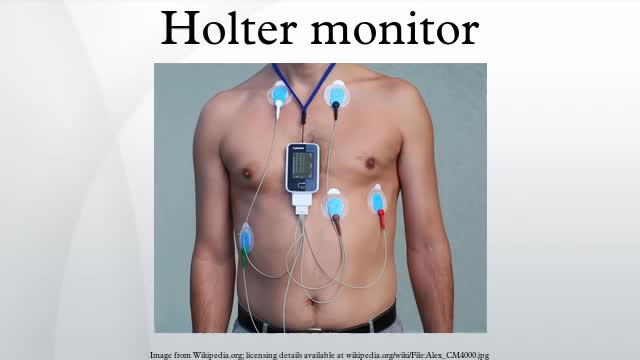
A Holter monitor is a small recorder worn for 24 to 48 hours, connected to chest electrodes, capturing every beat while you go about normal life and keep a symptom diary. Patch monitors stick directly to the chest without wires and are often worn for up to two weeks. Event monitors are worn for weeks and save the tracing when you press a button during symptoms, or automatically when the rhythm looks abnormal. An implantable loop recorder sits under the skin and can monitor for a few years, used when episodes are rare but important.
What it can mean
The choice of monitor depends on how often symptoms happen. Daily symptoms suit a 24–48 hour Holter. Symptoms every week or two suit a patch or event monitor worn for longer. Rare but serious symptoms — such as unexplained fainting a few times a year — may need an implantable loop recorder that watches for years. The diary you keep is half the test: a recording that shows normal sinus rhythm during your exact symptoms is genuinely useful, because it redirects the search. Do not stop prescribed medicines during monitoring unless your team tells you to.
When it is urgent
Monitoring is usually a planned, non-urgent test — but the symptoms that prompt it are not always safe to wait on. Fainting, chest pain, or severe palpitations should be assessed urgently rather than waiting for a monitor appointment. If you faint while wearing a monitor, note the time precisely and tell the team; that pairing of symptom and tracing is exactly what the test is for. Seek help the same day if episodes become more frequent or severe while you are waiting to be fitted.
Common questions
What is a Holter monitor?
A Holter monitor is a small portable ECG recorder worn for 24 to 48 hours, with electrodes on the chest. It records every heartbeat during that time so symptoms can be matched against the rhythm.
How long are patch and event monitors worn?
Patch and event monitors are worn for longer — patches often up to two weeks, event monitors for weeks — because they are smaller and more comfortable. Longer recording gives a better chance of catching symptoms that happen only occasionally.
How is monitoring different from an echocardiogram or stress test?
An echocardiogram is an ultrasound scan that pictures the heart's structure and pumping, while an ECG records electrical activity. A stress test records the ECG and blood pressure while the heart works harder, usually on a treadmill.
What is an implantable loop recorder?
An implantable loop recorder is a tiny monitor placed under the skin of the chest that records the heart rhythm for a few years. It is used for unexplained fainting or rare symptoms that shorter monitors have missed.
More in Related Tests
Related
Sources
- Electrocardiogram (ECG) test (MedlinePlus)
- Stress Tests (MedlinePlus)
- Electrocardiogram (ECG) (NHS)
- Heart Arrhythmia (MedlinePlus)
This guide is general information, not medical advice, and does not replace advice from your own clinician. ECG patterns should always be interpreted in context by a trained professional. If you have chest pain, severe breathlessness, fainting or a racing heartbeat that will not settle, seek urgent medical care. Monitoring results are interpreted with your symptom diary; a normal recording during symptoms is as informative as an abnormal one.