
- Physical Examination
- Surgical Examination
- Ophthalmology
- Clinical Skills
- Orthopedics
- Surgery Videos
- Laparoscopy
- Pediatrics
- Funny Videos
- Cardiothoracic Surgery
- Nursing Videos
- Plastic Surgery
- Otorhinolaryngology
- Histology and Histopathology
- Neurosurgery
- Dermatology
- Pediatric Surgery
- Urology
- Dentistry
- Oncology and Cancers
- Anatomy Videos
- Health and Fitness
- Radiology
- Anaesthesia
- Physical Therapy
- Pharmacology
- Interventional Radiology
- Cardiology
- Endocrinology
- Gynecology
- Emergency Medicine
- Psychiatry and Psychology
- Childbirth Videos
- General Medical Videos
- Nephrology
- Physiology
- Diet and Food Health
- Diabetes Mellitus
- Neurology
- Women Health
- Osteoporosis
- Gastroenterology
- Pulmonology
- Hematology
- Rheumatology
- Toxicology
- Nuclear Medicine
- Infectious Diseases
- Vascular Disease
- Reproductive Health
- Burns and Wound Healing
- Kidney Zone Podcast
- Other
Normal Sinus Rhythm
Normal sinus rhythm is the heart's usual rhythm, in which every beat starts in the sinus node, the heart's natural pacemaker. This page explains what it looks like on an ECG and how it differs from rhythms that need attention, in plain language with videos.
✓ Medically reviewed by Dr. Mohamed Ibrahim, MD, PhD — physician-scientist · Last reviewed: November 2026
Watch: Normal Sinus Rhythm videos
 Electrical Cardioversion14,933 views
 Cardioversion of Atrial Flutter13,434 views
 Cardioversion of Atrial Fibrillation13,093 views
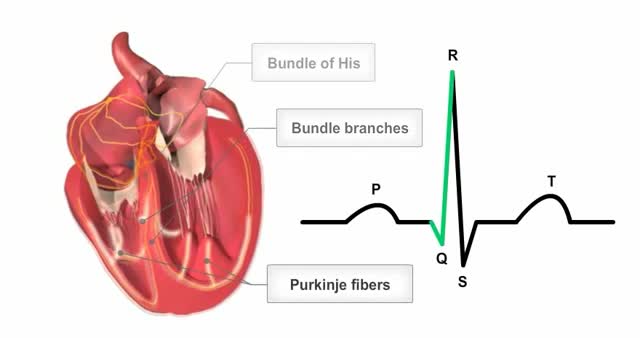 Cardiac conduction system and ECG12,984 views
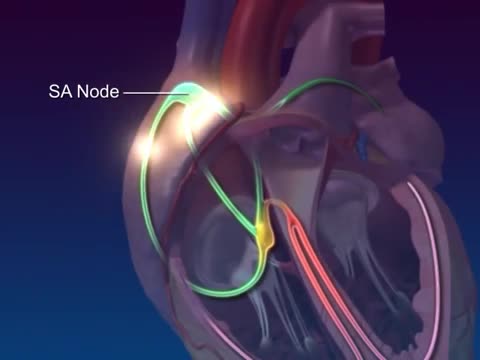 Heart Conduction System8,072 views
Guide
What it is
The sinus node is a small cluster of specialised cells in the upper right chamber of the heart. It fires regularly to set the pace, and because it is the heart's built-in pacemaker, any rhythm it drives is called a sinus rhythm. The signal spreads across the upper chambers, pauses briefly at the AV node, then races through the lower chambers. When this sequence repeats evenly at a normal rate with normal intervals, the ECG is reported as normal sinus rhythm — the expected finding in a healthy resting heart.
What the tracing shows
The checklist is simple. There is a P wave before every QRS complex, and every P wave is followed by a QRS. The P waves all look alike, because they all start from the same spot. The gap between beats is even, the rate is between 60 and 100 per minute, and the PR interval and QRS width sit in their usual ranges. Small variations are normal: in many people, especially the young, the rate speeds slightly as they breathe in and slows as they breathe out — a normal variant called sinus arrhythmia.
What it can mean
A report of normal sinus rhythm means the heart's electrical system was working in its standard pattern during the recording. It does not by itself prove the heart is healthy — structure, valves, and blood flow need other tests — and it does not capture rhythms that come and go. Sinus rhythms outside the normal rate still start in the sinus node: faster than 100 is sinus tachycardia and slower than 60 is sinus bradycardia, and both are often normal responses to exercise, fever, fitness, or sleep rather than disease.
When it is urgent
Normal sinus rhythm on one tracing should not delay help if symptoms suggest otherwise: chest pain, fainting, or severe palpitations need urgent assessment even when an earlier ECG was normal. Rhythm problems are often intermittent, so doctors may arrange longer monitoring — a day or two with a portable recorder, or longer — to catch the rhythm during symptoms. If a tracing taken while you feel unwell shows normal sinus rhythm, that is still useful: it tells the team your symptoms at that moment were not caused by a rhythm disturbance.
Common questions
What makes a rhythm a sinus rhythm?
A rhythm is a sinus rhythm when each beat starts in the sinus node, the heart's natural pacemaker. On the ECG this shows as a P wave before every QRS complex, with all the P waves looking the same.
Is sinus arrhythmia dangerous?
Sinus arrhythmia — a slight speeding and slowing of the rate with breathing — is a normal finding, especially in younger people. Despite the name, it is not the same as the rhythm problems doctors simply call arrhythmias.
Can you have normal sinus rhythm and still have heart disease?
Yes. The ECG rhythm can be normal while the heart has structural, valve, or artery disease that an ECG cannot show. That is why symptoms and other tests matter alongside the tracing.
What rate counts as normal sinus rhythm?
Normal sinus rhythm has a resting rate between 60 and 100 beats per minute. The same sinus mechanism beating faster or slower is called sinus tachycardia or sinus bradycardia.
More in Basics
Related
Sources
- Heart Arrhythmia (MedlinePlus)
- Electrocardiogram (ECG) test (MedlinePlus)
- Arrhythmia (British Heart Foundation)
- Electrocardiogram (MedlinePlus Medical Encyclopedia)
This guide is general information, not medical advice, and does not replace advice from your own clinician. ECG patterns should always be interpreted in context by a trained professional. If you have chest pain, severe breathlessness, fainting or a racing heartbeat that will not settle, seek urgent medical care. A single normal tracing does not exclude intermittent rhythm problems; persistent symptoms should always be discussed with a clinician.