- Physical Examination
- Surgical Examination
- Ophthalmology
- Clinical Skills
- Orthopedics
- Surgery Videos
- Laparoscopy
- Pediatrics
- Funny Videos
- Cardiothoracic Surgery
- Nursing Videos
- Plastic Surgery
- Otorhinolaryngology
- Histology and Histopathology
- Neurosurgery
- Dermatology
- Pediatric Surgery
- Urology
- Dentistry
- Oncology and Cancers
- Anatomy Videos
- Health and Fitness
- Radiology
- Anaesthesia
- Physical Therapy
- Pharmacology
- Interventional Radiology
- Cardiology
- Endocrinology
- Gynecology
- Emergency Medicine
- Psychiatry and Psychology
- Childbirth Videos
- General Medical Videos
- Nephrology
- Physiology
- Diet and Food Health
- Diabetes Mellitus
- Neurology
- Women Health
- Osteoporosis
- Gastroenterology
- Pulmonology
- Hematology
- Rheumatology
- Toxicology
- Nuclear Medicine
- Infectious Diseases
- Vascular Disease
- Reproductive Health
- Burns and Wound Healing
- Kidney Zone Podcast
- Other
Suspected Spinal Injury — First Aid
What to do
- Suspect a spinal injury after a fall from height, a road collision, a diving accident, a heavy blow to the head, neck or back, or if the person reports neck or back pain, weakness, numbness or tingling in the limbs.
- Call 911 and tell them a spinal injury is suspected.
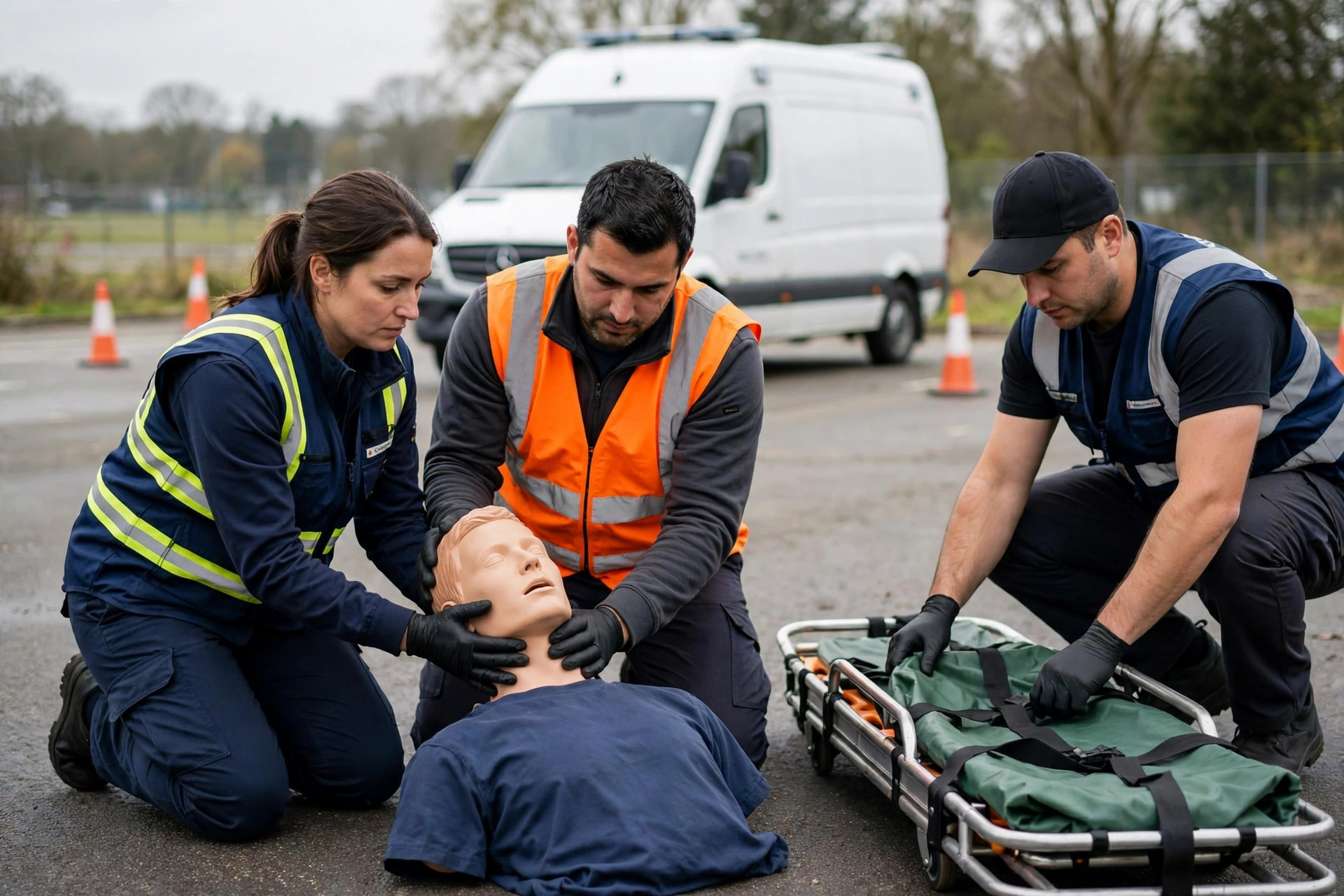
- Keep the person completely still. Reassure them and tell them not to move. Do not move them yourself unless they are in immediate danger (fire, traffic, water) or need CPR or airway care.
- Support the head and neck in line with the body: kneel behind the head and place your hands on either side of the head, or use rolled towels or clothing either side. Keep holding until the ambulance crew takes over.
- If they vomit or their airway is at risk, log-roll them onto their side with helpers keeping the head, neck and back in line — airway always takes priority over spinal precautions.
- Keep them warm, monitor breathing, and if they become unresponsive and stop breathing normally, start CPR — opening the airway with a jaw thrust if you are trained, or a gentle head tilt if not.
What NOT to do
- Do not remove a crash helmet unless it blocks the airway or CPR — if it must come off, two people should do it, one supporting the neck.
- Do not sit the person up, twist the neck, or 'test' movement of the limbs.
- Do not give food or drink.
- Do not transport the person in a car if an ambulance can come to you.
When to get medical care
Call 911 for any suspected spinal injury — neck or back pain after significant trauma, weakness, numbness or tingling in arms or legs, loss of bladder or bowel control, or a deformed position of the neck. Spinal injuries can worsen with movement, so professional immobilisation and transport matter.
Related procedures & tests
Related symptoms
Watch: related videos
Frequently asked questions
Why must the person stay so still?
If a vertebra is broken, movement can let bone or swelling damage the spinal cord, converting a recoverable injury into permanent paralysis. Keeping the spine in line while the ambulance crew immobilise and transport protects the cord.
What if the person needs to vomit?
Airway comes first. Roll the person onto their side as one unit (a log roll) with as many helpers as possible keeping the head, shoulders and hips aligned, clear the mouth, and roll them back once the airway is safe — or keep them on their side supported if vomiting continues.
In an emergency, call 911 (or your local emergency number) first — do not delay a call to read a guide. These pages are educational first-aid information in general terms; they are not a substitute for emergency services, first-aid training, or assessment by a qualified clinician.