
- Physical Examination
- Surgical Examination
- Ophthalmology
- Clinical Skills
- Orthopedics
- Surgery Videos
- Laparoscopy
- Pediatrics
- Funny Videos
- Cardiothoracic Surgery
- Nursing Videos
- Plastic Surgery
- Otorhinolaryngology
- Histology and Histopathology
- Neurosurgery
- Dermatology
- Pediatric Surgery
- Urology
- Dentistry
- Oncology and Cancers
- Anatomy Videos
- Health and Fitness
- Radiology
- Anaesthesia
- Physical Therapy
- Pharmacology
- Interventional Radiology
- Cardiology
- Endocrinology
- Gynecology
- Emergency Medicine
- Psychiatry and Psychology
- Childbirth Videos
- General Medical Videos
- Nephrology
- Physiology
- Diet and Food Health
- Diabetes Mellitus
- Neurology
- Women Health
- Osteoporosis
- Gastroenterology
- Pulmonology
- Hematology
- Rheumatology
- Toxicology
- Nuclear Medicine
- Infectious Diseases
- Vascular Disease
- Reproductive Health
- Burns and Wound Healing
- Kidney Zone Podcast
- Other
Leaking fluid during pregnancy
✓ Medically reviewed by Mohamed Magdy Ibrahim, MD, PhD — Assistant Professor of Medicine, Transplant Nephrology, University of Maryland School of Medicine · Board certified in Internal Medicine (ABIM) · Last reviewed: November 2026
Category: Women's Health · All women's health symptoms
What it can feel like
Leaking fluid during pregnancy means fluid coming away from the vagina that might be the waters (amniotic fluid) surrounding the baby. It ranges from a damp trickle to a gush. Three fluids are commonly confused: urine, normal pregnancy discharge, and amniotic fluid — and because broken waters before term, or with infection, change how the pregnancy is managed, any suspected leak is checked the same day by your maternity team.
Possible causes
A symptom can have many causes, and most are not serious. The lists below group conditions this symptom can be associated with — common causes first. They are possibilities to discuss with a clinician, not a diagnosis.
Common causes
Fluid leaking in pregnancy can be associated with urine leaking under pressure (very common as the uterus presses on the bladder), normal increased vaginal discharge, and the waters breaking at term as labour approaches.
Other possible causes
It can also be associated with the waters breaking early — preterm prelabour rupture of membranes, before 37 weeks — with infection of the membranes, and with vaginal infections that increase discharge. The distinction matters because broken waters change the plan for the rest of the pregnancy.
Red flags — when to seek help promptly
- Leaking fluid before 37 weeks of pregnancy — contact your maternity unit promptly, the same day
- Fluid that is green, brown or foul-smelling
- Leaking fluid with fever, abdominal pain or feeling unwell (possible infection)
- Leaking fluid with reduced fetal movements or any vaginal bleeding
What a clinician may do
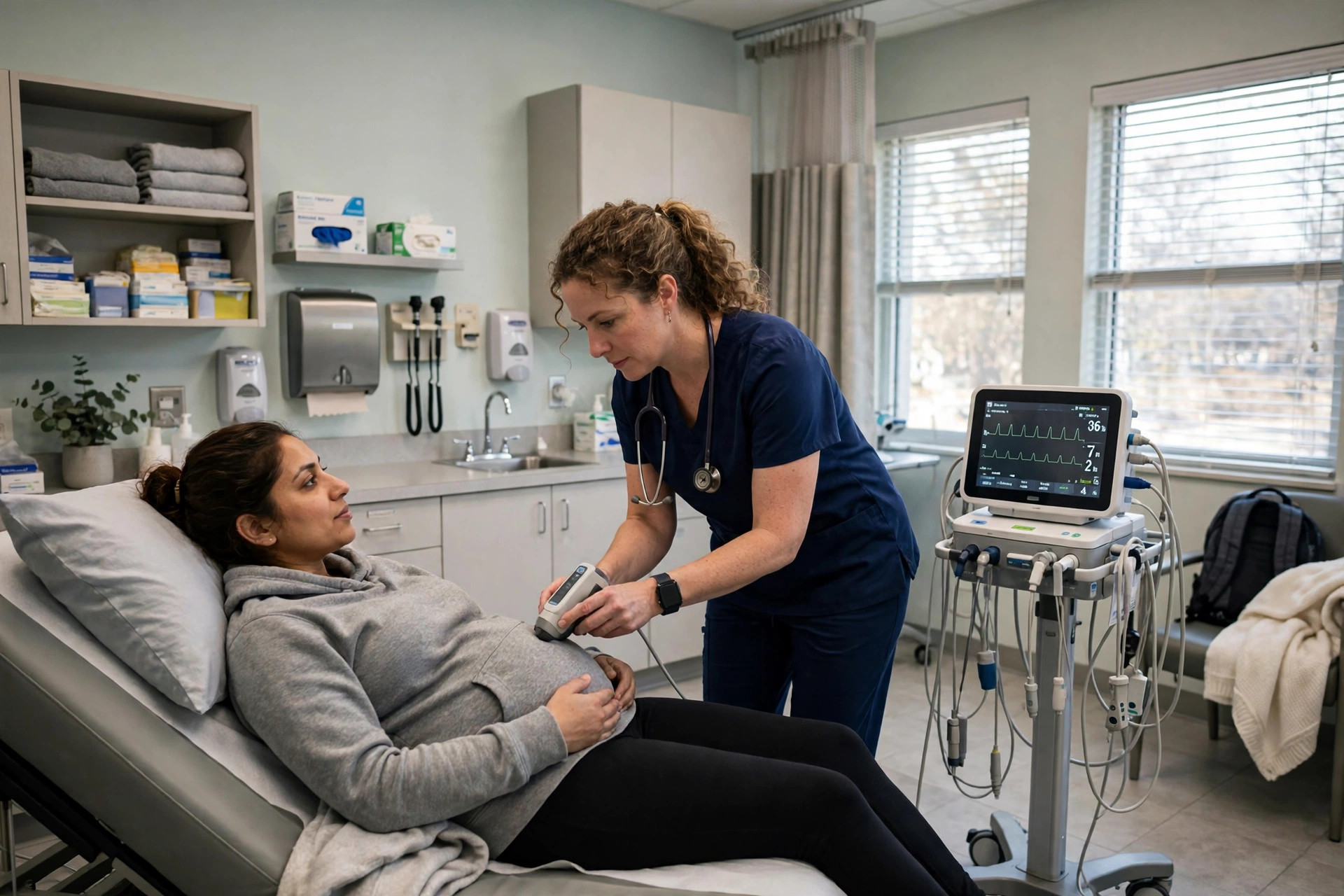
Your maternity team will ask about timing, amount and colour, examine you (including a speculum examination), and may test the fluid for amniotic fluid and infection. An ultrasound checks the fluid volume and the baby, whose heartbeat is monitored; the plan then depends on how many weeks pregnant you are.
Related guides on MedicalVideos.com
Frequently asked questions
How can I tell waters from urine?
Amniotic fluid is usually clear or pale straw-coloured, smells sweet rather than like urine, and keeps leaking — a trickle or gush that you cannot stop by tightening your pelvic floor. Urine leaks with coughs and effort and stops. When in doubt, maternity teams would always rather check than have you guess.
My waters broke but contractions have not started — what happens?
Contact your maternity unit straight away for assessment. If all is well, many units offer a period of waiting for labour to start naturally — usually with a plan to induce labour if it has not begun within about a day — alongside temperature checks and advice about infection symptoms to report.
Related symptoms — Women's Health
Browse the L section of the A–Z list or return to the Symptoms A–Z hub.