- Physical Examination
- Surgical Examination
- Ophthalmology
- Clinical Skills
- Orthopedics
- Surgery Videos
- Laparoscopy
- Pediatrics
- Funny Videos
- Cardiothoracic Surgery
- Nursing Videos
- Plastic Surgery
- Otorhinolaryngology
- Histology and Histopathology
- Neurosurgery
- Dermatology
- Pediatric Surgery
- Urology
- Dentistry
- Oncology and Cancers
- Anatomy Videos
- Health and Fitness
- Radiology
- Anaesthesia
- Physical Therapy
- Pharmacology
- Interventional Radiology
- Cardiology
- Endocrinology
- Gynecology
- Emergency Medicine
- Psychiatry and Psychology
- Childbirth Videos
- General Medical Videos
- Nephrology
- Physiology
- Diet and Food Health
- Diabetes Mellitus
- Neurology
- Women Health
- Osteoporosis
- Gastroenterology
- Pulmonology
- Hematology
- Rheumatology
- Toxicology
- Nuclear Medicine
- Infectious Diseases
- Vascular Disease
- Reproductive Health
- Burns and Wound Healing
- Kidney Zone Podcast
- Other
Heart Chambers
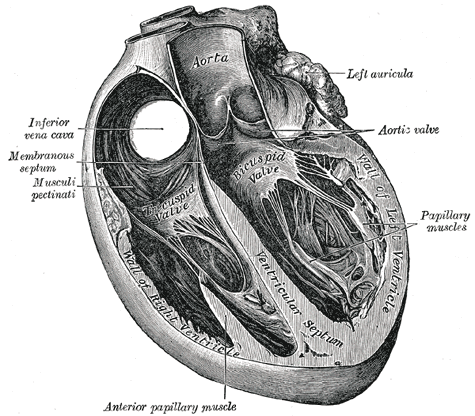
Gray's Anatomy (1918) plate, public domain
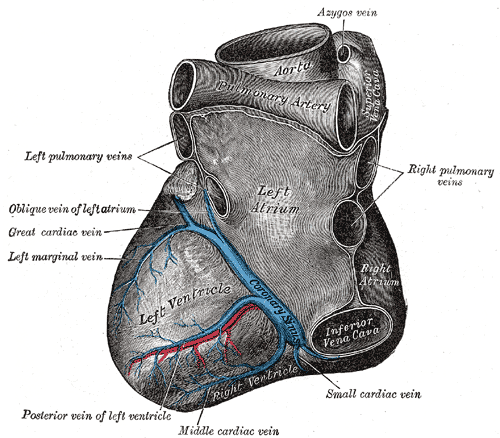
The heart has four chambers: two thin-walled upper atria that receive blood, and two thick-walled lower ventricles that pump it out. The right atrium receives oxygen-poor blood from the body and passes it to the right ventricle, which pumps it to the lungs. The left atrium receives oxygen-rich blood from the lungs and passes it to the left ventricle — the most powerful chamber — which pumps it to the whole body. One-way valves separate the chambers.
Key facts
- The left ventricle's wall is about three times thicker than the right's, because it pumps against the body's much higher resistance.
- The atria contract together, then the ventricles — a sequence timed by the heart's electrical system to maximise efficiency.
- A muscular wall (septum) separates right from left chambers, so the two bloodstreams never normally mix after birth.
- At rest the ventricles eject roughly 55-70% of their contents with each beat (the ejection fraction).
What can go wrong
Chamber problems include enlargement and thinning (cardiomyopathy), thickening from pressure overload (hypertrophy in hypertension or valve narrowing), and failure of the pumping or relaxing function (heart failure), causing breathlessness and fluid retention. Defects in the septum ('holes in the heart') let blood shunt between sides. Rhythm problems often arise in the atria, such as atrial fibrillation. Ultrasound (echocardiography) images the chambers directly.
Related conditions
Related procedures & tests
Related symptoms
Frequently asked questions
Why is the left ventricle so much stronger?
It must push blood through the entire systemic circulation against high resistance, whereas the right ventricle only supplies the nearby, low-pressure lungs.
What is an ejection fraction?
The percentage of blood in the filled left ventricle that is pumped out with each beat — a standard ultrasound measure of heart pumping function.
Educational information only. This atlas explains normal anatomy and describes conditions in general terms; it is not medical advice and does not replace assessment by a qualified clinician. If you have symptoms that worry you, seek medical care.