- Physical Examination
- Surgical Examination
- Ophthalmology
- Clinical Skills
- Orthopedics
- Surgery Videos
- Laparoscopy
- Pediatrics
- Funny Videos
- Cardiothoracic Surgery
- Nursing Videos
- Plastic Surgery
- Otorhinolaryngology
- Histology and Histopathology
- Neurosurgery
- Dermatology
- Pediatric Surgery
- Urology
- Dentistry
- Oncology and Cancers
- Anatomy Videos
- Health and Fitness
- Radiology
- Anaesthesia
- Physical Therapy
- Pharmacology
- Interventional Radiology
- Cardiology
- Endocrinology
- Gynecology
- Emergency Medicine
- Psychiatry and Psychology
- Childbirth Videos
- General Medical Videos
- Nephrology
- Physiology
- Diet and Food Health
- Diabetes Mellitus
- Neurology
- Women Health
- Osteoporosis
- Gastroenterology
- Pulmonology
- Hematology
- Rheumatology
- Toxicology
- Nuclear Medicine
- Infectious Diseases
- Vascular Disease
- Reproductive Health
- Burns and Wound Healing
- Kidney Zone Podcast
- Other
Jejunum and Ileum
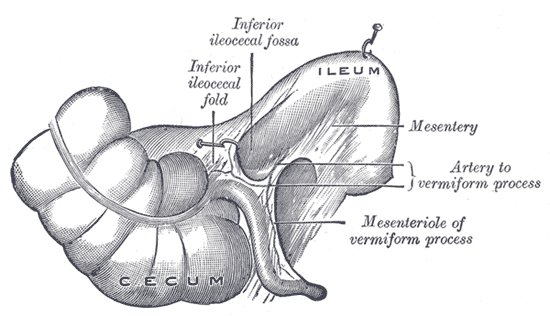
Gray's Anatomy (1918) plate, public domain
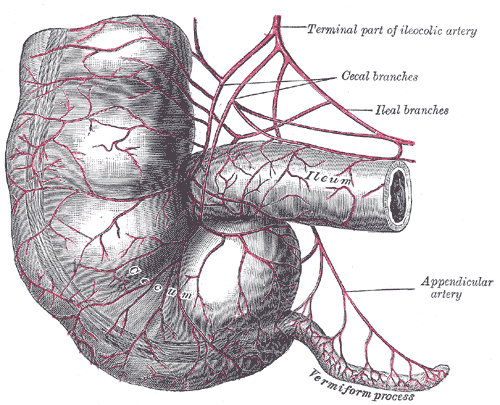
Beyond the duodenum, the small intestine continues as the jejunum (the middle section, about two-fifths) and the ileum (the final three-fifths), coiled within the abdomen and suspended on a fan of tissue (the mesentery) carrying its blood vessels. Their walls are thrown into folds, villi and microvilli that multiply the absorptive surface enormously; this is where most nutrients, vitamins and minerals enter the blood.
Key facts
- The jejunum's thicker wall and larger folds make it the busiest site of absorption.
- The ileum specialises in absorbing vitamin B12 and bile salts for recycling to the liver.
- Clusters of lymphoid tissue (Peyer's patches) in the ileum sample gut contents for the immune system.
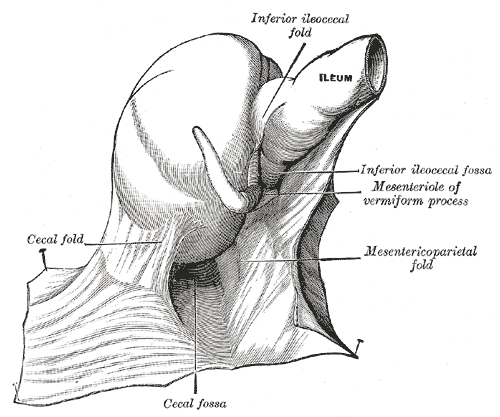
- The ileum ends at the ileocaecal valve, which limits backflow from the colon.
What can go wrong
Inflammation of these segments is the hallmark of Crohn's disease, which often targets the end of the ileum and causes pain, diarrhoea and poor absorption. Coeliac disease mainly damages the jejunum's villi. Ileum disease or removal can cause B12 deficiency and bile-salt diarrhoea. Blockages (obstruction) from adhesions or hernias cause vomiting, distension and colicky pain.
Related procedures & tests
Related symptoms
Frequently asked questions
How long are the jejunum and ileum together?
Together they make up most of the small intestine — in life roughly 4-6 metres, though measurements vary because the bowel's muscle tone changes its length.
Why does ileum disease cause vitamin B12 deficiency?
B12 bound to intrinsic factor can only be absorbed in the last part of the ileum, so inflammation or removal of that segment impairs uptake.
Educational information only. This atlas explains normal anatomy and describes conditions in general terms; it is not medical advice and does not replace assessment by a qualified clinician. If you have symptoms that worry you, seek medical care.