- Physical Examination
- Surgical Examination
- Ophthalmology
- Clinical Skills
- Orthopedics
- Surgery Videos
- Laparoscopy
- Pediatrics
- Funny Videos
- Cardiothoracic Surgery
- Nursing Videos
- Plastic Surgery
- Otorhinolaryngology
- Histology and Histopathology
- Neurosurgery
- Dermatology
- Pediatric Surgery
- Urology
- Dentistry
- Oncology and Cancers
- Anatomy Videos
- Health and Fitness
- Radiology
- Anaesthesia
- Physical Therapy
- Pharmacology
- Interventional Radiology
- Cardiology
- Endocrinology
- Gynecology
- Emergency Medicine
- Psychiatry and Psychology
- Childbirth Videos
- General Medical Videos
- Nephrology
- Physiology
- Diet and Food Health
- Diabetes Mellitus
- Neurology
- Women Health
- Osteoporosis
- Gastroenterology
- Pulmonology
- Hematology
- Rheumatology
- Toxicology
- Nuclear Medicine
- Infectious Diseases
- Vascular Disease
- Reproductive Health
- Burns and Wound Healing
- Kidney Zone Podcast
- Other
Pelvis
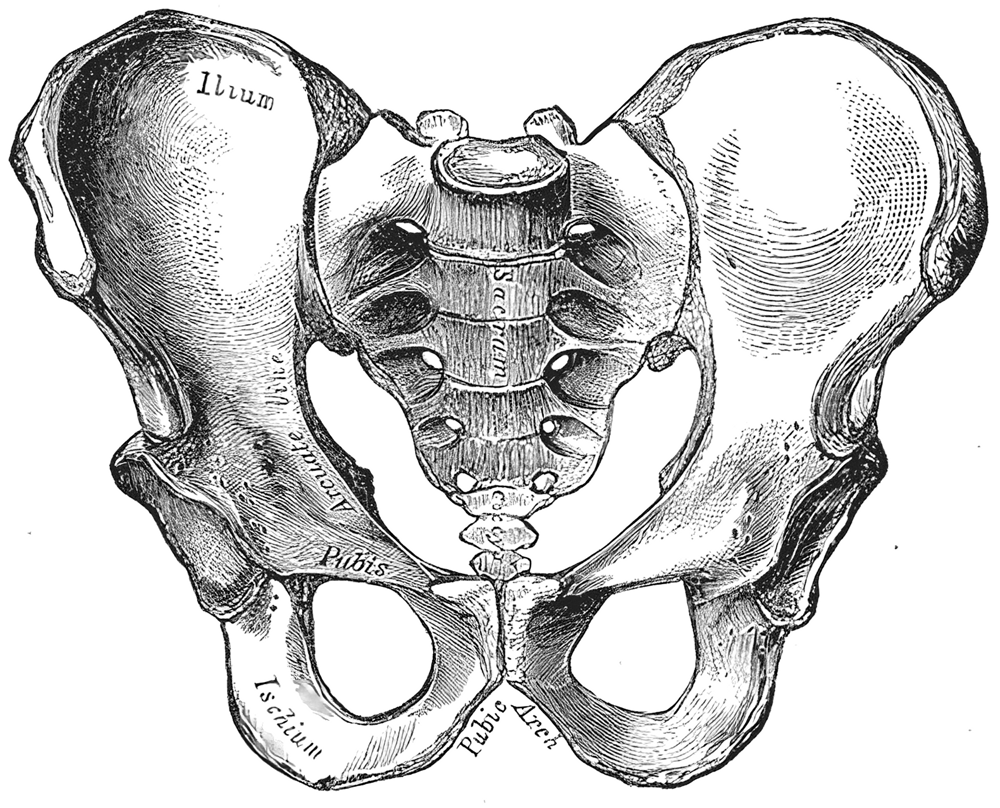
Gray's Anatomy (1918) plate, public domain
The pelvis is the basin-shaped ring of bone at the base of the trunk: the two hip bones in front and at the sides, the sacrum and coccyx behind, joined by the sacroiliac joints and the pubic symphysis. It supports the spine, transfers weight to the legs, protects the bladder, bowel and reproductive organs, and in women forms the birth canal.
Key facts
- The pelvis is a complete bony ring — breaks usually occur in two places.
- It consists of two hip bones, the sacrum and the coccyx.
- The pelvic brim divides the greater (false) pelvis from the lesser (true) pelvis.
- The female pelvis is broader and shallower, adapted for childbirth.
- The pubic symphysis is a cartilage joint that softens slightly in pregnancy.
What can go wrong
Pelvic fractures range from stable cracks in older adults after falls — painful but often managed without surgery — to high-energy ring disruptions in road collisions that threaten the organs and blood vessels inside. The shape and size of the pelvis are assessed in pregnancy when there is any question about the birth canal.
Related conditions
Related procedures & tests
Related symptoms
Related muscles
Watch: related videos
Frequently asked questions
Why is the pelvis a ring, and why does that matter for fractures?
A ring cannot usually break in just one place and displace — like a pretzel, it tends to snap in two places. Stable single cracks exist, but displaced pelvic injuries imply a second break or joint disruption, which surgeons look for.
How do male and female pelvises differ?
The female pelvis is wider, with a rounder inlet, a broader pubic arch and a shorter, less curved sacrum — all of which enlarge the birth canal. The male pelvis is narrower and heavier-built.
Educational information only. This atlas explains normal anatomy and describes conditions in general terms; it is not medical advice and does not replace assessment by a qualified clinician. If you have symptoms that worry you, seek medical care.