- Physical Examination
- Surgical Examination
- Ophthalmology
- Clinical Skills
- Orthopedics
- Surgery Videos
- Laparoscopy
- Pediatrics
- Funny Videos
- Cardiothoracic Surgery
- Nursing Videos
- Plastic Surgery
- Otorhinolaryngology
- Histology and Histopathology
- Neurosurgery
- Dermatology
- Pediatric Surgery
- Urology
- Dentistry
- Oncology and Cancers
- Anatomy Videos
- Health and Fitness
- Radiology
- Anaesthesia
- Physical Therapy
- Pharmacology
- Interventional Radiology
- Cardiology
- Endocrinology
- Gynecology
- Emergency Medicine
- Psychiatry and Psychology
- Childbirth Videos
- General Medical Videos
- Nephrology
- Physiology
- Diet and Food Health
- Diabetes Mellitus
- Neurology
- Women Health
- Osteoporosis
- Gastroenterology
- Pulmonology
- Hematology
- Rheumatology
- Toxicology
- Nuclear Medicine
- Infectious Diseases
- Vascular Disease
- Reproductive Health
- Burns and Wound Healing
- Kidney Zone Podcast
- Other
Pharynx
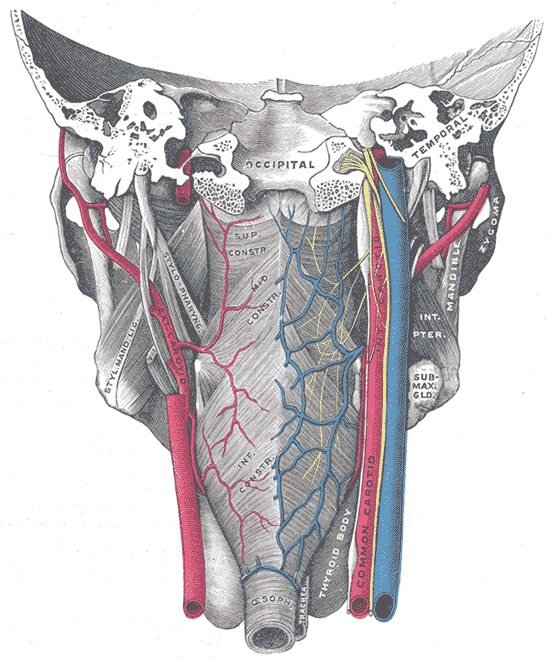
Gray's Anatomy (1918) plate, public domain
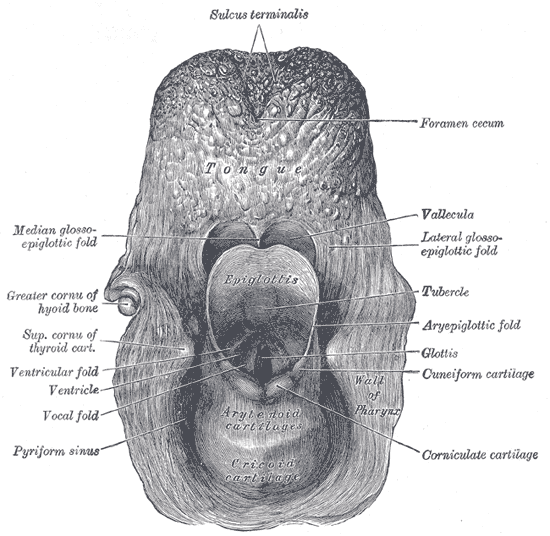
The pharynx is the muscular tube at the back of the nose and mouth that channels both air and food. It has three parts: the nasopharynx behind the nose, the oropharynx behind the mouth (the part you see when you look at your tonsils), and the laryngopharynx, which leads down to the voice box and the food pipe. Its walls are rings of muscle that squeeze in sequence to propel a swallowed bolus downwards.
Key facts
- The pharynx is a shared corridor: air passes to the larynx while food passes to the esophagus.
- The Eustachian tubes open into the nasopharynx, linking the throat to the middle ears.
- A ring of lymphoid tissue (including the tonsils and adenoids) guards its entrance against swallowed and inhaled microbes.
- During swallowing, the soft palate seals the nasopharynx so food does not escape into the nose.
What can go wrong
Inflammation of the pharynx (pharyngitis) is the familiar sore throat of colds and strep infections. Enlarged adenoids in the nasopharynx can block breathing and ear drainage in children. Because air and food share this corridor, swallowing problems can let food enter the airway (aspiration), a risk assessed in people with stroke or neurological disease.
Related conditions
Related procedures & tests
Related symptoms
Related muscles
Watch: related videos
Frequently asked questions
Where exactly is the pharynx?
It is the funnel-shaped tube behind the nasal cavity and mouth, running from the base of the skull down to the level of the voice box, about 12-14 cm long in adults.
Why do throat infections sometimes cause earache?
The Eustachian tube connects the nasopharynx to the middle ear, and the same nerves serve both areas, so throat pain is often felt in the ear.
Educational information only. This atlas explains normal anatomy and describes conditions in general terms; it is not medical advice and does not replace assessment by a qualified clinician. If you have symptoms that worry you, seek medical care.