- Physical Examination
- Surgical Examination
- Ophthalmology
- Clinical Skills
- Orthopedics
- Surgery Videos
- Laparoscopy
- Pediatrics
- Funny Videos
- Cardiothoracic Surgery
- Nursing Videos
- Plastic Surgery
- Otorhinolaryngology
- Histology and Histopathology
- Neurosurgery
- Dermatology
- Pediatric Surgery
- Urology
- Dentistry
- Oncology and Cancers
- Anatomy Videos
- Health and Fitness
- Radiology
- Anaesthesia
- Physical Therapy
- Pharmacology
- Interventional Radiology
- Cardiology
- Endocrinology
- Gynecology
- Emergency Medicine
- Psychiatry and Psychology
- Childbirth Videos
- General Medical Videos
- Nephrology
- Physiology
- Diet and Food Health
- Diabetes Mellitus
- Neurology
- Women Health
- Osteoporosis
- Gastroenterology
- Pulmonology
- Hematology
- Rheumatology
- Toxicology
- Nuclear Medicine
- Infectious Diseases
- Vascular Disease
- Reproductive Health
- Burns and Wound Healing
- Kidney Zone Podcast
- Other
Pleura
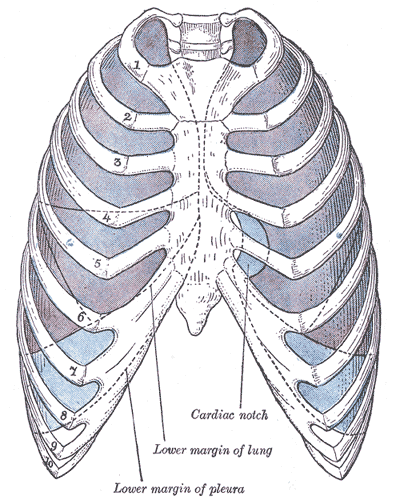
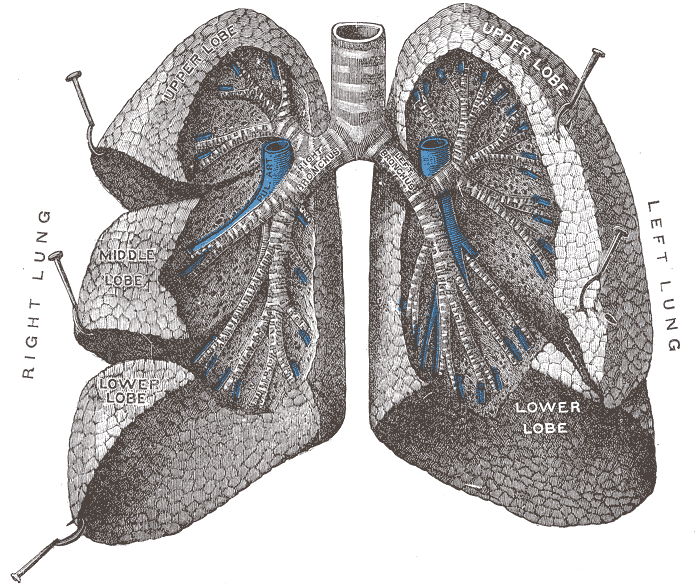
Gray's Anatomy (1918) plate, public domain
The pleura is a double-layered membrane wrapping each lung. The inner (visceral) layer coats the lung surface; the outer (parietal) layer lines the chest wall and diaphragm. Between them is a potential space with a film of fluid that lets the lung glide silently as it expands, and whose surface tension keeps the lung coupled to the chest wall as it moves.
Key facts
- Pleural fluid is normally only a few millilitres — just enough to lubricate.
- The parietal pleura senses pain; the visceral pleura on the lung does not.
- The space extends below the lung edges, which is why fluid collects at the bases when you stand.
- The fluid film lets the lung slide yet resists being pulled away from the chest wall, like two wet glass slides.
What can go wrong
Air leaking into the pleural space collapses the lung (pneumothorax), causing sudden chest pain and breathlessness. Excess fluid (pleural effusion) collects from heart failure, infection, inflammation or cancer and compresses the lung. Inflamed pleura (pleurisy) causes sharp pain on breathing in. These conditions are assessed with ultrasound or CT and sometimes by sampling the fluid (thoracentesis).
Related conditions
Related procedures & tests
Related symptoms
Watch: related videos
Frequently asked questions
What is a pleural effusion?
A build-up of fluid in the space between the lung and chest wall. Small amounts may cause no symptoms; larger amounts compress the lung and cause breathlessness.
Why does pleurisy hurt so much when breathing?
The two inflamed pleural layers lose their smooth glide and rub with each breath, and the chest-wall layer carries pain fibres, producing sharp, localised pain.
Educational information only. This atlas explains normal anatomy and describes conditions in general terms; it is not medical advice and does not replace assessment by a qualified clinician. If you have symptoms that worry you, seek medical care.