- Physical Examination
- Surgical Examination
- Ophthalmology
- Clinical Skills
- Orthopedics
- Surgery Videos
- Laparoscopy
- Pediatrics
- Funny Videos
- Cardiothoracic Surgery
- Nursing Videos
- Plastic Surgery
- Otorhinolaryngology
- Histology and Histopathology
- Neurosurgery
- Dermatology
- Pediatric Surgery
- Urology
- Dentistry
- Oncology and Cancers
- Anatomy Videos
- Health and Fitness
- Radiology
- Anaesthesia
- Physical Therapy
- Pharmacology
- Interventional Radiology
- Cardiology
- Endocrinology
- Gynecology
- Emergency Medicine
- Psychiatry and Psychology
- Childbirth Videos
- General Medical Videos
- Nephrology
- Physiology
- Diet and Food Health
- Diabetes Mellitus
- Neurology
- Women Health
- Osteoporosis
- Gastroenterology
- Pulmonology
- Hematology
- Rheumatology
- Toxicology
- Nuclear Medicine
- Infectious Diseases
- Vascular Disease
- Reproductive Health
- Burns and Wound Healing
- Kidney Zone Podcast
- Other
Pubis
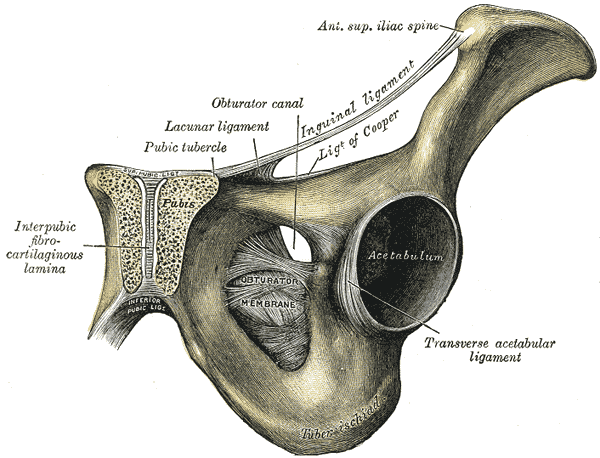
Gray's Anatomy (1918) plate, public domain
The pubis is the front part of the hip bone. Its body meets the opposite pubis at the pubic symphysis — a midline cartilage joint — and its two arms (rami) curve to join the ilium above and the ischium below, framing the obturator foramen. The abdominal and inner-thigh muscles attach to it, and it shields the bladder behind it.
Key facts
- The pubic symphysis is the midline joint at the front of the pelvis.
- The superior and inferior rami frame the obturator foramen.
- The rectus abdominis and the thigh adductors attach to the pubis.
- The pubic crest and tubercle are landmarks for the groin and hernia examination.
- In pregnancy the symphysis softens slightly under hormonal influence.
What can go wrong
The pubic rami are among the commonest sites of fragility fractures in older adults after falls. The symphysis can become painful in pregnancy (symphysis pubis dysfunction) and in athletes, where stress at the pubic bone and its muscle attachments causes groin pain sometimes called osteitis pubis.
Related conditions
Related procedures & tests
Related symptoms
Related muscles
Frequently asked questions
Can the pubic symphysis move?
Only a millimetre or two normally — it is a stiffening joint, not a moving one. In pregnancy it loosens a little to help the pelvis during birth, which is why it can become sore.
Why do footballers get pubic bone pain?
Kicking and twisting load the abdominal and adductor muscles that pull on the pubis from opposite sides. Repeated overload inflames the bone and joint area, producing chronic groin pain.
Educational information only. This atlas explains normal anatomy and describes conditions in general terms; it is not medical advice and does not replace assessment by a qualified clinician. If you have symptoms that worry you, seek medical care.