- Physical Examination
- Surgical Examination
- Ophthalmology
- Clinical Skills
- Orthopedics
- Surgery Videos
- Laparoscopy
- Pediatrics
- Funny Videos
- Cardiothoracic Surgery
- Nursing Videos
- Plastic Surgery
- Otorhinolaryngology
- Histology and Histopathology
- Neurosurgery
- Dermatology
- Pediatric Surgery
- Urology
- Dentistry
- Oncology and Cancers
- Anatomy Videos
- Health and Fitness
- Radiology
- Anaesthesia
- Physical Therapy
- Pharmacology
- Interventional Radiology
- Cardiology
- Endocrinology
- Gynecology
- Emergency Medicine
- Psychiatry and Psychology
- Childbirth Videos
- General Medical Videos
- Nephrology
- Physiology
- Diet and Food Health
- Diabetes Mellitus
- Neurology
- Women Health
- Osteoporosis
- Gastroenterology
- Pulmonology
- Hematology
- Rheumatology
- Toxicology
- Nuclear Medicine
- Infectious Diseases
- Vascular Disease
- Reproductive Health
- Burns and Wound Healing
- Kidney Zone Podcast
- Other
Pulmonary Circulation
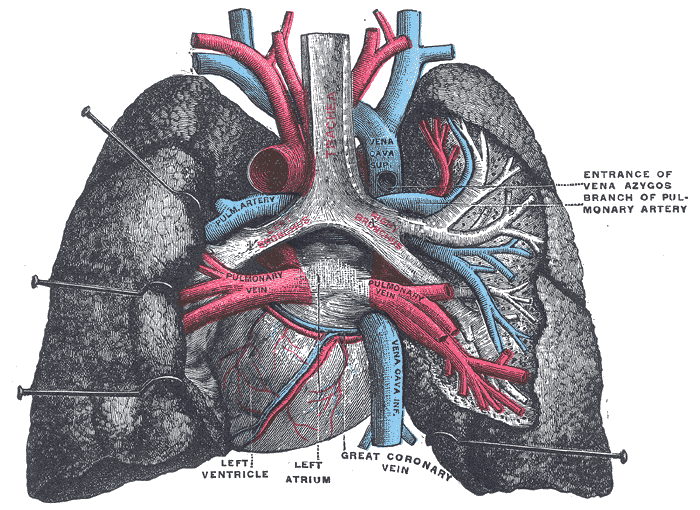
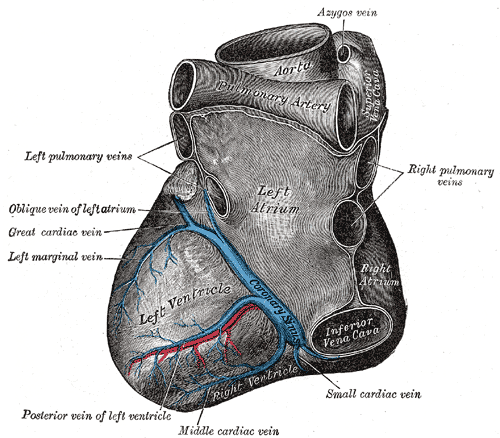
Gray's Anatomy (1918) plate, public domain
The pulmonary circulation is the short loop between the right side of the heart and the lungs: the pulmonary artery carries oxygen-poor blood (the only artery carrying deoxygenated blood) to the lung capillaries, where carbon dioxide is unloaded and oxygen picked up; four pulmonary veins return the enriched blood to the left atrium. It is a low-pressure, low-resistance circuit that nevertheless handles the heart's entire output.
Key facts
- Pulmonary artery pressure is about a fifth of systemic pressure, so the right ventricle is built much lighter than the left.
- Lung capillaries also filter small clots and debris from the venous blood before it reaches the systemic side.
- The circuit's blood volume shifts with posture and breathing, buffering the left heart's filling.
- In the fetus this loop is largely bypassed, since the placenta does the oxygenating.
What can go wrong
A clot lodging in the pulmonary arteries (pulmonary embolism) strains the right ventricle and can be fatal; it usually originates in leg veins. Chronically raised pulmonary pressure (pulmonary hypertension) — from lung disease, left-heart disease, clots or intrinsic vessel disease — causes progressive breathlessness and right heart failure. In newborns the circuit must switch over at birth; failure to do so causes persistent pulmonary hypertension of the newborn.
Related conditions
Related procedures & tests
Related symptoms
Frequently asked questions
Why is pulmonary pressure so much lower than body pressure?
The lungs are close to the heart and their vast capillary network offers little resistance, so a gentle pressure suffices to move the entire cardiac output through them.
What is a pulmonary embolism?
A blockage of a pulmonary artery, usually by a clot that travelled from the legs; it obstructs blood flow to part of the lung and strains the right heart.
Educational information only. This atlas explains normal anatomy and describes conditions in general terms; it is not medical advice and does not replace assessment by a qualified clinician. If you have symptoms that worry you, seek medical care.