- Physical Examination
- Surgical Examination
- Ophthalmology
- Clinical Skills
- Orthopedics
- Surgery Videos
- Laparoscopy
- Pediatrics
- Funny Videos
- Cardiothoracic Surgery
- Nursing Videos
- Plastic Surgery
- Otorhinolaryngology
- Histology and Histopathology
- Neurosurgery
- Dermatology
- Pediatric Surgery
- Urology
- Dentistry
- Oncology and Cancers
- Anatomy Videos
- Health and Fitness
- Radiology
- Anaesthesia
- Physical Therapy
- Pharmacology
- Interventional Radiology
- Cardiology
- Endocrinology
- Gynecology
- Emergency Medicine
- Psychiatry and Psychology
- Childbirth Videos
- General Medical Videos
- Nephrology
- Physiology
- Diet and Food Health
- Diabetes Mellitus
- Neurology
- Women Health
- Osteoporosis
- Gastroenterology
- Pulmonology
- Hematology
- Rheumatology
- Toxicology
- Nuclear Medicine
- Infectious Diseases
- Vascular Disease
- Reproductive Health
- Burns and Wound Healing
- Kidney Zone Podcast
- Other
Scrotum
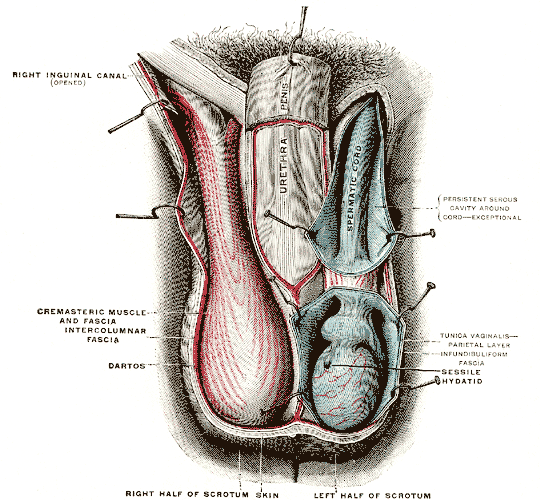
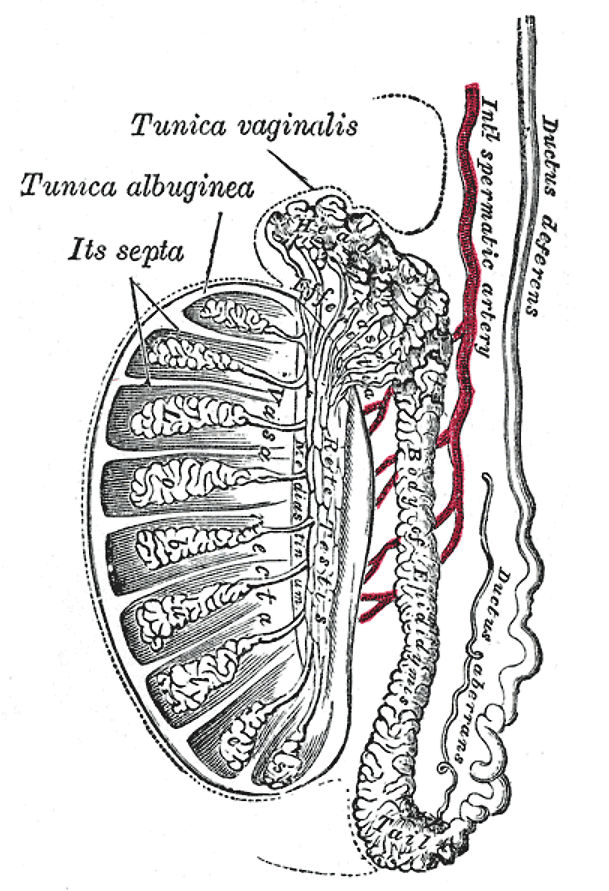
Gray's Anatomy (1918) plate, public domain
The scrotum is the pouch of skin and muscle that houses the testes, epididymides and lower spermatic cords. Its job is temperature control: the dartos muscle wrinkles the skin to conserve heat or relaxes it to cool, while the cremaster muscles adjust the testes' height, keeping them a few degrees below body temperature for sperm production. A midline septum divides it into two compartments.
Key facts
- Scrotal skin is thin, pigmented and nearly fat-free, optimised for heat exchange.
- A specialised counter-current exchange in the cord (the pampiniform plexus) pre-cools arterial blood heading to the testis.
- The scrotum's midline ridge (raphe) marks where the two halves fused before birth.
- Its sweat glands and rich blood flow make it an effective radiator in warm conditions.
What can go wrong
Scrotal swellings are common and usually benign — fluid around the testis (hydrocele), dilated veins (varicocele), epididymal cysts — but any new lump is examined and often ultrasounded to exclude testicular cancer. Sudden severe scrotal pain is treated as possible testicular torsion until proven otherwise. Skin problems include infections and, in chronic lymphatic disease, marked swelling.
Related conditions
Related procedures & tests
Related symptoms
Related muscles
Frequently asked questions
What is a varicocele?
A varicose swelling of the veins draining the testis, usually on the left, often described as feeling like a bag of worms; large ones can affect sperm quality.
What is a hydrocele?
A collection of fluid in the sac around the testis, causing a painless scrotal swelling; it is common and confirmed by examination and ultrasound.
Educational information only. This atlas explains normal anatomy and describes conditions in general terms; it is not medical advice and does not replace assessment by a qualified clinician. If you have symptoms that worry you, seek medical care.