- Physical Examination
- Surgical Examination
- Ophthalmology
- Clinical Skills
- Orthopedics
- Surgery Videos
- Laparoscopy
- Pediatrics
- Funny Videos
- Cardiothoracic Surgery
- Nursing Videos
- Plastic Surgery
- Otorhinolaryngology
- Histology and Histopathology
- Neurosurgery
- Dermatology
- Pediatric Surgery
- Urology
- Dentistry
- Oncology and Cancers
- Anatomy Videos
- Health and Fitness
- Radiology
- Anaesthesia
- Physical Therapy
- Pharmacology
- Interventional Radiology
- Cardiology
- Endocrinology
- Gynecology
- Emergency Medicine
- Psychiatry and Psychology
- Childbirth Videos
- General Medical Videos
- Nephrology
- Physiology
- Diet and Food Health
- Diabetes Mellitus
- Neurology
- Women Health
- Osteoporosis
- Gastroenterology
- Pulmonology
- Hematology
- Rheumatology
- Toxicology
- Nuclear Medicine
- Infectious Diseases
- Vascular Disease
- Reproductive Health
- Burns and Wound Healing
- Kidney Zone Podcast
- Other
Spinal Nerves
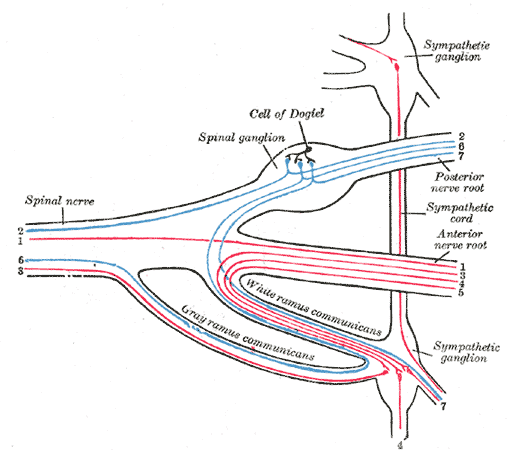
Gray's Anatomy (1918) plate, public domain
The spinal nerves are the 31 pairs of mixed nerves that connect the spinal cord to the body: 8 cervical, 12 thoracic, 5 lumbar, 5 sacral and 1 coccygeal. Each forms from a motor (front) root and a sensory (back) root, exits through a gap between vertebrae, and supplies a specific strip of skin (dermatome) and group of muscles (myotome). Their orderly maps let clinicians localise cord and root problems from the pattern of symptoms.
Key facts
- There are 8 cervical nerves but only 7 cervical vertebrae — the first seven exit above their vertebrae, the rest below.
- The sensory root carries a swelling (the dorsal root ganglion) housing the sensory cell bodies — the site where shingles virus hides.
- Each nerve immediately gives a small branch back to supply the spine's own structures.
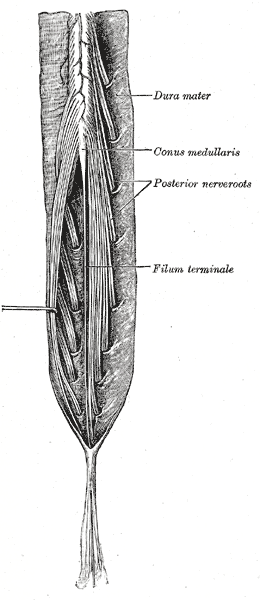
- The lower lumbar and sacral nerves travel downwards inside the canal before exiting, forming the cauda equina.
What can go wrong
Root compression — typically by a prolapsed disc or narrowed exit canal — causes dermatomal pain, numbness and myotome weakness (radiculopathy), such as sciatica. Shingles erupts in a single dermatome when the dormant virus reactivates in its ganglion. Inflammatory disorders can attack multiple roots (as in Guillain-Barré syndrome). Assessment maps the deficit against the dermatome and myotome charts to pinpoint the level.
Related procedures & tests
Related symptoms
Frequently asked questions
What is a dermatome?
The strip of skin supplied by one spinal nerve root; dermatomes form a map over the body that clinicians use to localise nerve root problems.
Why does shingles follow a band?
The chickenpox virus lies dormant in one sensory root ganglion for years; when it reactivates it travels down that root's nerve, erupting only in its dermatome band.
Educational information only. This atlas explains normal anatomy and describes conditions in general terms; it is not medical advice and does not replace assessment by a qualified clinician. If you have symptoms that worry you, seek medical care.