- Physical Examination
- Surgical Examination
- Ophthalmology
- Clinical Skills
- Orthopedics
- Surgery Videos
- Laparoscopy
- Pediatrics
- Funny Videos
- Cardiothoracic Surgery
- Nursing Videos
- Plastic Surgery
- Otorhinolaryngology
- Histology and Histopathology
- Neurosurgery
- Dermatology
- Pediatric Surgery
- Urology
- Dentistry
- Oncology and Cancers
- Anatomy Videos
- Health and Fitness
- Radiology
- Anaesthesia
- Physical Therapy
- Pharmacology
- Interventional Radiology
- Cardiology
- Endocrinology
- Gynecology
- Emergency Medicine
- Psychiatry and Psychology
- Childbirth Videos
- General Medical Videos
- Nephrology
- Physiology
- Diet and Food Health
- Diabetes Mellitus
- Neurology
- Women Health
- Osteoporosis
- Gastroenterology
- Pulmonology
- Hematology
- Rheumatology
- Toxicology
- Nuclear Medicine
- Infectious Diseases
- Vascular Disease
- Reproductive Health
- Burns and Wound Healing
- Kidney Zone Podcast
- Other
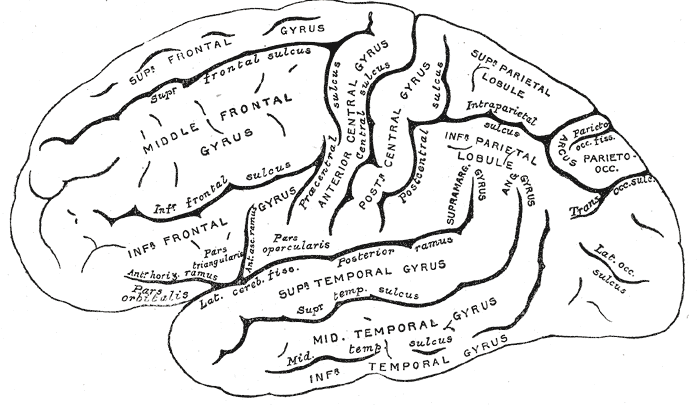
Temporal Lobe
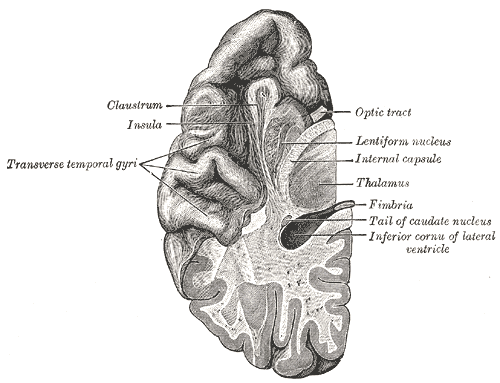
Gray's Anatomy (1918) plate, public domain
The temporal lobe lies beneath the temples, at the side of each hemisphere. It contains the primary auditory cortex (processing sound), the hippocampus deep within it (forming new memories), and — usually on the left — Wernicke's area for understanding language. Its underside handles object and face recognition. Sounds, speech, music, memory and recognition converge here, which is why its symptoms can be striking and varied.
Key facts
- The hippocampus is named for its seahorse shape and is the gateway to long-term memory formation.
- Each ear projects to both temporal lobes, so one-sided hearing cortex damage rarely causes deafness.
- A specialised face-recognition area sits on the underside of the right temporal lobe.
- The temporal lobe is the commonest starting point for focal epilepsy in adults.
What can go wrong
Temporal lobe epilepsy produces seizures that may begin with a rising stomach sensation, déjà vu, or a strange smell, followed by altered awareness. Damage from stroke, infection (herpes encephalitis has a predilection here) or tumours can impair memory, language comprehension or recognition. Alzheimer's disease begins its damage in the medial temporal memory structures, which is why early symptoms are forgetfulness for recent events.
Related conditions
Related procedures & tests
Related symptoms
Frequently asked questions
What is Wernicke's aphasia?
Fluent but meaningless speech with poor understanding, after damage to the dominant temporal lobe's language area — the opposite pattern to Broca's aphasia.
Why is the hippocampus important?
It consolidates new experiences into long-term memories; without it (as in the famous patient H.M.), old memories remain but new lasting memories cannot be formed.
Educational information only. This atlas explains normal anatomy and describes conditions in general terms; it is not medical advice and does not replace assessment by a qualified clinician. If you have symptoms that worry you, seek medical care.