- Physical Examination
- Surgical Examination
- Ophthalmology
- Clinical Skills
- Orthopedics
- Surgery Videos
- Laparoscopy
- Pediatrics
- Funny Videos
- Cardiothoracic Surgery
- Nursing Videos
- Plastic Surgery
- Otorhinolaryngology
- Histology and Histopathology
- Neurosurgery
- Dermatology
- Pediatric Surgery
- Urology
- Dentistry
- Oncology and Cancers
- Anatomy Videos
- Health and Fitness
- Radiology
- Anaesthesia
- Physical Therapy
- Pharmacology
- Interventional Radiology
- Cardiology
- Endocrinology
- Gynecology
- Emergency Medicine
- Psychiatry and Psychology
- Childbirth Videos
- General Medical Videos
- Nephrology
- Physiology
- Diet and Food Health
- Diabetes Mellitus
- Neurology
- Women Health
- Osteoporosis
- Gastroenterology
- Pulmonology
- Hematology
- Rheumatology
- Toxicology
- Nuclear Medicine
- Infectious Diseases
- Vascular Disease
- Reproductive Health
- Burns and Wound Healing
- Kidney Zone Podcast
- Other
Temporomandibular Joint
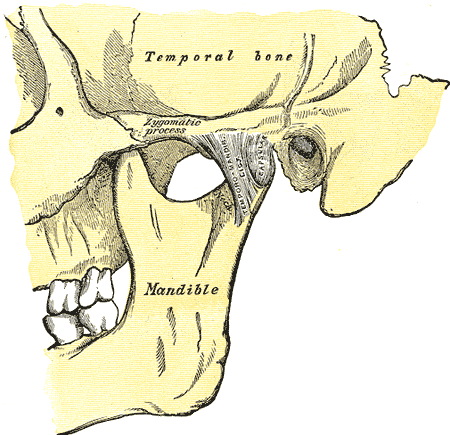
Gray's Anatomy (1918) plate, public domain
The temporomandibular joint (TMJ) is the hinge-and-slide joint connecting the jaw (mandible) to the temporal bone of the skull, just in front of the ear. A disc of fibrocartilage sits between the bones, letting the joint both rotate (for small opening) and glide forward (for wide opening and chewing movements). You use it thousands of times a day for speaking, chewing and yawning, driven by some of the body's strongest muscles.
Key facts
- It is the most frequently used joint in the body.
- The disc divides it into two compartments, which is why movement combines rolling and sliding.
- The chewing muscles can generate forces of 70 kg or more at the molars.
- Its nerve supply is shared with the ear and teeth — which is why TMJ pain is often felt as earache or toothache.
What can go wrong
Temporomandibular disorders (TMD) cause pain around the joint and chewing muscles, clicking, and sometimes locking — commonly linked to tooth grinding (bruxism), stress-related clenching, disc displacement or arthritis. The jaw can also dislocate, usually during wide yawning, leaving the mouth stuck open. Most TMD settles with conservative measures; persistent symptoms are assessed by dentists or maxillofacial specialists, with imaging for structural problems.
Related procedures & tests
Related symptoms
Related muscles
Frequently asked questions
Why does my jaw click?
Usually because the joint's disc slips slightly out of place as the jaw opens and then snaps back — a common, usually harmless finding unless pain or locking develops.
Can the TMJ cause earache?
Yes — the joint sits directly in front of the ear canal and shares nerves with the ear, so joint and muscle pain there is frequently perceived as ear pain even with a normal ear.
Educational information only. This atlas explains normal anatomy and describes conditions in general terms; it is not medical advice and does not replace assessment by a qualified clinician. If you have symptoms that worry you, seek medical care.