- Physical Examination
- Surgical Examination
- Ophthalmology
- Clinical Skills
- Orthopedics
- Surgery Videos
- Laparoscopy
- Pediatrics
- Funny Videos
- Cardiothoracic Surgery
- Nursing Videos
- Plastic Surgery
- Otorhinolaryngology
- Histology and Histopathology
- Neurosurgery
- Dermatology
- Pediatric Surgery
- Urology
- Dentistry
- Oncology and Cancers
- Anatomy Videos
- Health and Fitness
- Radiology
- Anaesthesia
- Physical Therapy
- Pharmacology
- Interventional Radiology
- Cardiology
- Endocrinology
- Gynecology
- Emergency Medicine
- Psychiatry and Psychology
- Childbirth Videos
- General Medical Videos
- Nephrology
- Physiology
- Diet and Food Health
- Diabetes Mellitus
- Neurology
- Women Health
- Osteoporosis
- Gastroenterology
- Pulmonology
- Hematology
- Rheumatology
- Toxicology
- Nuclear Medicine
- Infectious Diseases
- Vascular Disease
- Reproductive Health
- Burns and Wound Healing
- Kidney Zone Podcast
- Other
Thoracic Vertebrae
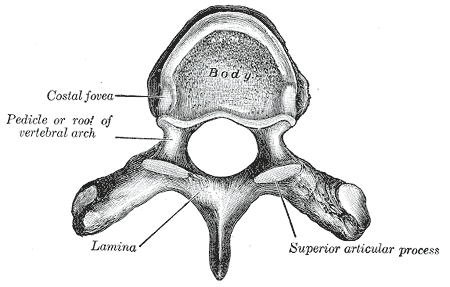
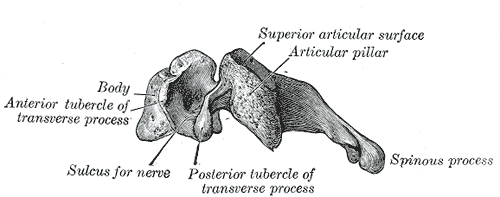
Gray's Anatomy (1918) plate, public domain
The twelve thoracic vertebrae form the middle of the back and carry the ribs. Each has facets on its body and processes where the rib heads and tubercles attach, building the rib cage. Their overlapping spinous processes point downwards, and this region of the spine is built more for stability than movement.
Key facts
- There are twelve thoracic vertebrae, T1 to T12, matching the twelve rib pairs.
- They form the backward curve (kyphosis) of the upper and mid back.
- Their rib joints create the protective cage for heart and lungs.
- Their downward-sloping spinous processes limit extension (bending back).
- Long muscles of posture — the erector spinae group — anchor along them.
What can go wrong
Thoracic vertebrae are the usual site of osteoporotic wedge fractures, which gradually increase the upper-back curve in older adults. This region is less often injured than the neck or lower back because the rib cage splints it. Persistent mid-back pain, especially at night or after minor trauma in older people, is a reason to have it examined.
Related procedures & tests
Related symptoms
Related muscles
Frequently asked questions
Why does the mid-back move less than the neck?
The ribs attached to each thoracic vertebra brace the whole region into a cage, and the shingled, downward-pointing processes block bending backwards. The design protects the chest organs at the cost of flexibility.
What is the normal curve of the thoracic spine?
A gentle outward (backward) curve called kyphosis. It becomes exaggerated when vertebrae wedge with age or osteoporosis, and it is reduced in some postural problems.
Educational information only. This atlas explains normal anatomy and describes conditions in general terms; it is not medical advice and does not replace assessment by a qualified clinician. If you have symptoms that worry you, seek medical care.