- Physical Examination
- Surgical Examination
- Ophthalmology
- Clinical Skills
- Orthopedics
- Surgery Videos
- Laparoscopy
- Pediatrics
- Funny Videos
- Cardiothoracic Surgery
- Nursing Videos
- Plastic Surgery
- Otorhinolaryngology
- Histology and Histopathology
- Neurosurgery
- Dermatology
- Pediatric Surgery
- Urology
- Dentistry
- Oncology and Cancers
- Anatomy Videos
- Health and Fitness
- Radiology
- Anaesthesia
- Physical Therapy
- Pharmacology
- Interventional Radiology
- Cardiology
- Endocrinology
- Gynecology
- Emergency Medicine
- Psychiatry and Psychology
- Childbirth Videos
- General Medical Videos
- Nephrology
- Physiology
- Diet and Food Health
- Diabetes Mellitus
- Neurology
- Women Health
- Osteoporosis
- Gastroenterology
- Pulmonology
- Hematology
- Rheumatology
- Toxicology
- Nuclear Medicine
- Infectious Diseases
- Vascular Disease
- Reproductive Health
- Burns and Wound Healing
- Kidney Zone Podcast
- Other
Trachea
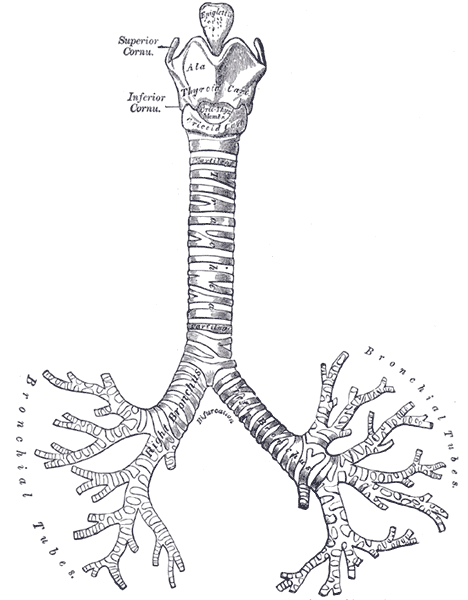
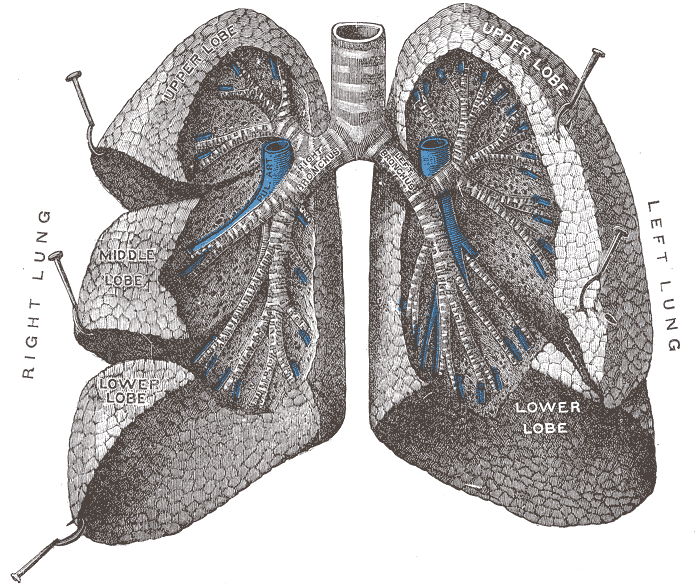
Gray's Anatomy (1918) plate, public domain
The trachea, or windpipe, is the airway tube running from the larynx down the front of the neck into the chest, where it divides into the two main bronchi. Its wall is stiffened by C-shaped rings of cartilage that hold it open, with a softer muscular back wall shared with the esophagus. A moist lining with beating cilia sweeps mucus and trapped particles upward — the airway's cleaning escalator.
Key facts
- An adult trachea is about 10-12 cm long and roughly 2 cm wide.
- Its 16-20 cartilage rings are open at the back, letting the esophagus expand when you swallow a large mouthful.
- The ridge at its fork (the carina) is one of the most cough-sensitive spots in the body.
- The cilia of its lining beat in waves, moving mucus up towards the throat at about a centimetre a minute.
What can go wrong
The trachea can be narrowed by scarring after prolonged breathing-tube use, by external pressure from an enlarged thyroid or lymph nodes, or by tumours — causing breathlessness and a harsh musical breathing sound (stridor). Infections of its lining (tracheitis) cause a barking cough. Inhaled foreign bodies that pass the larynx often lodge at its fork or in a main bronchus.
Related conditions
Related procedures & tests
Related symptoms
Frequently asked questions
Why is the trachea ridged?
The cartilage rings keep the tube springy and permanently open so it never collapses during breathing, while the gaps between rings let it flex with neck movement.
What is a tracheostomy?
A surgical opening made through the front of the neck into the trachea, used to bypass an obstructed upper airway or support long-term ventilation.
Educational information only. This atlas explains normal anatomy and describes conditions in general terms; it is not medical advice and does not replace assessment by a qualified clinician. If you have symptoms that worry you, seek medical care.