
- Physical Examination
- Surgical Examination
- Ophthalmology
- Clinical Skills
- Orthopedics
- Surgery Videos
- Laparoscopy
- Pediatrics
- Funny Videos
- Cardiothoracic Surgery
- Nursing Videos
- Plastic Surgery
- Otorhinolaryngology
- Histology and Histopathology
- Neurosurgery
- Dermatology
- Pediatric Surgery
- Urology
- Dentistry
- Oncology and Cancers
- Anatomy Videos
- Health and Fitness
- Radiology
- Anaesthesia
- Physical Therapy
- Pharmacology
- Interventional Radiology
- Cardiology
- Endocrinology
- Gynecology
- Emergency Medicine
- Psychiatry and Psychology
- Childbirth Videos
- General Medical Videos
- Nephrology
- Physiology
- Diet and Food Health
- Diabetes Mellitus
- Neurology
- Women Health
- Osteoporosis
- Gastroenterology
- Pulmonology
- Hematology
- Rheumatology
- Toxicology
- Nuclear Medicine
- Infectious Diseases
- Vascular Disease
- Reproductive Health
- Burns and Wound Healing
- Kidney Zone Podcast
- Other
Guillain-Barré Syndrome
Guillain-Barré syndrome is a rare condition in which the immune system mistakenly attacks the peripheral nerves, causing weakness that can spread quickly. This page explains its symptoms, causes, diagnosis, and treatment in plain language, with videos to help you follow the key points.
✓ Medically reviewed by Dr. Mohamed Ibrahim, MD, PhD — physician-scientist · Last reviewed: November 2026
In short: In Guillain-Barré syndrome, inflammation damages the nerves that carry signals between the brain, spinal cord, and the rest of the body. Weakness usually starts in the legs and can climb upward, sometimes affecting breathing, so new or worsening weakness needs urgent hospital assessment.
Watch: Guillain-Barré Syndrome videos

Read: the plain-language guide
Overview
The peripheral nerves carry movement and feeling signals between the spinal cord and the rest of the body. In Guillain-Barré syndrome the immune system inflames the protective covering of these nerves, or the nerve fibers themselves, so signals slow down or stop. Symptoms typically develop over days to a few weeks and often follow a recent infection. Severity varies widely: some people have mild leg weakness, while others develop widespread paralysis and need breathing support for a time. Most people recover substantially with hospital care, although recovery can take months and some have lingering weakness or fatigue.
Symptoms
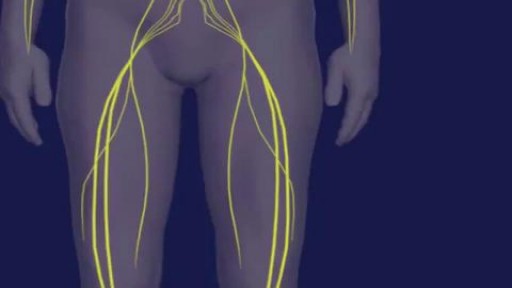
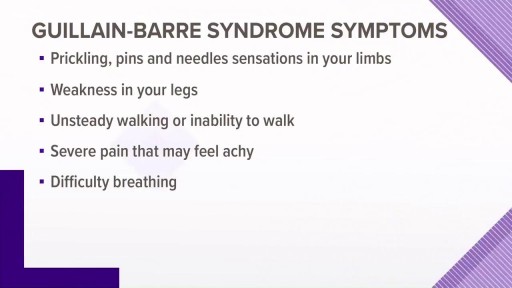
The hallmark symptom is weakness that begins in both legs and spreads upward to the arms and sometimes the face. Tingling, pins and needles, or numbness in the hands and feet often come first, and deep aching pain in the back or limbs is common. Reflexes fade, walking becomes unsteady or impossible, and facial weakness, double vision, or trouble swallowing can appear. In more severe cases the nerves controlling breathing, heart rate, and blood pressure are affected. Symptoms usually reach their worst within a few weeks and then level off before recovery begins.
Causes & risk factors
Guillain-Barré syndrome is an autoimmune reaction, not an infection itself, and it is not contagious. It often begins a week or two after a stomach or chest infection, when the immune response aimed at a germ mistakenly targets nerve tissue that looks similar. A food poisoning bacterium called Campylobacter is a frequent trigger, and flu and several viruses have also been linked. Rarely, symptoms follow surgery or vaccination, but infections remain far more common triggers.
How it's diagnosed
Doctors diagnose Guillain-Barré syndrome from the pattern of symptoms and a neurological examination showing weakness with reduced or absent reflexes. A lumbar puncture often shows raised protein in the spinal fluid with a normal white cell count, a pattern that supports the diagnosis. Nerve conduction studies and electromyography test how well signals travel along the nerves and can show the type of damage. Blood tests and scans help exclude look-alike conditions such as stroke, spinal cord compression, or severe muscle disease.
Treatment overview
There is no cure that switches the attack off instantly, so treatment focuses on speeding recovery and supporting the body in hospital. Two therapies can shorten the illness: plasma exchange, which filters harmful antibodies out of the blood, and intravenous immunoglobulin, a drip of donated antibodies. These are usually alternatives rather than combined. Breathing, heart rate, and blood pressure are monitored closely, and some patients need a ventilator for a period. Pain relief, clot and pressure-sore prevention, and early physiotherapy are central, followed by rehabilitation as strength returns.
When to seek care
Seek emergency care for new weakness in the legs or arms, weakness that is spreading, difficulty breathing or swallowing, fainting, or a racing or very slow heartbeat. Guillain-Barré syndrome can progress over hours to days, and early hospital monitoring is what makes it safer.
Frequently asked questions
Is Guillain-Barré syndrome contagious?
Guillain-Barré syndrome itself is not contagious, because it is an immune reaction rather than an infection. The infections that sometimes trigger it can spread between people, but only a very small number of those infected go on to develop the syndrome.
How long does recovery from Guillain-Barré syndrome take?
Recovery usually begins after symptoms level off, often within a few weeks, but regaining strength commonly takes months and sometimes longer. Rehabilitation and physiotherapy play a big role, and some people are left with tiredness or mild weakness that keeps improving slowly.
Can Guillain-Barré syndrome come back?
Guillain-Barré syndrome usually happens once, and coming back is uncommon. New or returning weakness after recovery should always be assessed promptly, because doctors will want to confirm the cause and rule out other nerve conditions.
What is the difference between Guillain-Barré syndrome and multiple sclerosis?
Guillain-Barré syndrome attacks the peripheral nerves outside the brain and spinal cord and usually follows an infection, while multiple sclerosis affects the brain and spinal cord themselves. Their symptom patterns, tests, and treatments differ, which is why a neurological assessment matters.
More in Brain & Nerves
Related topics on MedicalVideos.com
Sources & further reading
Authoritative references for readers who want to go deeper:
- MedlinePlus: Guillain-Barré Syndrome
- NHS: Guillain-Barré Syndrome
- NINDS: Guillain-Barré Syndrome (NINDS)
This page is for general education only and is not medical advice. Weakness from Guillain-Barré syndrome can progress to the breathing muscles, so any new or spreading limb weakness needs same-day emergency assessment rather than watchful waiting at home.